Trauma and Orthopaedics HST • 2027 Interview

The 2027 Trauma and Orthopaedics HST Interview Revision Platform: Question Bank, Live Practice and Mocks with Other Candidates

The Medibuddy Trauma and Orthopaedics HST Question Bank includes 68 scenarios and over 260 model-answered questions that closely mirror the real interview, each written and edited by high-scoring candidates who sat the Trauma and Orthopaedics HST interview in 2026.

However, knowing a strong answer isn't the same as delivering it well under pressure, which is why we provide:

10 years' experience preparing doctors for interviews

Users of the Medibuddy Trauma and Orthopaedics HST Revision Platform have secured some of the most competitive surgical training posts in recent rounds. Ask around, there's a good chance the trainees in the year above you used us too.

Always up to date

Did you know the interviews change every year? That's why we review and update every Question Bank on the platform twice a year, so you know you're always practising with scenarios based on the latest interview structure.

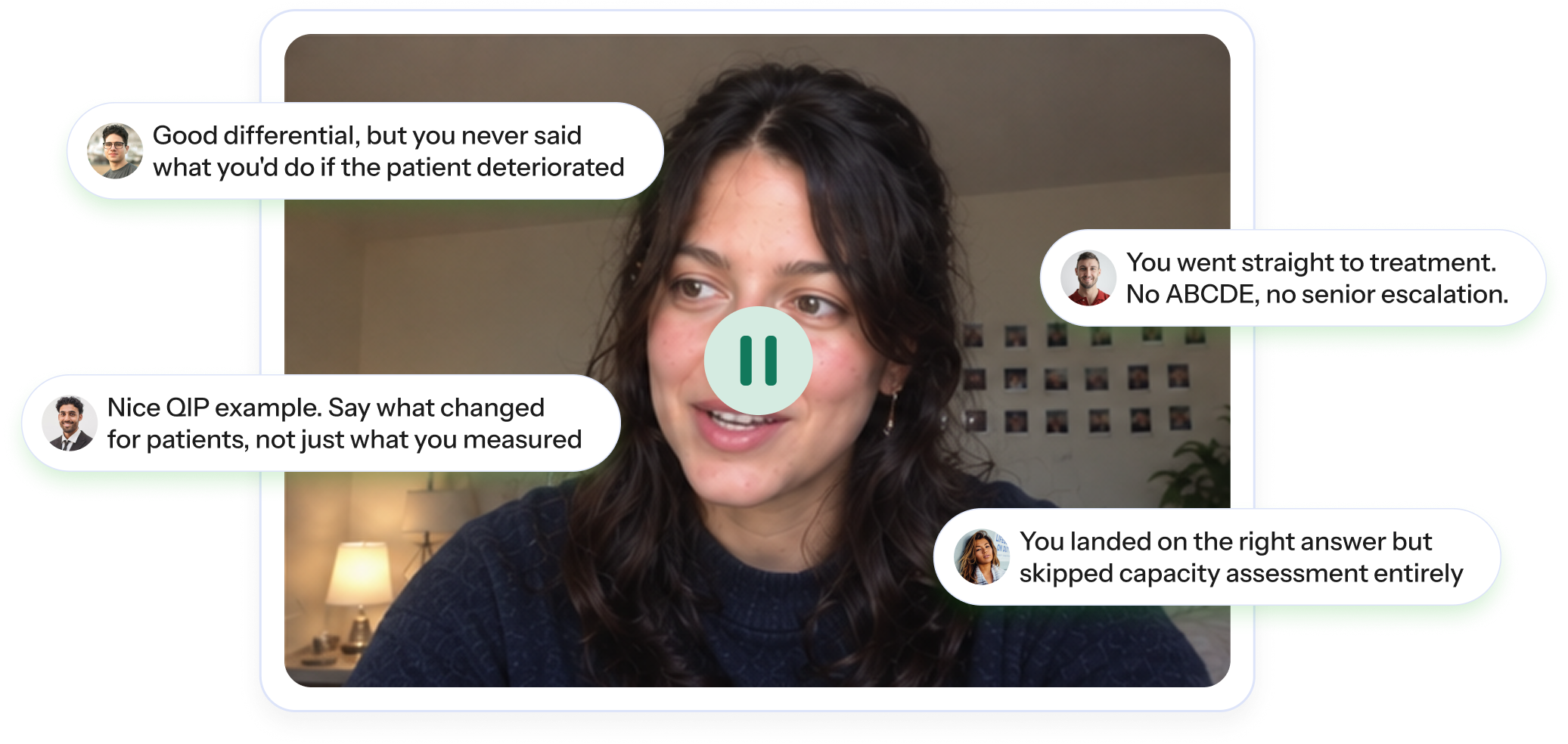
Network and practise real interview scenarios with other candidates

Question Bank

See every scenario, and how to answer it well

68 scenarios across all five interview stations, which tell you exactly how to respond to each question.
Study Groups

Connect with candidates across the country
Most people only ever practise with one or two friends. Study Groups connect you with candidates right across the country sitting the same Trauma and Orthopaedics HST interview.
Live MocksBeta

Practise interview technique with different candidates
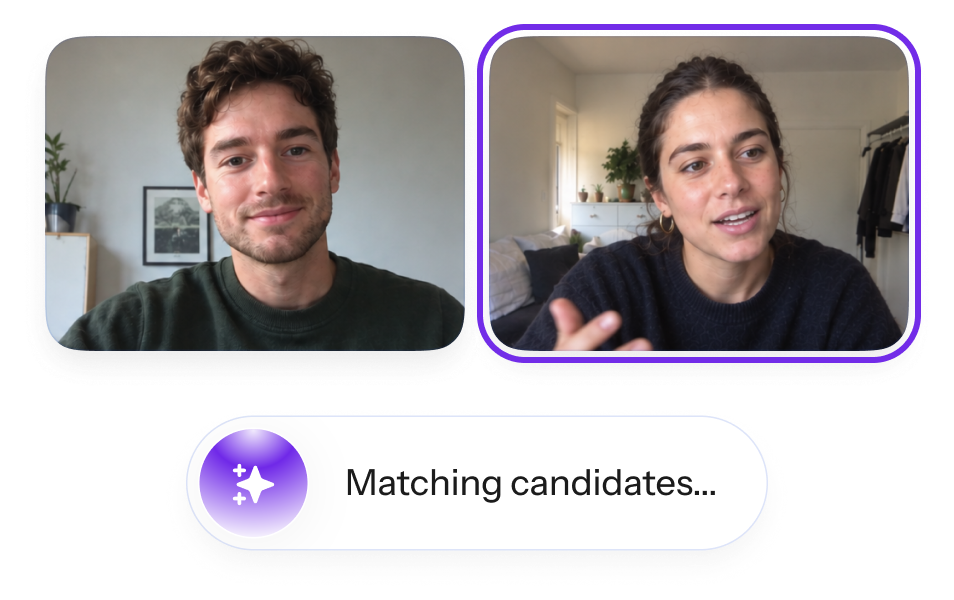
Arrange or get matched on demand with other candidates and run real scenarios out loud under interview conditions. Those who practise with the widest range of people tend to score the highest.
Peer FeedbackBeta

Reviewed by candidates across the platform

Submit your recorded mocks to candidates across the platform and get honest, varied feedback. Reviewing other people's mocks teaches you just as much.

The question bank, and other candidates to practise with, all in one platform.

Trauma and Orthopaedics HST Revision Platform • €170

Gain access to 68 scenarios across all five stations, and collaborate with other candidates through Study Groups, Live Mocks and Peer Feedback.
Get instant access
What candidates say

Scored well, secured their post

A few of the candidates who prepared with us for the Trauma and Orthopaedics HST interview.

Verified candidateInterviewed 2026
"Having a clear structure for the decision-making and quality and safety stations meant I could stay calm and systematic under pressure."
Secured HST post
Verified candidateInterviewed 2026
"Practising the professionalism and current-issues questions out loud with other candidates was the single most useful thing I did before the day."
Ranked highly
Part 1 • See the questions

The Medibuddy 2027 Trauma and Orthopaedics HST Question Bank

Each station is tightly timed, so you have a limited window to deliver the high-scoring answers you need to do well. That means every point has to land, and knowing how to structure each answer is essential. That's why each of our 68 scenarios comes with a model answer, written by candidates who scored highly in the 2026 Trauma and Orthopaedics HST interview, so you know exactly how to approach every question the panel puts to you.
What's inside

What's included in the Trauma and Orthopaedics HST Question Bank

There's nothing worse than getting to the interview and being handed a scenario you've never seen before. The panel scores five distinct stations, so the safest approach is to revise across all of them. We provide scenarios for every part of the interview, including the common themes and the more unusual cases that have come up before, so you don't get caught out.

Quality & Safety in Surgical Healthcare

Audit, never events, implant safety notices and clinical governance, each with a worked answer showing how to think through safety and quality systematically.

Commitment to Academic Advancement & Lifelong Learning

Research, teaching, audit and continuing professional development, with model answers that show how to evidence your academic commitment.

Knowledge of Current Issues in Surgical Practice

The issues shaping surgery today, with structured answers so you can discuss them with confidence and balance.

Decision Making in Surgery

Clinical and operative judgement under pressure, from prioritising a trauma list to knowing when not to operate, each with a worked answer.

Professionalism & Probity in Surgical Practice

Realistic professional, ethical and probity dilemmas, with model answers so you can reason through them clearly on the day.
Built around the five scored stations
Every scenario is anchored to Irish practice, guidelines and law, with model answers structured against the RCSI selection criteria.
Try it

Try an example Trauma and Orthopaedics HST question

You are the registrar on call for trauma and orthopaedics, called to the Emergency Department to review a 58-year-old man with a two-day history of an acutely swollen, hot, painful right knee. He is pyrexial at 38.8 degrees Celsius, tachycardic at 104 beats per minute, with a CRP of 187 mg/L and a white cell count of 14.2 x 10^9/L. He has type 2 diabetes and was started on oral antibiotics by his GP three days ago for a presumed skin infection. The knee is grossly swollen with marked restriction of movement in all planes, and he is weight-bearing with difficulty.

How would you approach this?

Question
How do you assess this patient, and what is your working diagnosis?
Example answer
This is septic arthritis until proven otherwise and must be managed as a surgical emergency.
  • History: onset of the swelling, fever and pain; any skin breach, bite or recent procedure; the three days of GP antibiotics, which can mask the picture and alter synovial results; previous gout or inflammatory arthropathy; recent joint injection, immunosuppression or IV drug use.
  • Diabetes: poor control raises the risk of joint infection and can blunt the systemic response.
  • Examination: full observations with a NEWS2 score, and if raised treat as sepsis on the HSE Sepsis Pathway; inspect the knee for erythema, effusion and skin breaks; assess range of movement, which is painful in all planes in septic arthritis; examine the joint above and below and the limb's vascular and neurological status.
The combination of fever, raised inflammatory markers, an acute monoarthropathy and systemic compromise in a diabetic patient makes septic arthritis the most dangerous diagnosis to miss. Crystal arthropathy and reactive arthritis are differentials to exclude, not assume.
Question
What investigations do you order, and how do you interpret the synovial fluid?
Example answer
Investigations should run urgently and in parallel, not one after another.
  • Bloods: FBC, CRP, ESR, serum urate, U and E, LFTs, coagulation, HbA1c and glucose, plus two sets of blood cultures before antibiotics; bacteraemia is present in up to half of cases.
  • Imaging: plain knee X-rays to exclude fracture and chondrocalcinosis and set a baseline; ultrasound to confirm an effusion and guide aspiration.
  • Joint aspiration, the key test: aspirate under aseptic technique before antibiotics if at all possible, and send fluid for Gram stain, culture and sensitivity, white cell count and differential, and crystal microscopy under polarised light.
Septic fluid is typically turbid with a white cell count over 50,000 per microlitre and more than 75% neutrophils. The recent antibiotics may reduce the bacterial yield, so I would flag this to microbiology, and remember a negative culture does not exclude the diagnosis. If NEWS2 is raised I would start the Sepsis Six.
Question
The fluid is turbid, WBC 95,000 with 88% neutrophils, Gram stain negative. What is your plan?
Example answer
Turbid fluid with marked neutrophilia is septic arthritis regardless of a negative Gram stain, and this patient needs an emergency washout.
  • Inform the on-call consultant immediately; washout should ideally be within six hours, and admit under trauma and orthopaedics.
  • Start IV antibiotics once cultures and aspiration are done, following local antimicrobial guidelines and microbiology advice and covering Staphylococcus aureus as the commonest organism; do not delay antibiotics for culture results.
  • Optimise IV access, fluids and glycaemic control with the medical team.
  • Surgery: arthroscopic washout and debridement is the gold standard, with multiple tissue and fluid samples sent; open arthrotomy is reserved for difficult access or an inadequate arthroscopic clearance.
  • Continue IV antibiotics guided by microbiology, monitor inflammatory markers, and plan a repeat washout if there is no improvement at 48 to 72 hours.
Question
He is a Jehovah's Witness, refuses transfusion and questions whether he needs surgery. How do you consent him?
Example answer
This needs careful consent under the HSE National Consent Policy and the Assisted Decision-Making (Capacity) Act 2015, respecting his autonomy while making sure he is fully informed.
  • Capacity: assess whether he can understand, retain, weigh and communicate the decision, and document it. A capacitous adult has an absolute right to refuse treatment, including blood, and that refusal must be respected.
  • The operation: explain in plain terms that the joint is infected and cannot be cleared without surgery, what a keyhole washout involves, and the risks of not operating: cartilage destruction, joint failure, osteomyelitis and life-threatening sepsis, particularly in a diabetic patient.
  • Blood refusal: confirm it is contemporaneous and informed, ask about an advance healthcare directive, and tell the anaesthetic team now so they can plan cell salvage, meticulous haemostasis and tolerance of a lower haemoglobin.
  • Document the discussion in detail, involve the consultant, and do not proceed without documented informed consent.
Question
At arthroscopy the cartilage loss is extensive and looks longstanding. How does this change your management?
Example answer
Extensive cartilage loss changes the prognosis and may change the operation.
  • Grade the damage with a recognised system such as Outerbridge or ICRS, and record the synovitis, fibrin load and any osteomyelitic change.
  • Complete a thorough mechanical debridement and copious lavage, and take multiple samples of synovium, cartilage and bone for culture and histology.
  • Inform the consultant intraoperatively; they may attend or advise converting to open arthrotomy for a more thorough debridement.
  • If bone looks necrotic, arrange a post-operative MRI and involve microbiology and infectious diseases, as osteomyelitis usually needs around six weeks of antibiotics.
  • Counsel the patient honestly afterwards about post-septic osteoarthritis and possible future joint replacement once the infection is cleared, and plan early physiotherapy.
Question
At 48 hours his inflammatory markers are not settling and he becomes confused. What do you do?
Example answer
Failure to settle after washout with new confusion is a deterioration that needs urgent reassessment and escalation.
  • Review him in person at once, repeat a full set of observations and calculate the NEWS2 score. New confusion here has a broad differential: ongoing sepsis from an inadequately controlled joint, haematogenous meningitis, metabolic derangement, medication effect or a new neurological event.
  • Investigations: urgent FBC, CRP, U and E, glucose, LFTs, coagulation, lactate and repeat blood cultures; urinalysis and chest X-ray for a second focus; CT head and, after it, discussion about lumbar puncture if meningitis cannot be excluded.
  • Management: escalate to the consultant immediately and involve the medical team; review antibiotics with microbiology; return to theatre for a repeat washout, as persistent raised markers at 48 hours after adequate drainage is an indication to re-explore; optimise diabetes control; and reassess capacity if further decisions are needed.

That's one scenario. There are 67 more.

Trauma and Orthopaedics HST Revision Platform • €170

Includes every scenario in the Question Bank, and access to Study Groups, Live Mocks with other candidates and Peer Feedback.
Get instant access
Actively maintained

How we keep our Question Banks up to date

The Trauma and Orthopaedics HST interview changes from year to year, and the biggest fear for any candidate is getting to interview day and realising you've revised with a question bank that's totally outdated.

That's why we review and update every Question Bank twice a year, so you know you're revising with scenarios that are likely to come up. We do this in April after the previous year's interviews, and again in the autumn when the new recruitment guidance is published.

For 2027, this process kept the Question Bank aligned with the current five-station format, across quality and safety, academic commitment, current issues, decision making and professionalism, so you always practise with the format the panel is using now.
Updated for 2027 Interviews
Part 2 • Practise them live

The only interview resource where you can practise live with other candidates from across the country

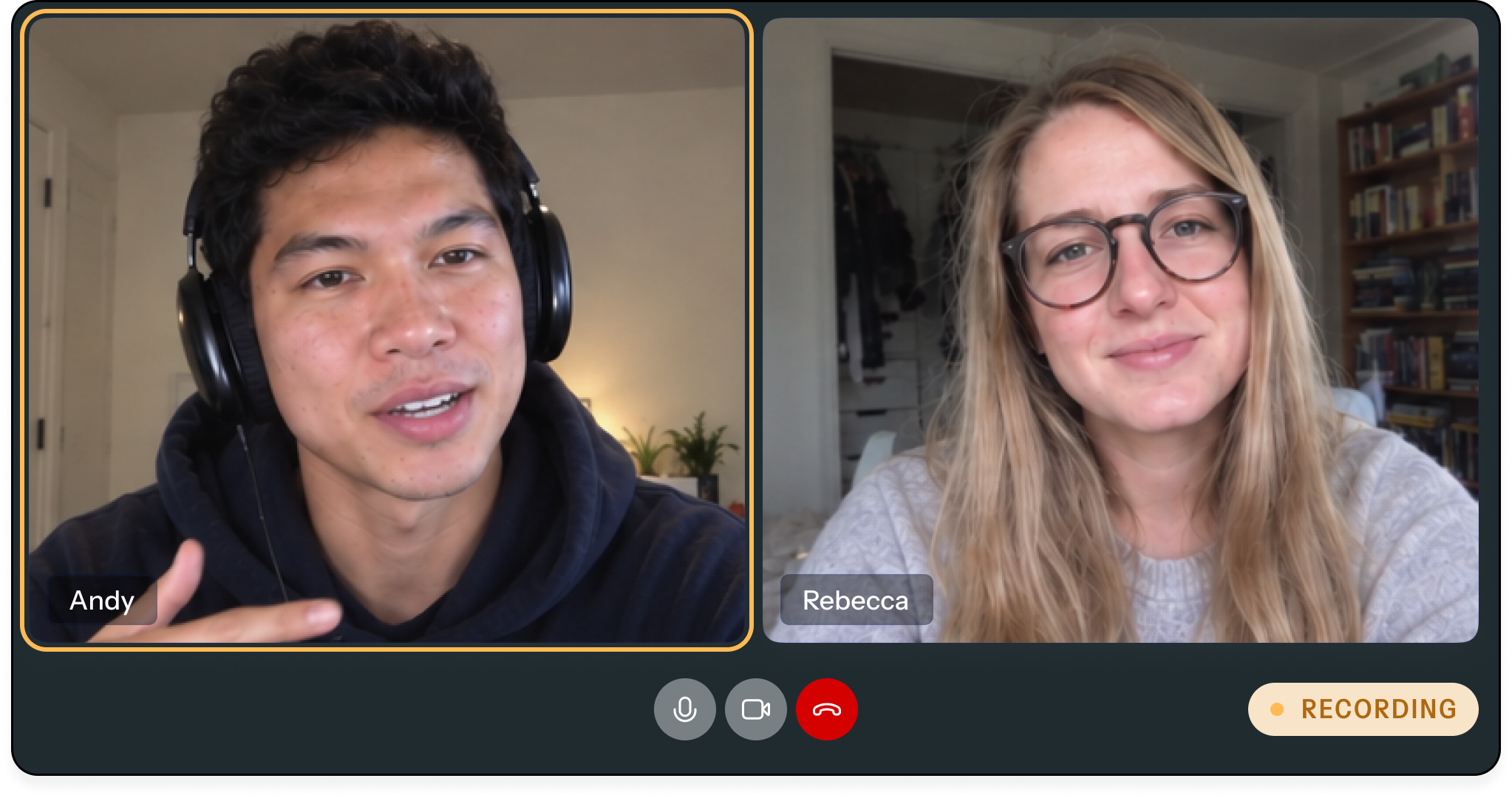
Our Trauma and Orthopaedics HST Question Bank tells you exactly how to answer real interview scenarios. But how you practise with them will determine how many marks you score. Simply reading answers off a screen won't prepare you for the intense scrutiny you'll face in the interview, and only practising with the same few colleagues limits the feedback you'll get. Medibuddy gives you unique access to Trauma and Orthopaedics HST candidates across the country, so you can learn from a variety of perspectives and hear a far wider range of feedback than your own circle could ever give you.
Study Groups
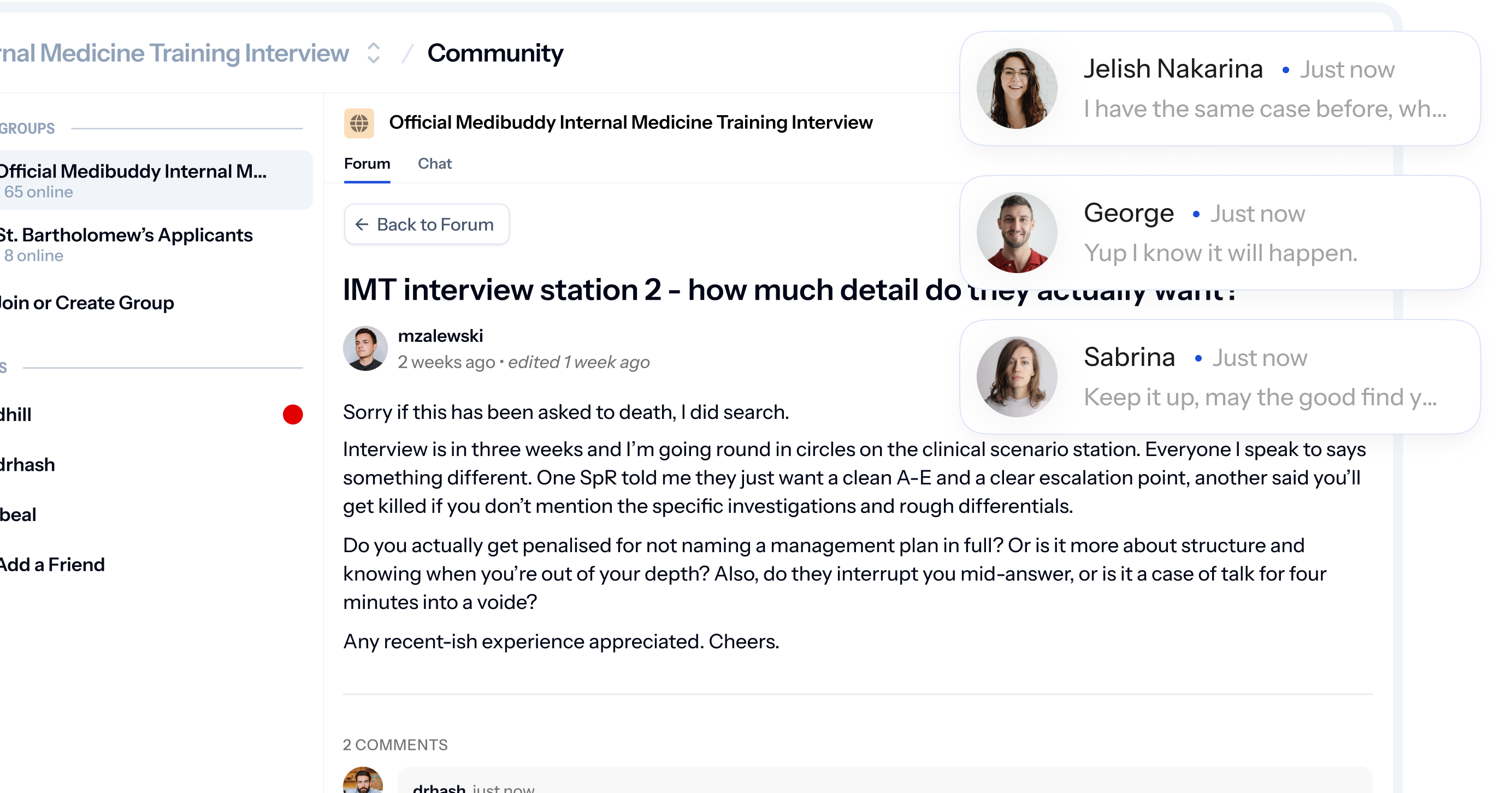
When you prepare in isolation, you're relying on your own interpretation of the interview process, which is one of the quickest ways to get found out on the day. Study Groups connect you with other doctors across the country who are also applying to Trauma and Orthopaedics HST, so you can engage and network with people preparing for the same interview as you. Everyone brings different experience from different units, meaning you won't miss out on the key bits of information that could swing the interview in your favour.
Live MocksBeta
Candidates who don't take part in mocks often struggle to adapt to the pressure of the interview. Your knowledge might be correct, but without convincing delivery the interviewers will score you poorly. The best way to improve your delivery is to take part in as many live mocks as possible, which is why we haven't put a cap on how many you can do. All you have to do is join the waiting room and we'll match you with a different Trauma and Orthopaedics HST candidate each time. Take turns as both the interviewer and candidate on real Question Bank scenarios, so you can see exactly how other candidates perform in real time while refining your own technique.
Peer FeedbackBeta
Preparing alone means you won't know how you're coming across during the interview, and preparing with the same few candidates means you'll miss opportunities to improve, which is why it's so important to get as many opinions as possible on your performance. With Medibuddy, you can record a mock and submit it for feedback from other candidates on the platform, so you receive a wider range of feedback and refine your answers with each person you practise with. Reviewing other people's mocks is just as valuable, as it shows you how strong candidates handle the same scenarios.
The interview

What to expect from the Trauma and Orthopaedics HST interview

Higher Specialist Training in Trauma and Orthopaedics is one of the most competitive surgical pathways, and strong applicants are often separated by narrow margins at interview.

The interview is five scored stations, run by the Royal College of Surgeons in Ireland, covering quality and safety, academic commitment, current issues in surgery, surgical decision making, and professionalism and probity.

Station 1

Quality and Safety in Surgical Healthcare

Audit, governance, never events and patient-safety systems: how you identify risk, respond to incidents and improve quality in a surgical unit.
Station 2

Commitment to Academic Advancement and Lifelong Learning

Your research, teaching, audit and professional development, and how you keep learning throughout a surgical career.
Station 3

Knowledge of Current Issues in Surgical Practice

The issues shaping surgery today, and your ability to discuss them in a balanced, informed way.
Station 4

Decision Making in Surgery

Clinical and operative judgement under pressure, prioritising safely and knowing when, and when not, to operate.
Station 5

Professionalism and Probity in Surgical Practice

Professional, ethical and probity dilemmas, handled safely and with integrity and reference to relevant guidance.

How the interview is scored

Each station is marked against the Royal College of Surgeons in Ireland Trauma and Orthopaedics HST selection criteria. Our model answers are structured against those criteria, so you know exactly what a strong, well-organised answer looks like at each station.
Get ready

How to prepare for the Trauma and Orthopaedics HST interview

Start with the Question Bank

Work through 68 scenarios across all five stations, each with a worked answer from a candidate who scored well in the 2026 interview. Start by reading how a strong answer is formed, then think about how you'd deliver it.

Talk the hard ones through in Study Groups

Study Groups are your biggest opportunity to network and connect with other candidates sitting the same interview as you. Everyone on the platform is in the same boat, so don't be scared to get involved and ask questions. Someone in your study group might just help you work through a scenario you've been struggling with.

Rehearse out loud in Live Mocks

Live mocks are where you begin to put everything you've learned into practice, and we know from experience that those who practise with a wide range of candidates usually do the best. Organise mocks with people from one of your study groups, or get matched with a random Trauma and Orthopaedics HST candidate, then take turns as interviewer and candidate using real scenarios until answering out loud under pressure feels normal.

Get reviewed with Peer Feedback before the day

Once you've recorded a mock, you can have other community members review it. This lets you see how you come across to other people, and gives you time to refine your delivery as you revise, rather than being caught out on the day. Reviewing other people's mocks is just as crucial, as you see how other candidates navigate the same scenarios.
Questions

Frequently asked questions

What does the Trauma and Orthopaedics HST interview involve?
Five scored stations run by the Royal College of Surgeons in Ireland: Quality and Safety in Surgical Healthcare, Commitment to Academic Advancement and Lifelong Learning, Knowledge of Current Issues in Surgical Practice, Decision Making in Surgery, and Professionalism and Probity in Surgical Practice.
How competitive is the Trauma and Orthopaedics HST interview?
Higher Specialist Training in Trauma and Orthopaedics is one of the most competitive surgical pathways, and strong candidates are frequently separated by small margins at interview, which is why a structured, well-rehearsed approach matters.
Who writes the model answers?
High-scoring candidates who sat the Trauma and Orthopaedics HST interview in 2026, so the answers reflect what came up and what scored this year.
Can I practise with other candidates?
Yes. Every Revision Platform purchase gives you the opportunity to connect with other candidates through Study Groups, Live Mocks and Peer Feedback.
How do the Live Mocks work?
All you have to do is join the waiting room, and we match you with another Trauma and Orthopaedics HST candidate. You then take turns as interviewer and candidate on real Question Bank scenarios, so you gain experience answering out loud to a real person before you ever sit in front of the panel.
What are Study Groups and how do they help?
Study Groups are community forums for doctors across the country preparing for the same Trauma and Orthopaedics HST interview. You can ask questions, share what you're struggling with, and compare how you'd approach a scenario.
Can I get feedback on my interview performance?
Yes. After you've recorded a mock, you can ask other members to review it, so you can see which part of your answer needs fine-tuning.
How do you keep the Trauma and Orthopaedics HST Question Bank up to date?
We review and update it twice a year: in April after that year's interviews, and again in the autumn when the new recruitment guidance is published, so you always practise with the current five-station format.
How long do I get access for?
Access runs for 12 months from the purchase date.

Start preparing for the Trauma and Orthopaedics HST interview

The Revision Platform gives you 68 scenarios to practise and refine with other candidates through Study Groups, Live Mocks and Peer Feedback. Ten years preparing doctors for interviews, with the questions, this year's model answers and live practice, all in one place.

Trauma and Orthopaedics HST Revision Platform • €170

Buy Now