Anaesthesiology SAT Interview Question Bank – Medibuddy Ireland
Anaesthesiology SAT • 2027 Interview

The 2027 Anaesthesiology SAT Interview Revision Platform: Question Bank, Live Practice and Mocks with Other Candidates

The Medibuddy Anaesthetics SAT Question Bank includes 52 scenarios and over 190 model-answered questions that closely mirror the real interview, each written and edited by high-scoring candidates who sat the Anaesthetics SAT interview in 2026.

However, knowing a strong answer isn't the same as delivering it well under pressure, which is why we provide:

10 years' experience preparing doctors for interviews

Users of the Medibuddy Anaesthetics SAT Revision Platform have secured some of the most competitive training posts in recent rounds. Ask around, there's a good chance the trainees in the year above you used us too.

Always up to date

Did you know the interviews change every year? That's why we review and update every Question Bank on the platform twice a year, so you know you're always practising with scenarios based on the latest selection process.

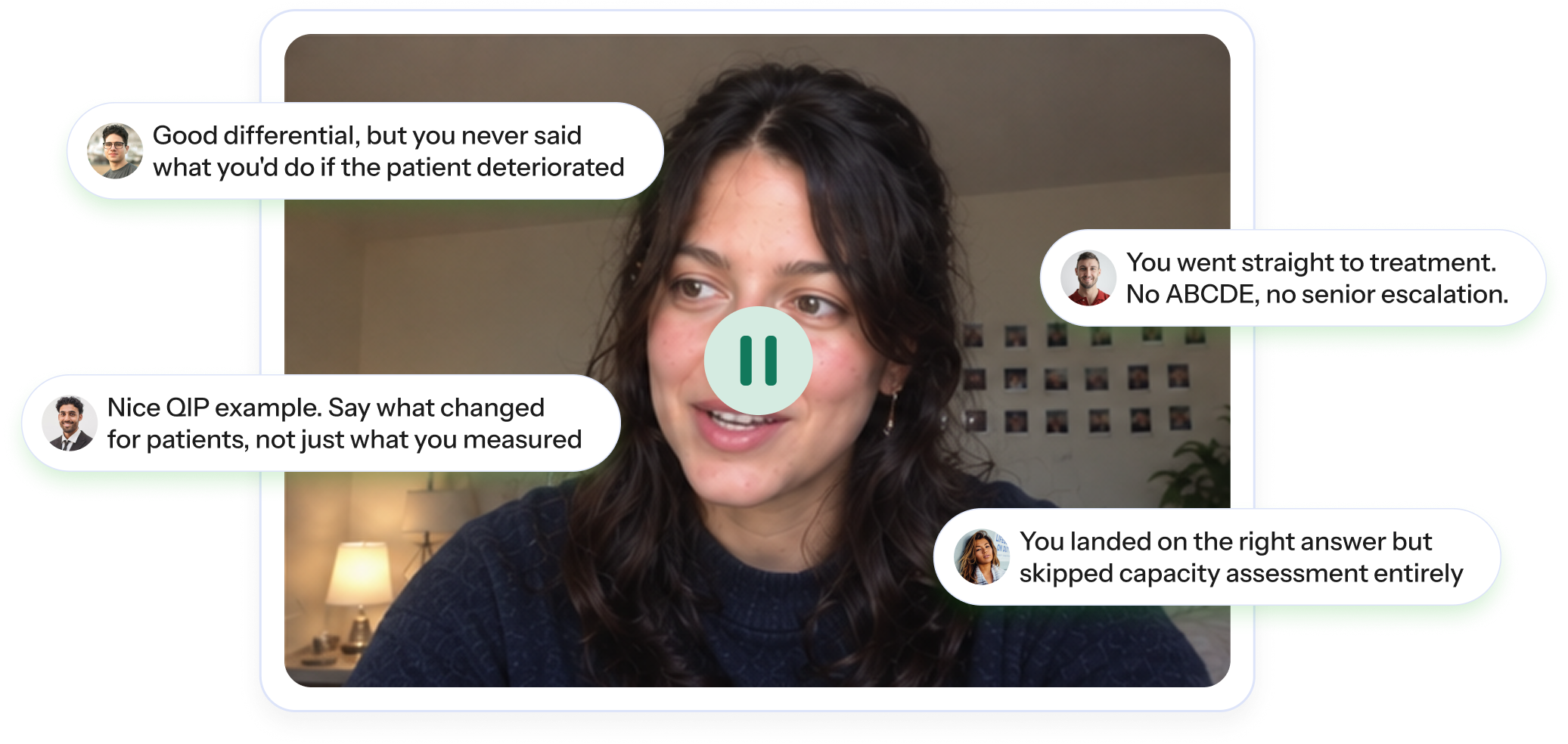
Network and practise real interview scenarios with other candidates

Question Bank

See every scenario, and how to answer it well

52 scenarios across all four teaching areas, which tell you exactly how to respond to each question.
Study Groups

Connect with candidates across the country
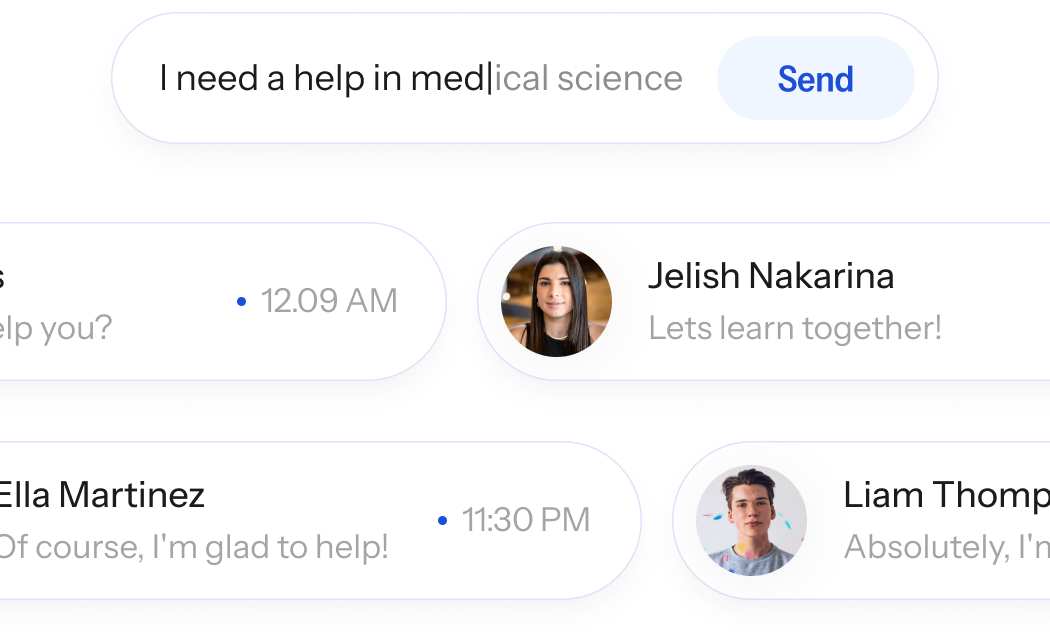
Most people only ever practise with one or two friends. Study Groups connect you with candidates right across the country sitting the same Anaesthetics SAT interview.
Live MocksBeta

Practise interview technique with different candidates
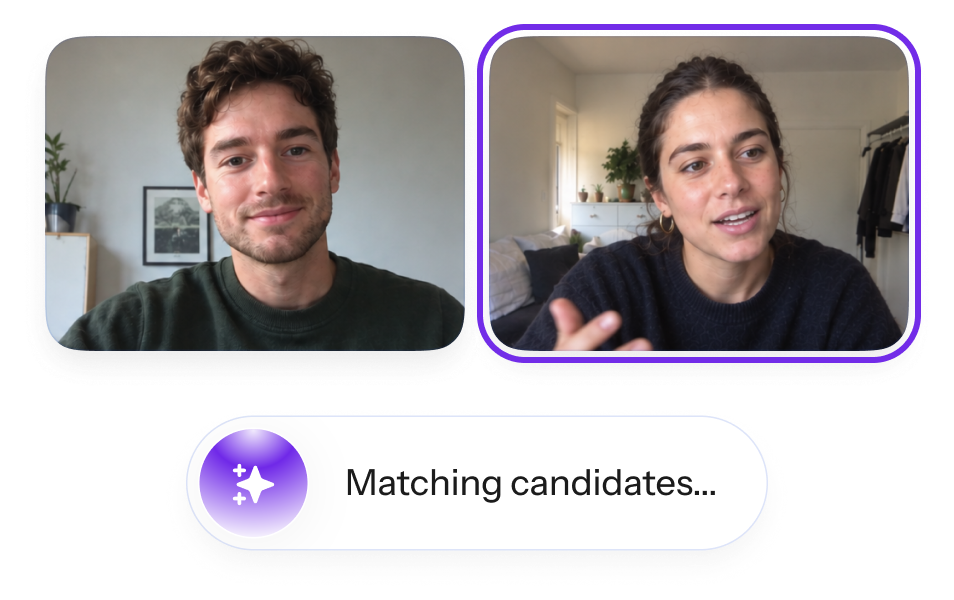
Arrange or get matched on demand with other candidates and run real scenarios out loud under interview conditions. Those who practise with the widest range of people tend to score the highest.
Peer FeedbackBeta

Reviewed by candidates across the platform
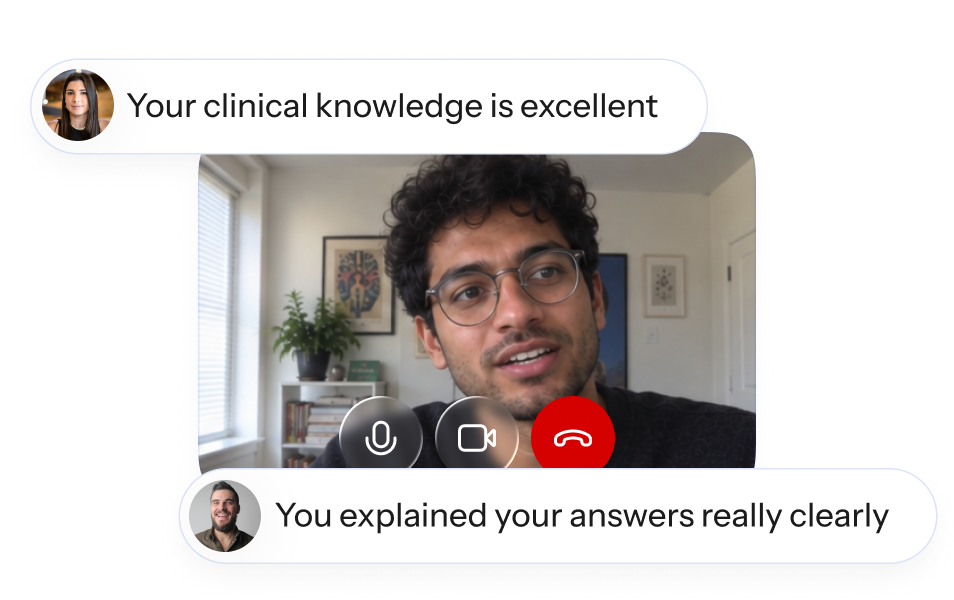
Submit your recorded mocks to candidates across the platform and get honest, varied feedback. Reviewing other people's mocks teaches you just as much.

The question bank, and other candidates to practise with, all in one platform.

Anaesthetics SAT Revision Platform • €105

Gain access to 52 scenarios across all four teaching areas, and collaborate with other candidates through Study Groups, Live Mocks and Peer Feedback.
Get instant access
What candidates say

Scored well, secured their post

A few of the candidates who prepared with us for the Anaesthetics SAT interview.

Verified candidateInterviewed 2026
"Having a structure ready for the clinical judgement and ethics questions meant I could stay calm and systematic under pressure."
Secured SAT post
Verified candidateInterviewed 2026
"Practising the suitability and research questions out loud with other candidates was the single most useful thing I did before the day."
Ranked highly
Part 1 • See the questions

The Medibuddy 2027 Anaesthetics SAT Question Bank

Selection for SAT totals 100 marks, with the interview carrying 65 of them, so every answer counts. The College publishes no fixed interview format, so the safest approach is to prepare broadly and know how to structure a strong answer whatever you're asked. That's why each of our 52 scenarios comes with a model answer, written by candidates who scored highly in the 2026 Anaesthetics SAT interview, so you know exactly how to approach every question the panel puts to you.
What's inside

What's included in the Anaesthetics SAT Question Bank

There's nothing worse than getting to the interview and being handed a question you've never prepared for. Because the College doesn't publish the interview structure, we organise the bank into four teaching areas that cover the ground selection draws on, so you can revise across all of them and not get caught out.

Clinical Judgement

Acute clinical scenarios where you assess, resuscitate and manage safely and know when to call for help, each with a worked answer.

Suitability & Commitment

Questions on your motivation for anaesthesiology and why you're suited to the specialty, with example answers that go beyond listing achievements.

Ethical Professionalism & Governance

Realistic ethical, professional and governance dilemmas, with structured model answers so you can reason through them clearly on the day.

Research, Audit & Achievements

Research, audit and quality-improvement questions, with worked answers that show how to evidence your academic contribution and its impact.
Organised into four teaching areas
The College of Anaesthesiologists of Ireland publishes no fixed interview structure, so we group the bank into four areas that cover the ground selection draws on, each anchored to Irish practice, guidelines and law.
Try it

Try an example Anaesthetics SAT question

You are a SAT 1 anaesthesiology trainee on call overnight. The recovery room nurse asks you to urgently review a 52-year-old woman who has just returned from a laparoscopic cholecystectomy under general anaesthesia. She is actively vomiting and her SpO2 has dropped to 88% on 4L nasal cannula. Other observations: HR 106 bpm, BP 138/82 mmHg, RR 26/min, GCS 13 (E3 V4 M6). She has a BMI of 38 and known gastro-oesophageal reflux disease, and was extubated in theatre ten minutes ago.

What are your immediate priorities?

Question
You arrive to find her actively vomiting with declining saturations. What are your immediate priorities?
Example answer
This is an airway emergency. The priority is to protect the airway from aspiration, restore oxygenation and escalate early. I would work through ABCDE and call for senior help at once.
  • Airway: position her left lateral and head-down to reduce further aspiration, suction the oropharynx with a rigid Yankauer, and call my anaesthesiology registrar or consultant immediately; as a SAT 1 trainee I would not manage this alone. Prepare airway equipment at the bedside: bag-valve-mask, airways, laryngoscope and video laryngoscope, a range of tubes, supraglottic devices and working suction.
  • Breathing: high-flow oxygen via a non-rebreather at 15 L/min, auscultate for aspiration, and apply continuous oximetry and waveform capnography.
  • Circulation: confirm patent IV access, attach cardiac monitoring, and have the crash trolley and antiemetics prepared.
  • Disability: track the GCS, as a falling level of consciousness raises aspiration risk and may mean the airway needs securing, and check glucose.
Question
She keeps vomiting and her GCS falls to 10. Your consultant is on the way. Do you secure a definitive airway, and how?
Example answer
A GCS of 10 with active vomiting and failing saturations means she has lost airway protection and needs a definitive airway urgently.
  • Decision: the indications here are a falling GCS, ongoing vomiting, saturations not recovering on high-flow oxygen, and high aspiration risk from obesity, GORD and recent surgery. I would confirm with the arriving consultant, but if she deteriorates first I must act.
  • Rapid sequence induction: pre-oxygenate for at least three minutes, head-up to improve FRC in this obese patient; apply cricoid pressure; induce with propofol, or ketamine if any haemodynamic concern; paralyse with succinylcholine 1.5 mg/kg, or rocuronium 1.2 mg/kg with sugammadex available; intubate with direct or video laryngoscopy; confirm with waveform capnography and auscultation, and inflate the cuff before ventilating.
  • Difficult airway: she is higher risk, so have a second-generation supraglottic airway and a surgical airway kit ready, and declare a can't-intubate-can't-oxygenate plan before induction.
Question
She is intubated and ventilated. What would suggest pulmonary aspiration has occurred?
Example answer
Aspiration of gastric contents can cause a chemical pneumonitis and later bacterial pneumonia, so I would look for it actively.
  • Clinical: witnessed vomiting then desaturation, new wheeze or reduced air entry at the right base (aspirate preferentially enters the right lower lobe), rising peak airway pressures, frothy or discoloured tracheal secretions on suctioning, and a falling P to F ratio.
  • Investigations: an arterial blood gas for oxygenation and acid-base (a P to F ratio under 300 suggests significant compromise, under 200 meets moderate ARDS); a portable chest X-ray, remembering changes may lag; a tracheal aspirate for culture; FBC and CRP now and at 24 to 48 hours; and bronchoscopy if a solid foreign body or heavy secretions are a concern.
Question
What are the principles of ventilatory management in the immediate post-aspiration period?
Example answer
The aim is to support gas exchange while limiting further lung injury.
  • Settings: lung-protective ventilation at 6 to 8 mL/kg ideal body weight, not actual weight in this obese patient; plateau pressure under 30 cmH2O; PEEP started at 5 to 8 and titrated; FiO2 titrated to SpO2 94 to 98%; and permissive hypercapnia if plateau pressures are already at the limit, unless intracranial pressure is a concern.
  • Monitoring: serial blood gases, continuous capnography, and tracking the P to F ratio, with early ICU notification as she will likely need ongoing ventilation.
  • Other: head up 30 to 45 degrees, a nasogastric tube to decompress the stomach, bronchodilators if there is bronchospasm, and antibiotics only if features of bacterial infection develop, reassessed at 48 hours.
Question
Whom do you escalate to, and how do you communicate this deterioration effectively?
Example answer
Escalation must be early, structured and documented.
  • Who: the anaesthesiology consultant on call first, informed when she first deteriorates rather than after intubation; the surgical team, as she is still their patient; and the ICU team for a bed and ongoing care, as an intubated patient should not stay in recovery without a plan. The recovery nurse in charge co-ordinates equipment and drugs.
  • How: use SBAR. Situation: a 52-year-old woman, post laparoscopic cholecystectomy, now intubated after aspiration in recovery. Background: BMI 38, GORD, extubated ten minutes earlier. Assessment: likely pulmonary aspiration, ventilated, haemodynamically stable, awaiting gas and X-ray. Recommendation: consultant attendance and an ICU bed.
  • Documentation: record the timeline, findings, the decision to intubate, drugs and doses, and who was contacted and when, and complete a clinical incident report.
Question
Once she is in ICU, what are your obligations regarding open disclosure to the patient and family?
Example answer
Open disclosure is a legal and ethical duty after a serious adverse event, under the Patient Safety (Notifiable Incidents and Open Disclosure) Act 2023 and the Medical Council guidance.
  • When: as soon as she has capacity to receive the information, likely on recovery in ICU; family may be informed earlier with her prior consent, or in the acute phase if she lacks capacity, consistent with the Assisted Decision-Making (Capacity) Act 2015.
  • How: a private meeting with the patient and, with consent, family, including the consultant and surgical team; explain in plain, honest language what happened, the vomiting, the risk to her airway, the breathing tube and the ICU transfer; apologise sincerely, which is not an admission of liability; invite questions; and document who attended and what was said.
  • Reporting: complete an incident report, let the consultant judge whether it meets the notifiable-incident threshold under the 2023 Act, and discuss it at the morbidity and mortality meeting.

That's one scenario. There are 51 more.

Anaesthetics SAT Revision Platform • €105

Includes every scenario in the Question Bank, and access to Study Groups, Live Mocks with other candidates and Peer Feedback.
Get instant access
Actively maintained

How we keep our Question Banks up to date

The Anaesthetics SAT selection process changes from year to year, and the biggest fear for any candidate is getting to interview day and realising you've revised with a question bank that's totally outdated.

That's why we review and update every Question Bank twice a year, so you know you're revising with material that's likely to come up. We do this in April after the previous year's interviews, and again in the autumn when the new recruitment guidance is published.

For 2027, this process kept the Question Bank aligned with the current SAT selection process, across clinical judgement, suitability, ethics and governance, and research and audit, so you always practise with material that reflects what selection draws on now.
Updated for 2027 Interviews
Part 2 • Practise them live

The only interview resource where you can practise live with other candidates from across the country

Our Anaesthetics SAT Question Bank tells you exactly how to answer real interview scenarios. But how you practise with them will determine how many marks you score. Simply reading answers off a screen won't prepare you for the intense scrutiny you'll face in the interview, and only practising with the same few colleagues limits the feedback you'll get. Medibuddy gives you unique access to Anaesthetics SAT candidates across the country, so you can learn from a variety of perspectives and hear a far wider range of feedback than your own circle could ever give you.
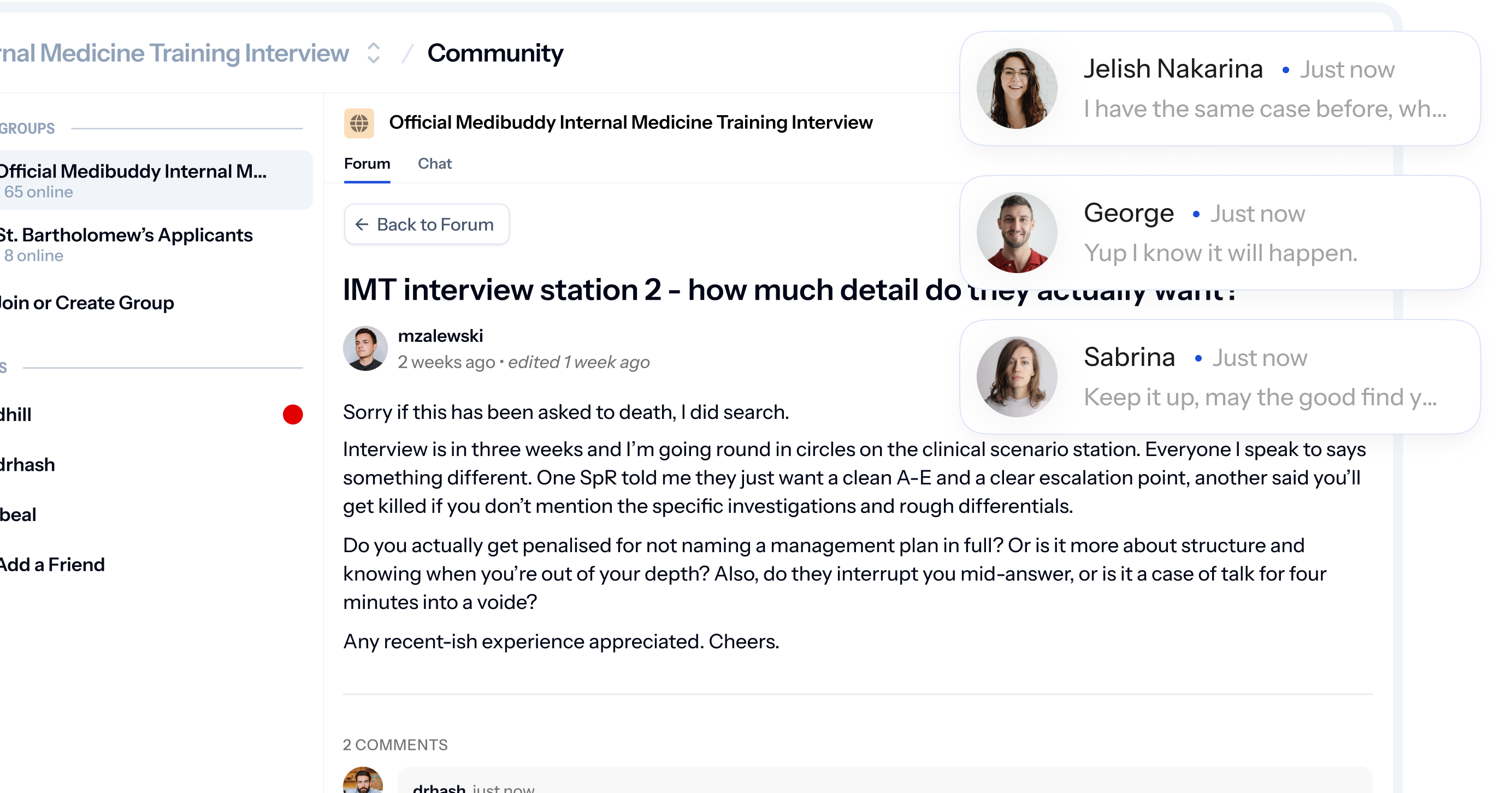
Study Groups
When you prepare in isolation, you're relying on your own interpretation of the interview process, which is one of the quickest ways to get found out on the day. Study Groups connect you with other doctors across the country who are also applying to Anaesthetics SAT, so you can engage and network with people preparing for the same interview as you. Everyone brings different experience from different hospitals, meaning you won't miss out on the key bits of information that could swing the interview in your favour.
Live MocksBeta
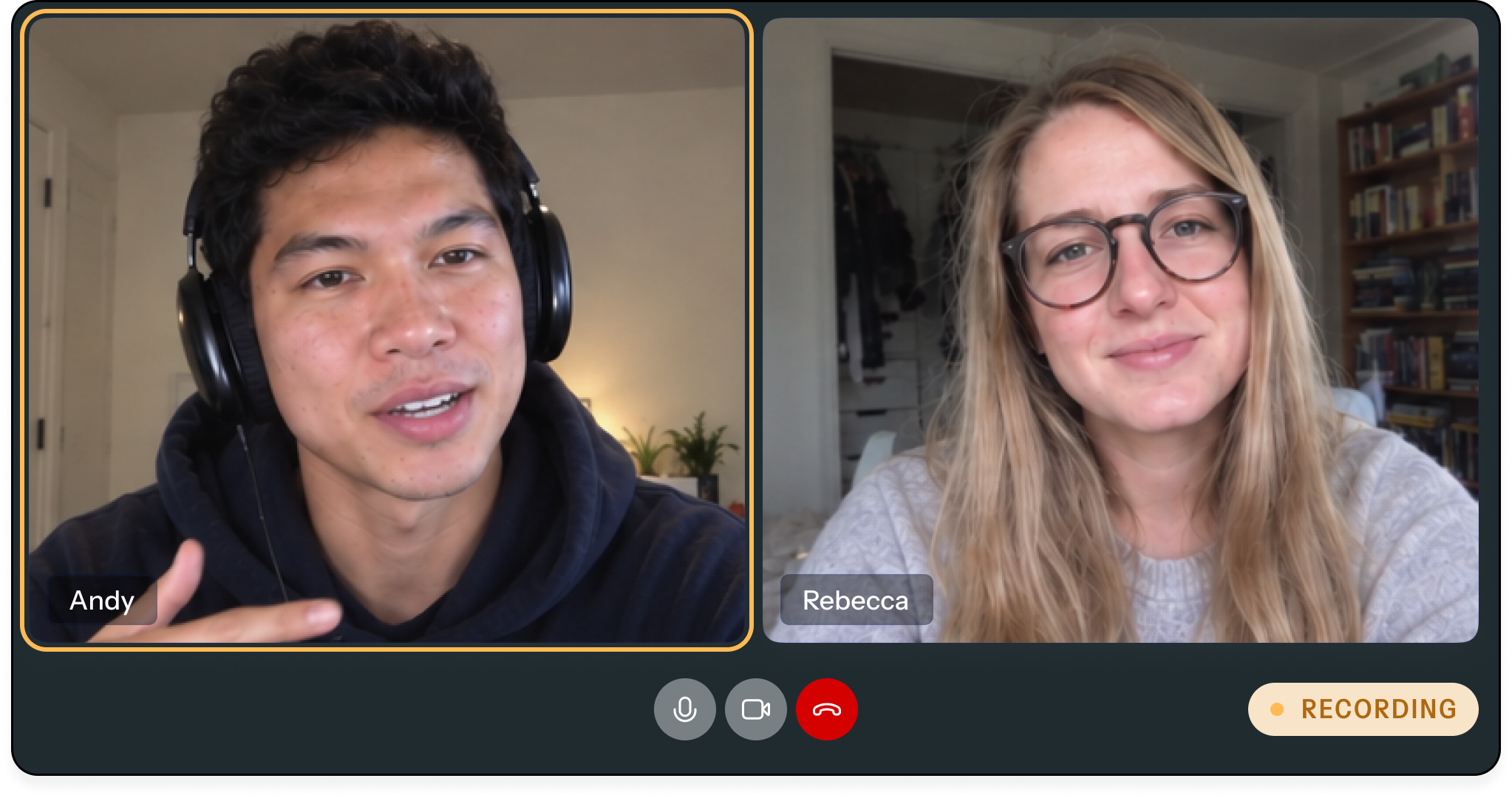
Candidates who don't take part in mocks often struggle to adapt to the pressure of the interview. Your knowledge might be correct, but without convincing delivery the interviewers will score you poorly. The best way to improve your delivery is to take part in as many live mocks as possible, which is why we haven't put a cap on how many you can do. All you have to do is join the waiting room and we'll match you with a different Anaesthetics SAT candidate each time. Take turns as both the interviewer and candidate on real Question Bank scenarios, so you can see exactly how other candidates perform in real time while refining your own technique.
Peer FeedbackBeta
Preparing alone means you won't know how you're coming across during the interview, and preparing with the same few candidates means you'll miss opportunities to improve, which is why it's so important to get as many opinions as possible on your performance. With Medibuddy, you can record a mock and submit it for feedback from other candidates on the platform, so you receive a wider range of feedback and refine your answers with each person you practise with. Reviewing other people's mocks is just as valuable, as it shows you how strong candidates handle the same scenarios.
The interview

What to expect from the Anaesthetics SAT interview

Specialist Anaesthesiology Training is a six-year run-through programme with the College of Anaesthesiologists of Ireland, and entry is competitive.

Selection totals 100 marks, split between your application (35) and the interview (65). The College publishes no fixed interview structure, so we organise our preparation around four teaching areas that cover the ground selection draws on: clinical judgement, suitability and commitment, ethical professionalism and governance, and research, audit and achievements.

Teaching area

Clinical Judgement

Acute clinical scenarios where you assess, resuscitate and manage safely, and know when and how to call for help.
Teaching area

Suitability and Commitment

Your motivation for anaesthesiology and why you're suited to the specialty, shown through your experience rather than a list of achievements.
Teaching area

Ethical Professionalism and Governance

Ethical, professional and governance dilemmas, handled safely and with reference to relevant Irish guidance and law.
Teaching area

Research, Audit and Achievements

Your research, audit and quality-improvement work, and how you evidence your academic contribution and its impact.

How selection works

Selection totals 100 marks: 35 for your application and 65 for the interview. The College does not publish a fixed interview format, so our model answers are structured to show what a strong, well-organised answer looks like across each of the four teaching areas, whatever form the questions take.
Get ready

How to prepare for the Anaesthetics SAT interview

Start with the Question Bank

Work through 52 scenarios across all four teaching areas, each with a worked answer from a candidate who scored well in the 2026 interview. Start by reading how a strong answer is formed, then think about how you'd deliver it.

Talk the hard ones through in Study Groups

Study Groups are your biggest opportunity to network and connect with other candidates sitting the same interview as you. Everyone on the platform is in the same boat, so don't be scared to get involved and ask questions. Someone in your study group might just help you work through a scenario you've been struggling with.

Rehearse out loud in Live Mocks

Live mocks are where you begin to put everything you've learned into practice, and we know from experience that those who practise with a wide range of candidates usually do the best. Organise mocks with people from one of your study groups, or get matched with a random Anaesthetics SAT candidate, then take turns as interviewer and candidate using real scenarios until answering out loud under pressure feels normal.

Get reviewed with Peer Feedback before the day

Once you've recorded a mock, you can have other community members review it. This lets you see how you come across to other people, and gives you time to refine your delivery as you revise, rather than being caught out on the day. Reviewing other people's mocks is just as crucial, as you see how other candidates navigate the same scenarios.
Questions

Frequently asked questions

What does the Anaesthetics SAT interview involve?
It is selection for entry to Specialist Anaesthesiology Training (SAT 1) with the College of Anaesthesiologists of Ireland. Selection totals 100 marks: 35 for your application and 65 for the interview. The College publishes no fixed interview structure, so we organise the bank into four teaching areas: clinical judgement, suitability and commitment, ethical professionalism and governance, and research, audit and achievements.
How competitive is the Anaesthetics SAT interview?
SAT is a sought-after six-year run-through programme and entry is competitive. The interview carries 65 of the 100 selection marks, so how well you prepare for it has a real bearing on the outcome.
Who writes the model answers?
High-scoring candidates who sat the Anaesthetics SAT interview in 2026, so the answers reflect what came up and what scored this year.
Can I practise with other candidates?
Yes. Every Revision Platform purchase gives you the opportunity to connect with other candidates through Study Groups, Live Mocks and Peer Feedback.
How do the Live Mocks work?
All you have to do is join the waiting room, and we match you with another Anaesthetics SAT candidate. You then take turns as interviewer and candidate on real Question Bank scenarios, so you gain experience answering out loud to a real person before you ever sit in front of the panel.
What are Study Groups and how do they help?
Study Groups are community forums for doctors across the country preparing for the same Anaesthetics SAT interview. You can ask questions, share what you're struggling with, and compare how you'd approach a scenario.
Can I get feedback on my interview performance?
Yes. After you've recorded a mock, you can ask other members to review it, so you can see which part of your answer needs fine-tuning.
How do you keep the Anaesthetics SAT Question Bank up to date?
We review and update it twice a year: in April after that year's interviews, and again in the autumn when the new recruitment guidance is published, so you always practise with material that reflects the current selection process.
How long do I get access for?
Access runs for 12 months from the purchase date.

Start preparing for the Anaesthetics SAT interview

The Revision Platform gives you 52 scenarios to practise and refine with other candidates through Study Groups, Live Mocks and Peer Feedback. Ten years preparing doctors for interviews, with the questions, this year's model answers and live practice, all in one place.

Anaesthetics SAT Revision Platform • €105

Buy Now