Urology HST • Ireland

The 2027 Urology HST Interview Revision Platform: Question Bank, Live Practice and Mocks with Other Candidates

The Medibuddy Urology HST Question Bank includes 69 scenarios and over 280 questions built around the real interview, across all five scored stations, each with a model answer written to the RCSI selection criteria and Irish practice.

However, knowing a strong answer isn't the same as delivering it well under pressure, which is why we provide:

Preparing doctors for interviews for 10 years

Medibuddy has spent 10 years helping doctors prepare for competitive specialty interviews. The Urology HST Question Bank brings that experience to the RCSI Higher Surgical Training interview in Urology.

Built for the current interview

Did you know the interviews change from year to year? For the 2027 intake, RCSI raised Decision making in surgery to 120 marks on the Pathway and made it a mandatory pass station. This bank is new for the 2027 interviews and built around that current structure.

Network and practise real interview scenarios with other candidates

Question Bank

See every scenario, and how to answer it well

69 scenarios across all five scored stations, each with a model answer that tells you exactly how to respond to every question.
Study Groups

Connect with candidates across the country
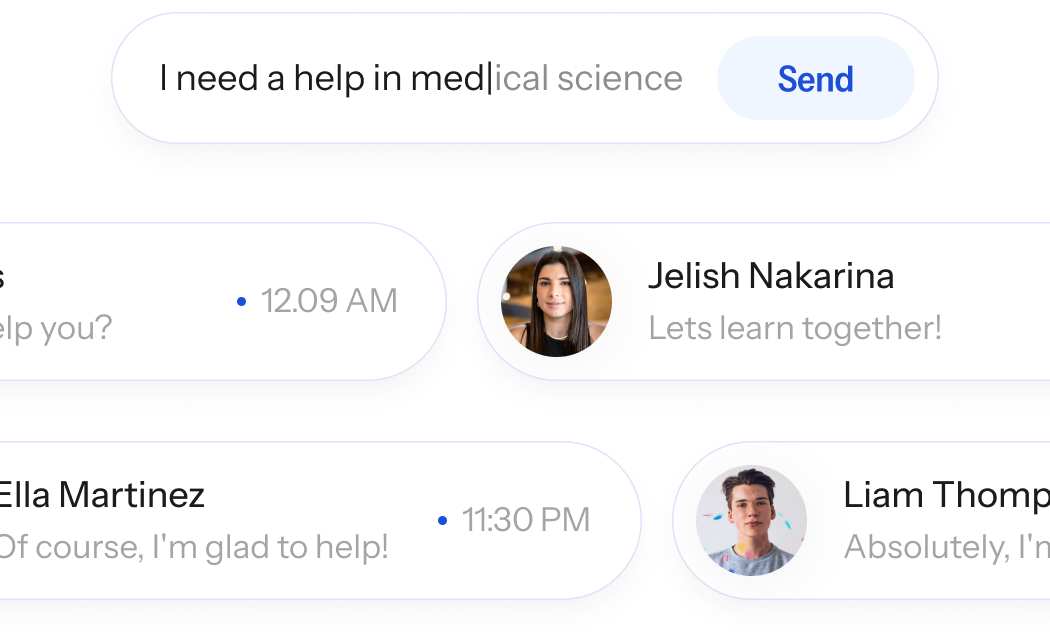
Most people only ever practise with one or two friends. Study Groups connect you with candidates right across the country sitting the same Urology HST interview.
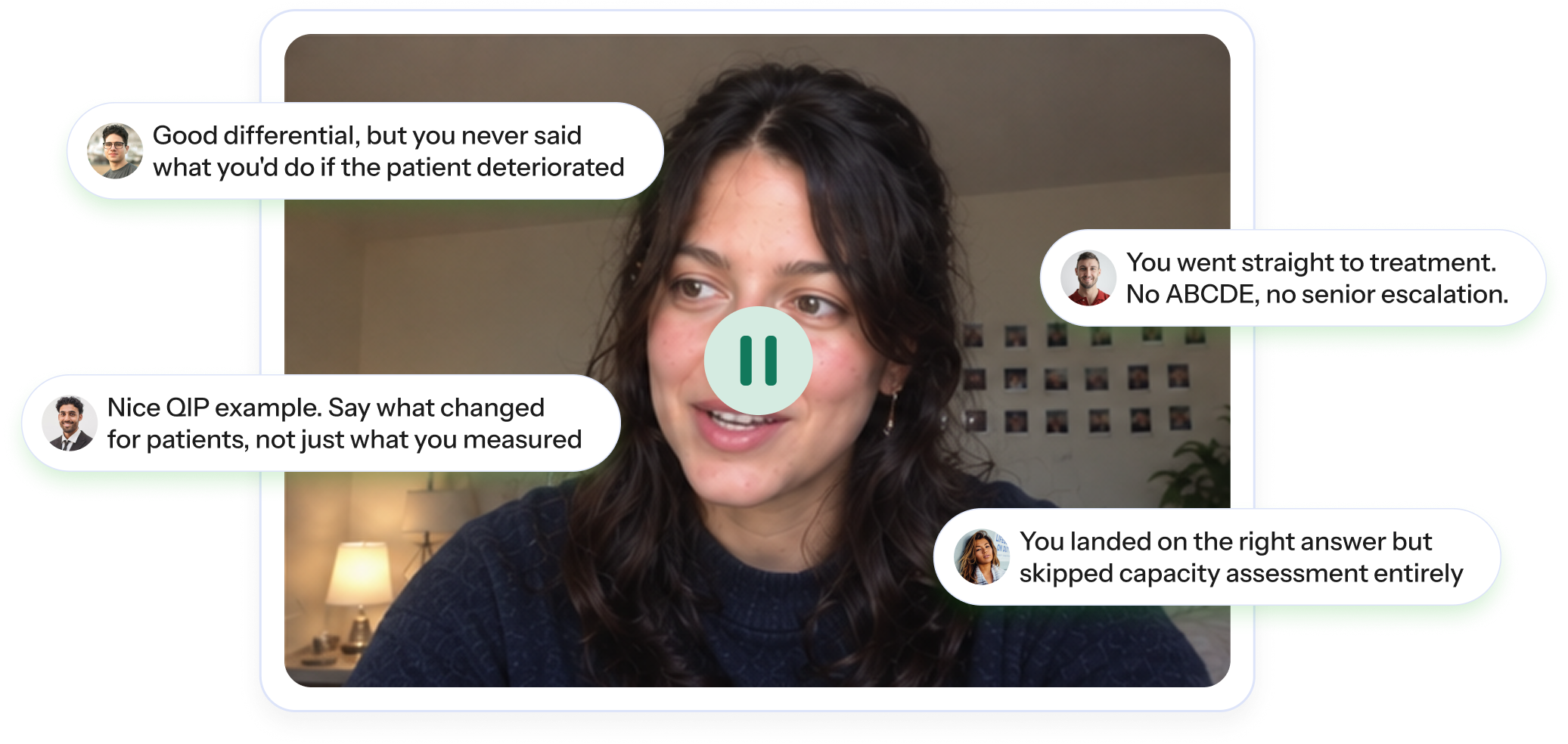
Live MocksBeta

Practise interview technique with different candidates
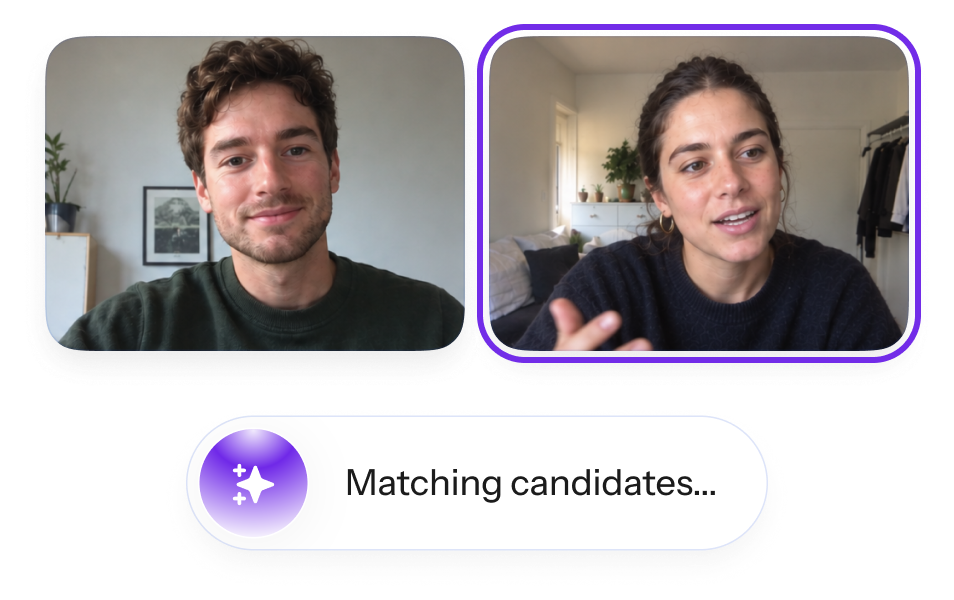
Arrange or get matched on demand with other candidates and run real scenarios out loud under interview conditions. Those who practise with the widest range of people tend to score the highest.
Peer FeedbackBeta

Reviewed by candidates across the platform

Submit your recorded mocks to candidates across the platform and get honest, varied feedback. Reviewing other people's mocks teaches you just as much.

The question bank, and other candidates to practise with, all in one platform.

Urology HST Revision Platform • €170

Gain access to 69 scenarios and over 280 model-answered questions across all five scored stations, and collaborate with other candidates through Study Groups, Live Mocks and Peer Feedback.
Get instant access
Part 1 • See the questions

The Medibuddy Urology HST Question Bank

The interview is marked station by station, with each panel member scoring you independently, so every point has to land, and knowing how to structure each answer is essential. That's why each of our 69 scenarios comes with a model answer, written to the RCSI selection criteria and Irish practice, so you know exactly how to approach every question the panel throws your way.
What's inside

What's included in the Urology HST Question Bank

There's nothing worse than getting to the interview and being handed a scenario you've never seen before. The panel scores you across five stations, from quality and safety to decision making in surgery, so the safest approach is to revise across all of them. We provide scenarios for every station, covering the common presentations and the less common ones, so you don't get caught out.

Quality and safety in surgical healthcare

12 scenarios and 42 questions. Short urology scenarios on patient safety and governance: the WHO Surgical Safety Checklist and laterality checks, forgotten ureteric stents, retained swabs and guidewires, sepsis after prostate biopsy, catheter harm, delays on rapid access pathways, and NIMS reporting and open disclosure under the Patient Safety Act 2023.

Commitment to academic advancement and lifelong learning

12 scenarios and 36 questions. Your own research, audit and teaching, critical appraisal and research governance, illustrated with urology examples, with model answers that show how to present your portfolio with confidence.

Knowledge of current issues relevant to surgical practice

14 scenarios and 47 questions. Irish urology service knowledge: NTPF waiting lists, rapid access prostate clinics in the eight cancer centres, prostate cancer screening, robotic surgery, the National Kidney Transplant Service, the 2019 urology model of care, paediatric urology, workforce and surgical hubs.

Decision making in surgery

17 scenarios and 117 questions. Clinical scenarios where you are the urology registrar on call: assess, prioritise, decide, consent and escalate to your consultant. Covers testicular torsion, the obstructed infected kidney, renal colic, acute and high-pressure chronic retention, clot retention, renal and urethral trauma, Fournier's gangrene, priapism, post-TURP complications and urgent outpatient decisions.

Professionalism and probity in surgical practice

14 scenarios and 46 questions. Scenario-led questions on honesty and integrity: delegated consent, intimate examinations and chaperones under the Medical Council Guide (9th edition), the HSE National Consent Policy, the Assisted Decision-Making (Capacity) Act 2015, open disclosure, and probity in public and private practice.
Reflecting how Urology HST is really assessed
Our scenarios and model answers are written to the current RCSI interview structure, across all five scored stations.
Try it

Try an example Urology HST question

You are the urology registrar on call. The Emergency Department asks you to review a 15-year-old boy with four hours of sudden, severe left testicular pain that woke him from sleep. He has vomited twice. His left testis is high-riding, lies horizontally and is exquisitely tender, and the left cremasteric reflex is absent. The right testis lies normally. His parents are with him. Your consultant is at home.

How would you approach this?

Question
How would you assess this boy?
Example answer
Sudden severe pain, vomiting and a high-riding testis with an absent cremasteric reflex make testicular torsion the working diagnosis until surgery proves otherwise.
  • History: exact time of onset, which sets the urgency; previous self-limiting episodes, suggesting intermittent torsion; trauma, dysuria, discharge or sexual activity; last food and drink, and allergies.
  • Examination: observations, and analgesia early.
  • Both testes: lie, position, swelling, tenderness and the cremasteric reflex.
  • A tender upper-pole nodule or blue dot sign, suggesting torsion of the appendix testis.
  • Hernial orifices and abdomen.
  • Differential diagnosis: testicular torsion; torsion of the appendix testis; epididymo-orchitis; incarcerated inguinal hernia, trauma or tumour.
  • Risk scoring: a TWIST score of 5 or more is high risk and supports going straight to theatre.
Question
Would you request a scrotal ultrasound before theatre?
Example answer
No. With this level of clinical suspicion, ultrasound only delays exploration: torsion is a clinical diagnosis.
  • Why not: every hour of ischaemia lowers the chance of saving the testis.
  • Doppler ultrasound is operator-dependent and often not immediately available out of hours.
  • Preserved flow does not exclude torsion: partial or intermittent torsion can still show flow.
  • When ultrasound helps: low or intermediate suspicion, such as a gradual history or a likely torsion of the appendix testis.
  • Only if it is available at once and does not delay theatre.
  • Features of torsion: absent or reduced intratesticular flow and the whirlpool sign of the twisted cord.
  • Pre-operative tests: urinalysis; FBC, urea and electrolytes and group and save, without holding theatre for the results.
Question
How would you get him to theatre?
Example answer
The decision is emergency scrotal exploration, and the preparation should run in parallel, not in sequence.
  • Escalation and theatre: call the consultant and agree the plan.
  • Book the emergency theatre and contact the anaesthetist at once; this case takes priority.
  • Keep him fasted, with IV fluids and analgesia.
  • Consent: at 15 he cannot consent alone, as section 23 of the Non-Fatal Offences Against the Person Act 1997 applies from 16.
  • Take consent from a parent, explain the operation to him and seek his assent.
  • Cover exploration, detorsion, fixation of both testes, possible orchidectomy, bleeding, infection, and later atrophy.
  • Temporising: manual detorsion, rotating the testis outwards, can be tried with analgesia if theatre is delayed; pain relief after manual detorsion does not remove the need for exploration and fixation.
Question
At exploration the left testis is twisted through 720 degrees and is dusky after detorsion. What do you do next?
Example answer
Viability is judged after warming, not at first sight, and any decision to remove the testis is made with the consultant.
  • Assessment: wrap the testis in warm saline-soaked swabs for at least 10 minutes.
  • Look for return of a pink colour.
  • If doubtful, incise the tunica albuginea: fresh bleeding within 10 minutes suggests viability (Arda grading).
  • If viable: fix it with non-absorbable sutures at three points, or place it in a dartos pouch; fix the right testis under the same anaesthetic, because the bell-clapper anomaly is usually bilateral.
  • If borderline: discuss with the consultant; a tunica albuginea incision with a tunica vaginalis flap can relieve compartment pressure; a borderline testis is often preserved, accepting a risk of later atrophy, with follow-up in clinic.
Question
Despite warming, the testis stays black and does not bleed when the tunica albuginea is incised. How do you proceed?
Example answer
A testis that does not bleed after warming and incision is non-viable and should be removed, with fixation of the other side.
  • Intra-operative: confirm the decision with the consultant.
  • Left orchidectomy: transfix and ligate the spermatic cord.
  • Send the testis for histology.
  • Fix the right testis under the same anaesthetic.
  • Careful haemostasis and closure in layers.
  • Post-operative: analgesia, and discharge once comfortable; record the findings fully in the operation note, and tell the boy and his parents what was found and done; clinic follow-up to check the wound and the remaining testis; offer a testicular prosthesis later, usually once he has finished growing; hormone function and fertility are usually normal with one healthy testis.
Question
If he had presented 30 hours after the onset of pain, would that change your management?
Example answer
No. He should still be explored urgently, although the chance of saving the testis is much lower.
  • Time and salvage: salvage is highest when the testis is detorted within the first few hours, and falls steeply as ischaemia continues.
  • Duration is not the only factor: the degree of twist matters, and some testes survive long histories.
  • No fixed time cut-off should be used to decide against exploration.
  • Why still explore: to confirm the diagnosis and exclude other causes; to remove a necrotic testis, which otherwise causes ongoing pain and can become infected; to fix the other testis, which is at risk of future torsion.
  • Practical points: consent should cover a high likelihood of orchidectomy; do not delay for an ultrasound in the hope that it rules torsion out.
Question
Suppose instead he had a 24-hour history of gradually worsening upper-pole pain, with a tender nodule and a blue dot sign. How would you manage him?
Example answer
These features suggest torsion of the appendix testis, which can be managed without surgery if the diagnosis is secure.
  • Assessment: tenderness confined to the upper pole, with a normally lying testis and a present cremasteric reflex; a blue dot sign is highly suggestive; ultrasound is useful here to confirm normal testicular flow and show the twisted appendage.
  • If the diagnosis is secure: analgesia, rest and scrotal support; explain that the pain usually settles within one to two weeks, and safety-net for any change; clinic review if symptoms persist.
  • Explore if testicular torsion cannot be excluded clinically or on ultrasound, or if the pain is severe or not settling.
  • At exploration, excise the twisted appendage; the testis does not need fixation.

That's one scenario. There are 68 more.

Urology HST Revision Platform • €170

Includes every scenario in the Question Bank, and access to Study Groups, Live Mocks with other candidates and Peer Feedback.
Get instant access
New for 2027

Built around the current interview structure

The Urology HST interview changes from year to year, and the biggest fear for any candidate is getting to interview day and realising you've revised with a question bank that doesn't match the format.

That's why this Question Bank is new for the 2027 interviews, built from the start around the current published RCSI interview structure and anchored to Irish practice, guidelines and law.

Our scenarios and model answers are aligned with the current interview structure, across all five scored stations, so you practise with the format the panel is using now.
New for 2027 interviews
Part 2 • Practise them live

The only interview resource where you can practise live with other candidates from across the country

Our Urology HST Question Bank tells you exactly how to answer real interview scenarios. But how you practise with them will determine how many marks you score. Simply reading answers off a screen won't prepare you for the intense scrutiny you'll face in the interview. And only practising with the same few colleagues or friends limits the amount of feedback you'll get. Medibuddy gives you unique access to Urology HST candidates across the country, so you can learn from a variety of perspectives and hear a far wider range of feedback than your own circle could ever give you.
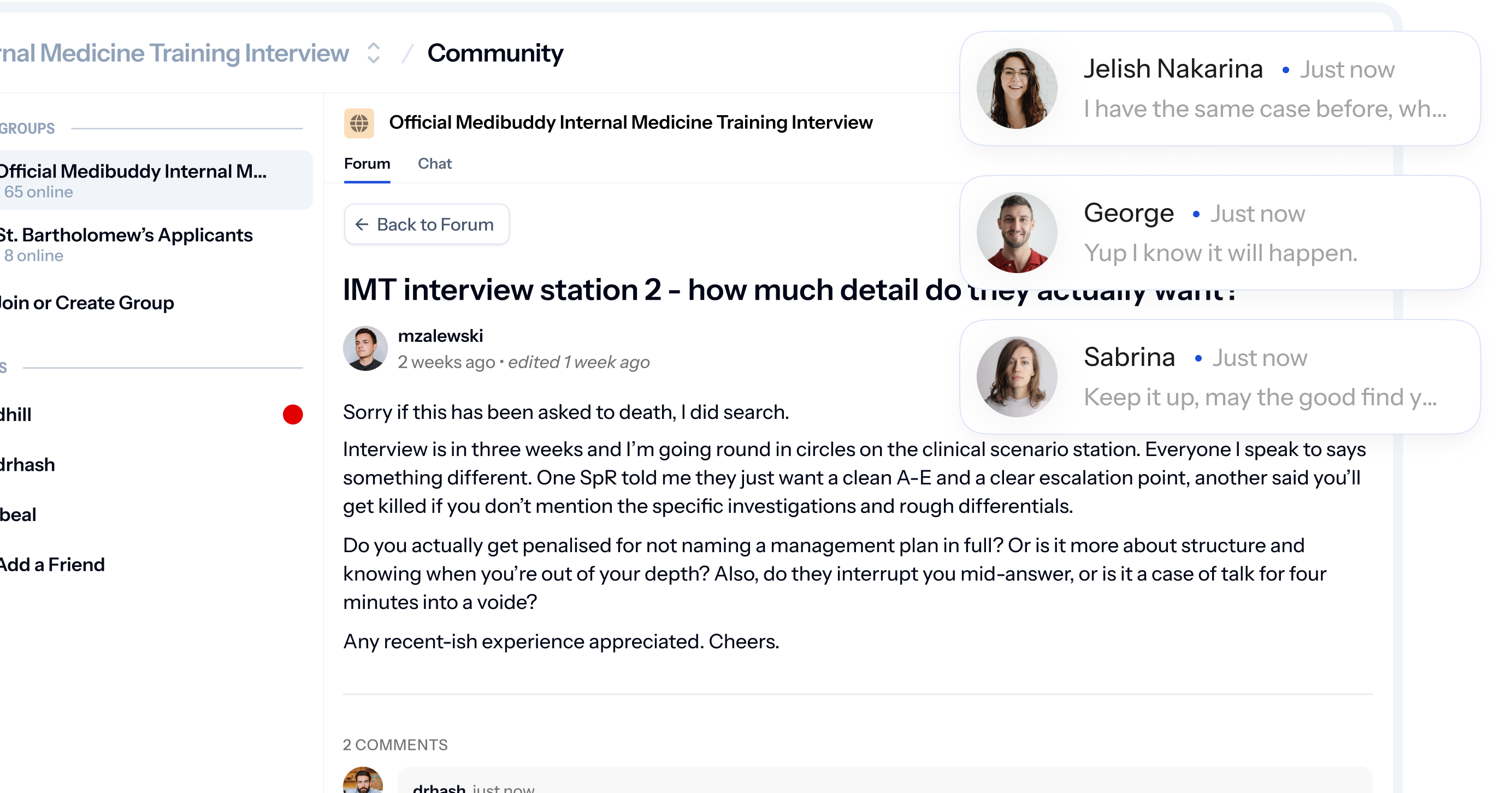
Study Groups
When you prepare in isolation, you're relying on your own interpretation of the interview process, which is one of the quickest ways to get found out on the day. Study Groups connect you with other doctors across the country who are also applying to Urology HST, so you can engage and network with people preparing for the same interview as you. Everyone brings different experience from different hospitals, meaning you won't ever miss out on the key bits of information that could swing the interview in your favour.
Live MocksBeta
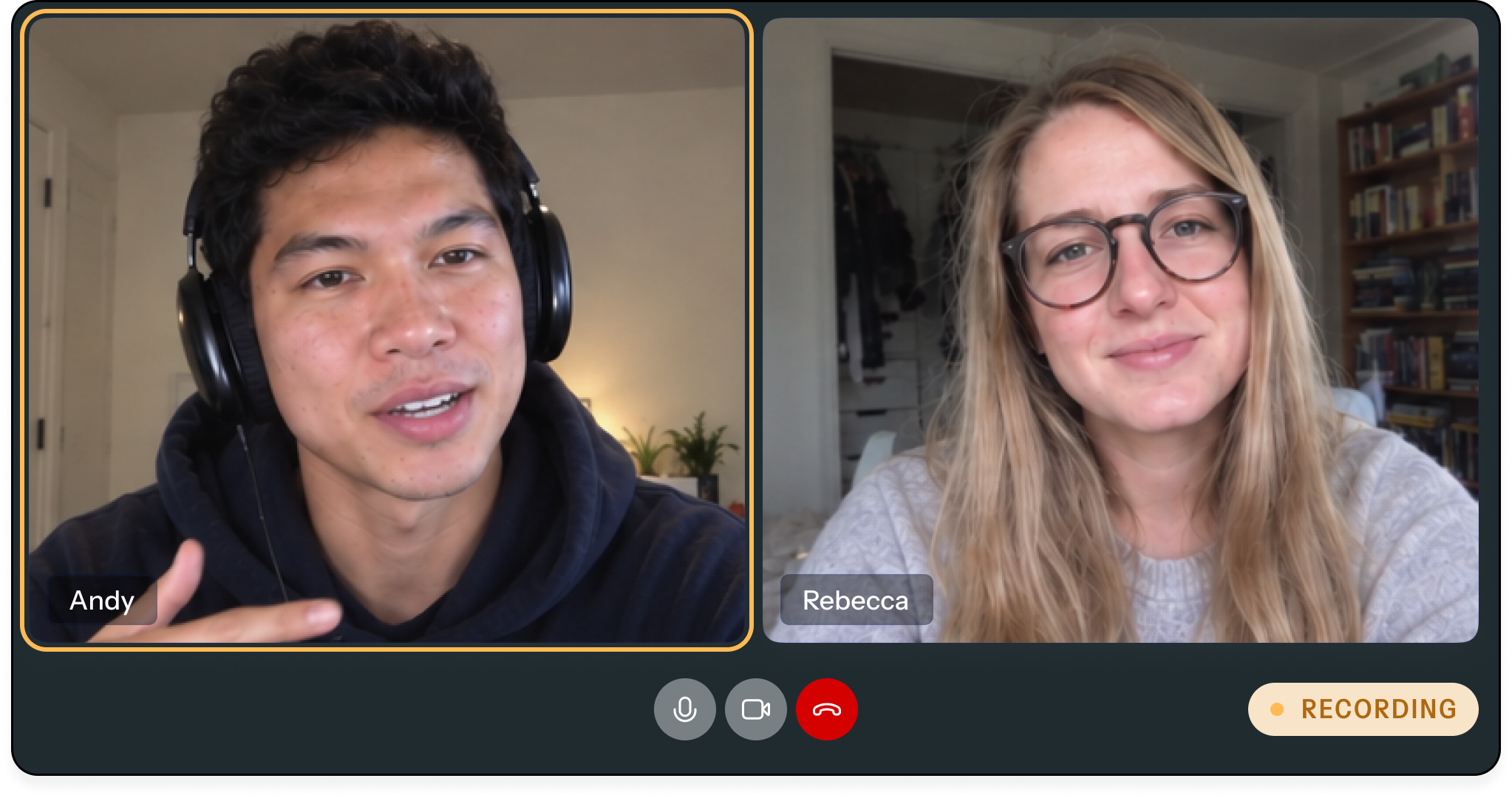
Candidates who don't take part in mocks often struggle to adapt to the pressure of the interview. Your knowledge might be correct, but without convincing delivery the interviewers will score you poorly. The best way to improve your delivery is to take part in as many live mocks as possible, which is why we haven't put a cap on how many you can do. We also know how difficult it can be to organise mocks with other people, so all you have to do is join the waiting room and we'll match you with a different Urology HST candidate each time. Take turns as both the interviewer and candidate on real Question Bank scenarios, so you can see exactly how other candidates perform in real time, while refining your own interview technique.
Peer FeedbackBeta
Preparing alone means you won't know how you're coming across during the interview. And preparing with the same few candidates means you'll miss opportunities to improve, which is why it's so important to get as many opinions as possible on your performance. With Medibuddy, you can record a mock and submit it for feedback from other candidates on the platform, so you receive a wider range of feedback and refine your answers with each person you practise with. Reviewing other people's mocks is just as valuable, as it shows you how strong candidates handle the same scenarios, which is one of the fastest ways to improve.
The interview

What to expect from the Urology HST interview

Higher Surgical Training in Urology is run by RCSI through the National Surgical Training Programme: a six-year Specialist Registrar programme that follows Core Surgical Training, with trainees rotating through the major academic urology units. RCSI gives an indicative appointable range of 6 to 7 Urology posts for 2027. Interviews run in the week commencing 15 March 2027, with Urology provisionally listed for Wednesday 24 March 2027, subject to confirmation, and training starts on 12 July 2027.

Station

Quality and safety in surgical healthcare

Worth 100 marks on the Pathway and 80 on the Equivalent Standards Route (ESR). Patient safety, governance and quality improvement in urology practice. RCSI does not publish the format, so be ready to work through a short scenario, say what you would do, and explain how the team and the service should learn from it.
Station

Commitment to academic advancement and lifelong learning

Worth 40 marks on the Pathway and 80 on the ESR. Expect questions on your own research, audit and teaching, and on critical appraisal. Pathway candidates also carry a separate 40-mark academic score assessed before interview.
Station

Knowledge of current issues relevant to surgical practice

Worth 100 marks on the Pathway and 80 on the ESR. The panel tests your knowledge of the Irish health service and urology within it. In September 2026 adult urology had 11,550 people on the NTPF inpatient and day case list, the fourth-largest adult list, so be ready to discuss access, cancer pathways, transplantation and workforce.
Station

Decision making in surgery

Worth 120 marks on the Pathway and 80 on the ESR, and a mandatory pass station: you need at least 60 per cent, and failing it makes you not appointable whatever your overall score. Both the higher weighting and the pass rule are new for 2027. As the on-call urology registrar, show a safe, structured approach and clear escalation to your consultant.
Station

Professionalism and probity in surgical practice

Worth 100 marks on the Pathway and 80 on the ESR. Probity means honesty and integrity, not only conduct. Show that you know the Medical Council Guide, including its guidance on intimate examinations and chaperones, the HSE National Consent Policy and the Assisted Decision-Making (Capacity) Act 2015, and that you would act on them under pressure.

How the interview is scored

Two or three panel members score each station out of 100 independently, and the average is weighted to the station marks. On the Pathway the interview is worth 460 marks (100, 40, 100, 120 and 100), and on the ESR each station is worth 80. You need at least 60 per cent of the interview overall, and at least 60 per cent in Decision making in surgery. Our model answers are structured against these stations, so you know what a strong, well-organised answer looks like in each one.
Get ready

How to prepare for the Urology HST interview

Start with the Question Bank

Work through 69 scenarios across all five scored stations, each with a model answer. Start by reading how a strong answer is formed, then think about how you'd deliver it.

Talk the hard ones through in Study Groups

Study Groups are your biggest opportunity to network and connect with other candidates sitting the same interview as you. Everyone on the platform is in the same boat, so don't be scared to get involved and ask questions. Someone in your study group might just help you work through a scenario you've been struggling with.

Rehearse out loud in Live Mocks

Live mocks are where you begin to put everything you've learned into practice, and we know from experience that those who practise with a wide range of candidates usually do the best. Organise mocks with people from one of your study groups, or get matched with a random Urology HST candidate, then take turns as interviewer and candidate using real scenarios until answering out loud under pressure feels normal.

Get reviewed with Peer Feedback before the day

Once you've recorded a mock, you can have other community members review it. This lets you see how you come across to other people, and gives you time to refine your delivery as you revise, rather than being caught out on the day. Reviewing other people's mocks is just as crucial, as you see how other candidates navigate the same scenarios.
Questions

Frequently asked questions

What does the Urology HST interview involve?
Five scored stations, each marked independently by two or three panel members: Quality and safety in surgical healthcare (100 marks on the Pathway), Commitment to academic advancement and lifelong learning (40), Knowledge of current issues relevant to surgical practice (100), Decision making in surgery (120) and Professionalism and probity in surgical practice (100). On the ESR each station is worth 80. Decision making in surgery is a mandatory pass station at 60 per cent. Our scenarios and model answers cover all five stations.
How competitive is the Urology HST interview?
Highly competitive. RCSI's indicative appointable range for Urology in 2027 is 6 to 7 posts, and from 2027 you must pass Decision making in surgery as well as reach 60 per cent of the interview overall, which is why a structured, well-rehearsed approach matters.
Who writes the model answers?
Written by our team of medical writers and reviewed against the current RCSI selection criteria and Irish guidance.
Can I practise with other candidates?
Yes. Every Revision Platform purchase gives you the opportunity to connect with other candidates through Study Groups, Live Mocks and Peer Feedback.
How do the Live Mocks work?
All you have to do is join the waiting room, and we match you with another Urology HST candidate. You then take turns as interviewer and candidate on real Question Bank scenarios, so you gain experience answering out loud to a real person before you ever sit in front of the panel.
What are Study Groups and how do they help?
Study Groups are community forums for doctors across the country preparing for the same Urology HST interview. You can ask questions, share what you're struggling with, and compare how you'd approach a scenario.
Can I get feedback on my interview performance?
Yes. After you've recorded a mock, you can ask other members to review it, so you can see which part of your answer needs fine-tuning.
How long do I get access for?
Access runs for 12 months from the purchase date.

Start preparing for the Urology HST interview

The Revision Platform gives you 69 scenarios and over 280 model-answered questions to practise and refine with other candidates through Study Groups, Live Mocks and Peer Feedback.

Urology HST Revision Platform • €170

Buy Now