


 Close
However, knowing a strong answer isn't the same as delivering it well under pressure, which is why we provide:
- Study Groups with candidates across the country
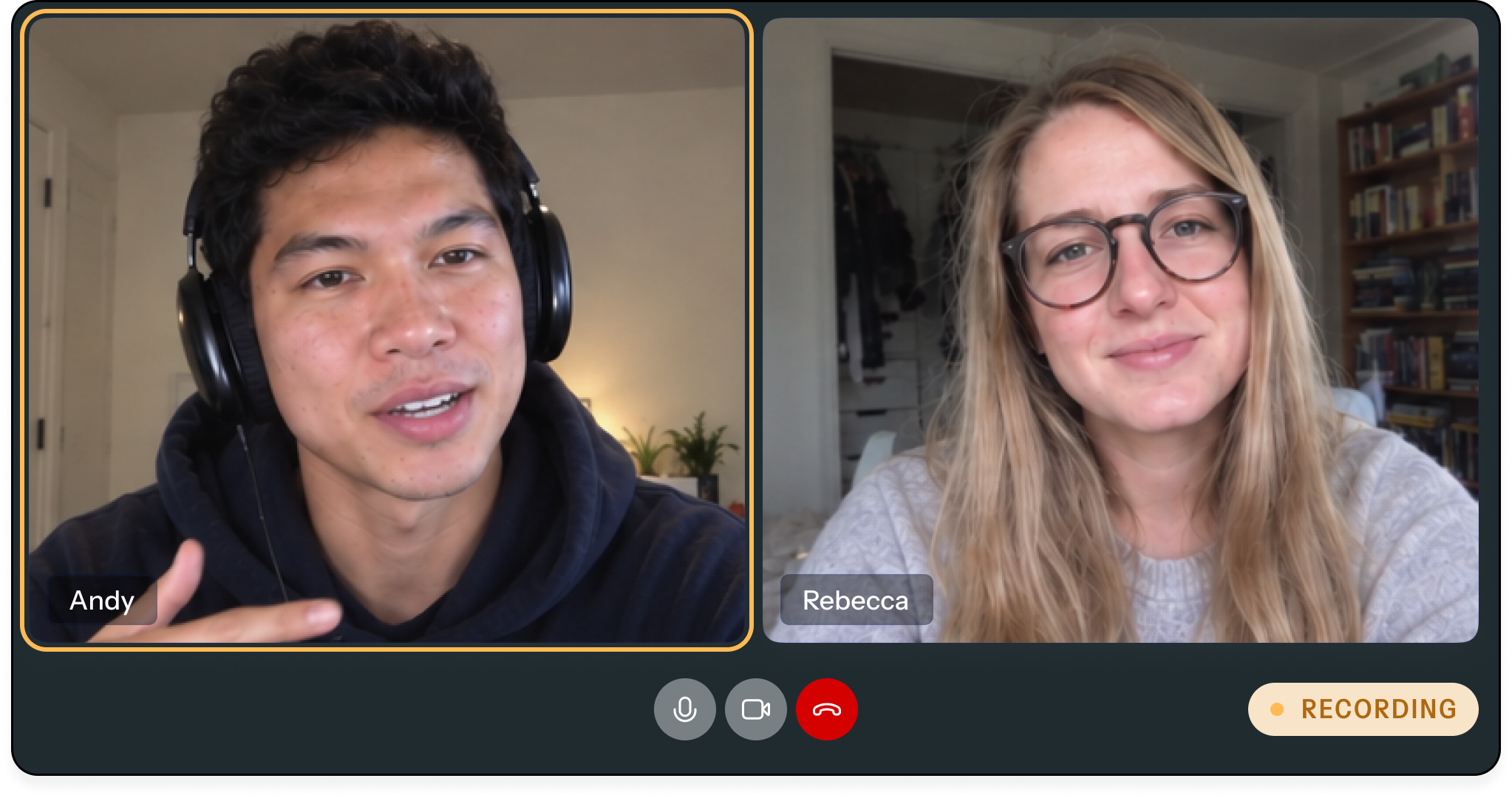
- Unlimited Live Mocks with real people
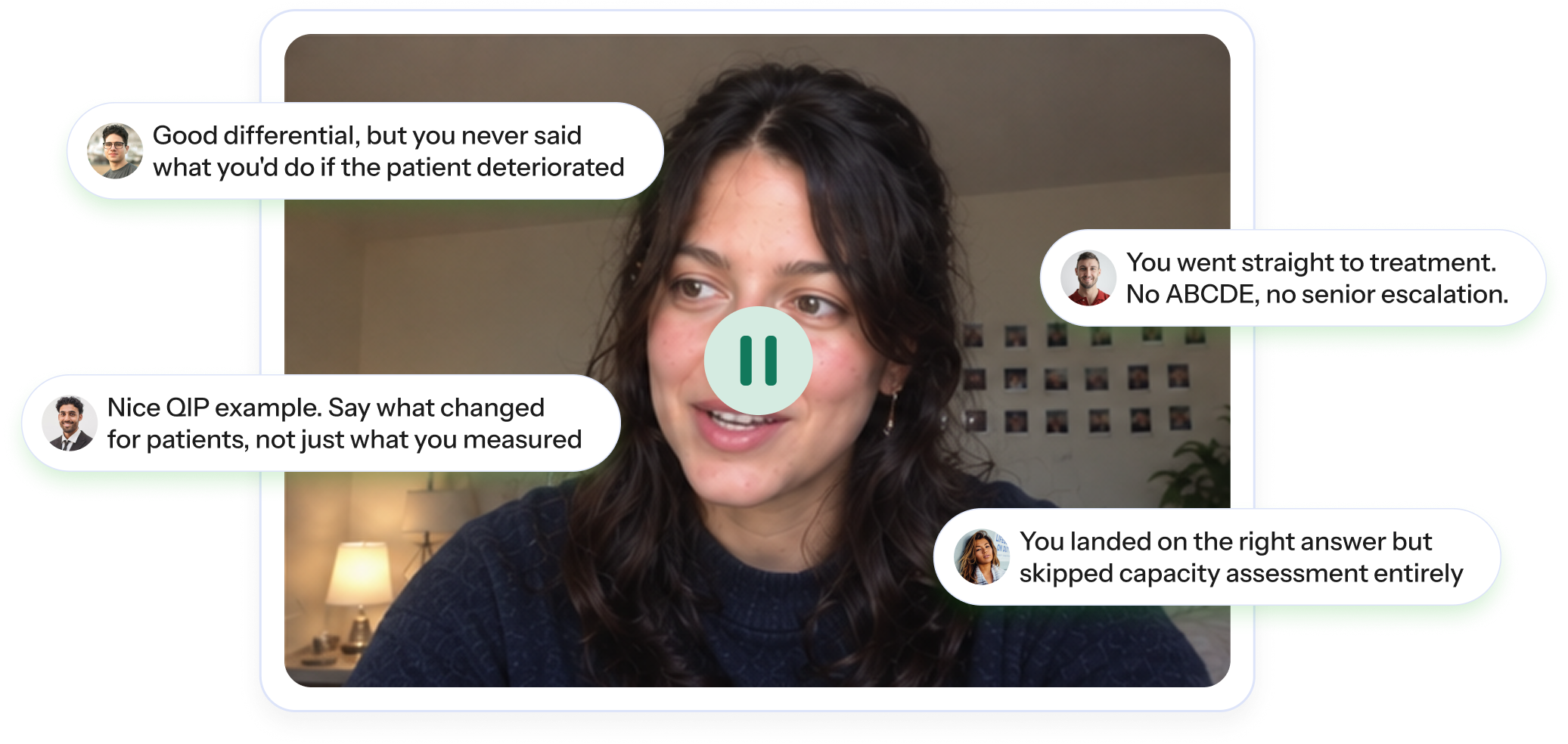
- Peer Feedback on your mocks from a wide range of candidates

Preparing doctors for interviews for 10 years
Always up to date
Network and practise real interview scenarios with other candidates
See every scenario, and how to answer it well

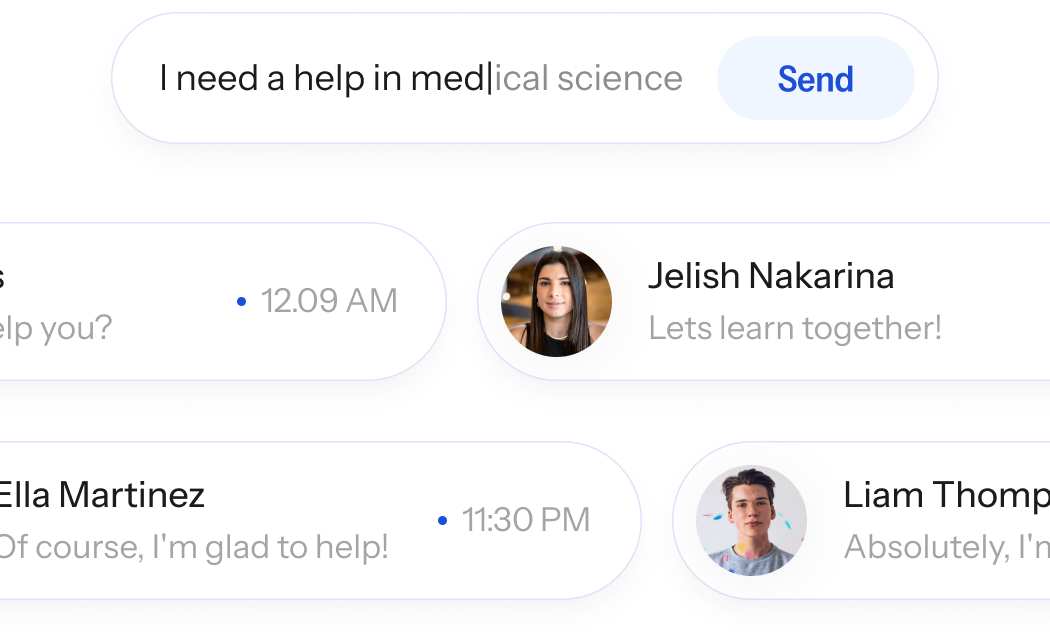
Connect with candidates across the country
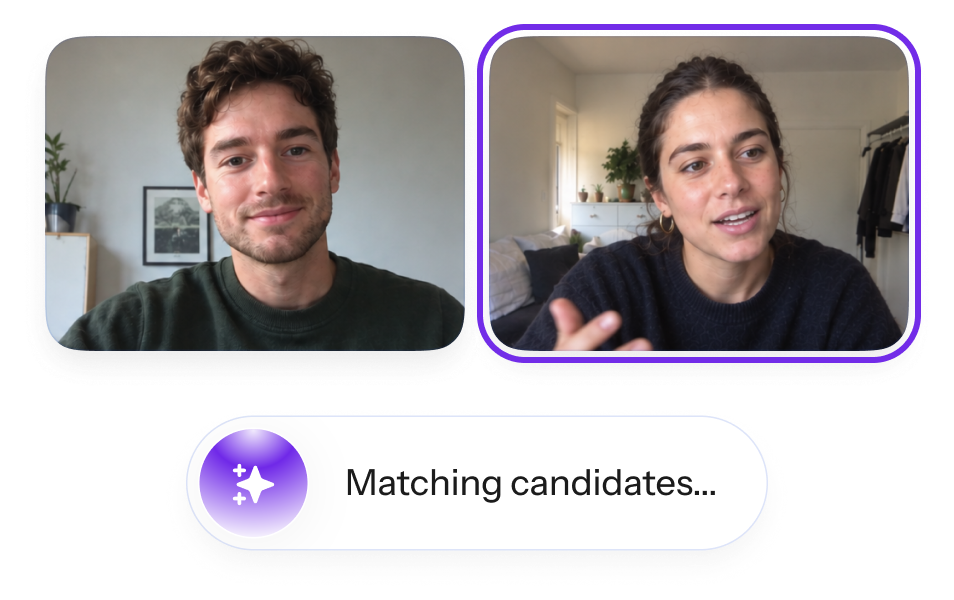
Practise interview technique with different candidates
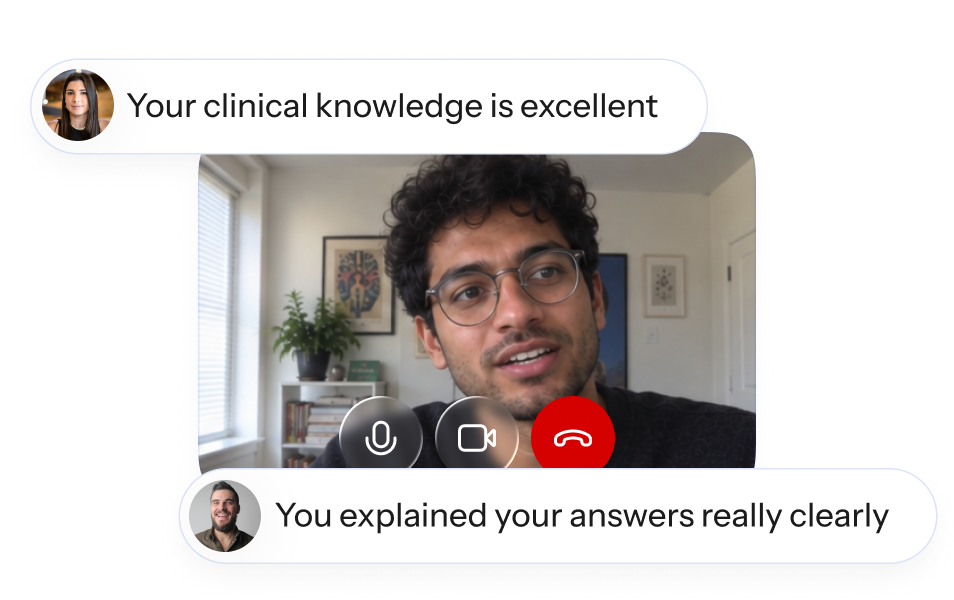
Reviewed by candidates across the platform
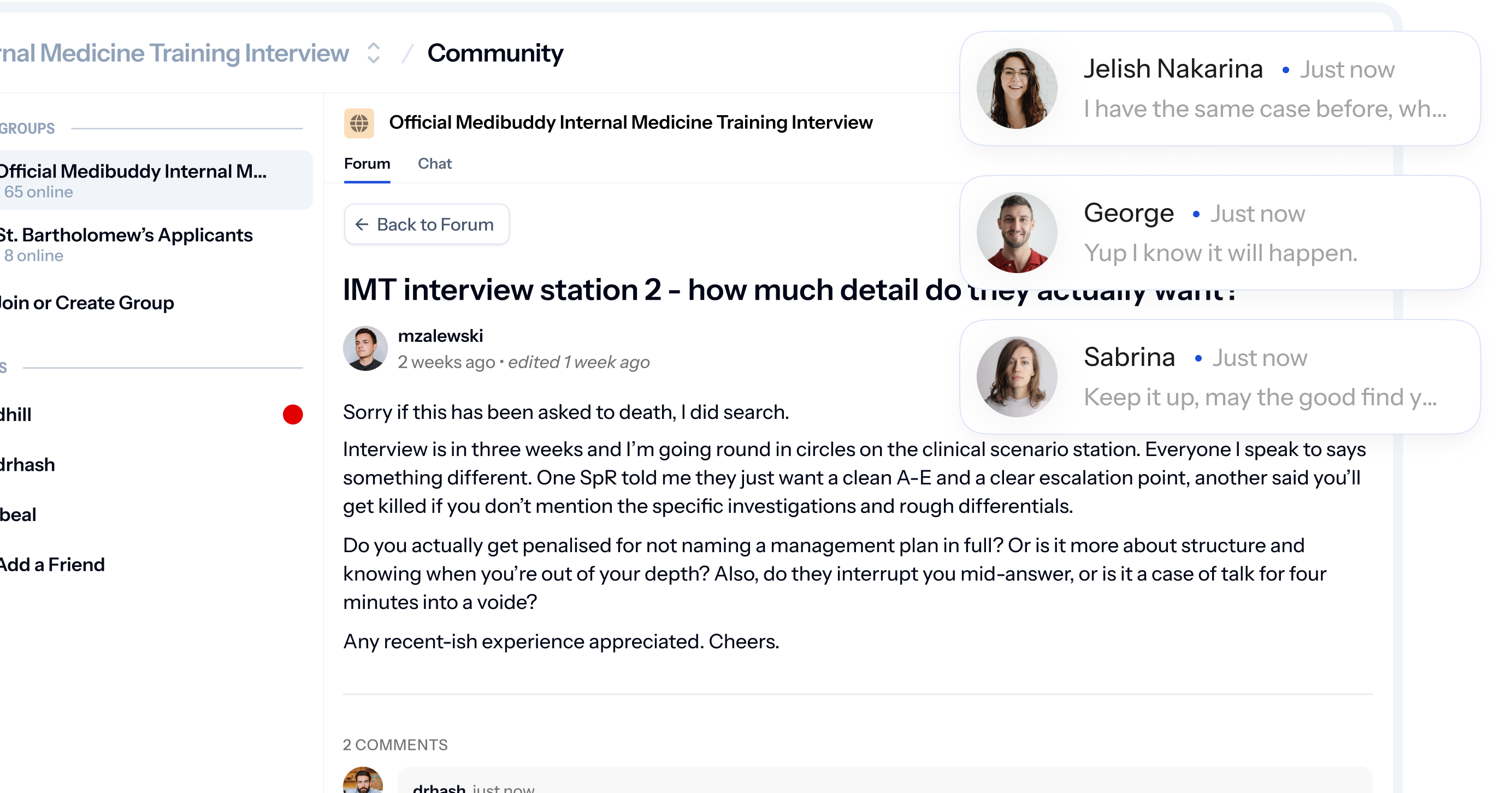
The question bank, and other candidates to practise with, all in one platform.
Radiation Oncology HST Revision Platform • €170
The Medibuddy Radiation Oncology HST Question Bank
What's included in the Radiation Oncology HST Question Bank
Experience and Suitability for a Career in Radiation Oncology
Career Trajectory
General/ Behaviours
Try an example Radiation Oncology HST question
You are a first-year Radiation Oncology Specialist Registrar. A radiation therapist pulls you aside between patients on the treatment unit and tells you that a patient receiving a radical course of radiotherapy for prostate cancer has been treated to the wrong isocentre for the past two fractions. The plan was approved and checked, but a positioning error went undetected. You are the most senior doctor immediately available; your consultant is in clinic on a different floor.
How would you approach this?

That's one scenario. There are 40 more.
Radiation Oncology HST Revision Platform • €170
How we keep our Question Banks up to date
Every scenario and model answer is anchored to Irish radiotherapy services, regulation and law, from the NCCP waiting time KPI and HIQA significant event notification to open disclosure, the Patient Safety Act 2023 and the Assisted Decision-Making (Capacity) Act 2015, so you're revising with content that reflects how the interview is run now.
The only interview resource where you can practise live with other candidates from across the country
Our Radiation Oncology HST Question Bank tells you exactly how to answer real interview scenarios. But how you practise with them will determine how many marks you score. Simply reading answers off a screen won't prepare you for the intense scrutiny you'll face in the interview. And only practising with the same few colleagues or friends limits the amount of feedback you'll get. Medibuddy gives you unique access to Radiation Oncology HST candidates across the country, so you can learn from a variety of perspectives and hear a far wider range of feedback than your own circle could ever give you.
What to expect from the Radiation Oncology HST interview
Higher Specialist Training in Radiation Oncology is run by the Faculty of Radiologists and Radiation Oncologists, RCSI. It is a five-year Specialist Registrar programme rotating across Cork University Hospital, University Hospital Galway and St Luke's Radiation Oncology Network in Dublin, and the Faculty says typically about 3 to 5 trainees are appointed. The interview for the July 2027 intake is held in person at the end of November, and it is worth 60 of the 100 selection marks; the other 40 come from shortlisting.
Experience and Suitability for a Career in Radiation Oncology
Career Trajectory
General/ Behaviours
How the interview is scored
How to prepare for the Radiation Oncology HST interview
Start with the Question Bank
Talk the hard ones through in Study Groups
Rehearse out loud in Live Mocks
Get reviewed with Peer Feedback before the day
Frequently asked questions
What does the Radiation Oncology HST interview involve?
How competitive is the Radiation Oncology HST interview?
Who writes the model answers?
Can I practise with other candidates?
How do the Live Mocks work?
What are Study Groups and how do they help?
Can I get feedback on my interview performance?
How long do I get access for?
Start preparing for the Radiation Oncology HST interview
The Revision Platform gives you 41 scenarios and over 120 model-answered questions to practise and refine with other candidates through Study Groups, Live Mocks and Peer Feedback.