Dermatology HST Interview Question Bank – Medibuddy Ireland
Dermatology HST • Ireland

The Dermatology HST Interview Revision Platform: Question Bank, Live Practice and Mocks with Other Candidates

The Medibuddy Dermatology HST Question Bank includes over 50 scenarios that closely mirror the real interview, each with a model answer written and edited by high-scoring candidates who sat the Dermatology HST interview.

However, knowing a strong answer isn't the same as delivering it well under pressure, which is why we provide:

Preparing doctors for interviews

Users of the Medibuddy Dermatology HST Revision Platform have secured competitive training places in recent rounds. Ask around, there's a good chance the trainees in the year above you used us too.

Always up to date

Did you know the interviews change from year to year? That's why we review and update every Question Bank on the platform regularly, so you know you're always practising with scenarios based on the latest interview structure.

Network and practise real interview scenarios with other candidates

Question Bank

See every scenario, and how to answer it well

Over 50 scenarios across every interview theme, which tell you exactly how to respond to each question.
Study Groups

Connect with candidates across the country
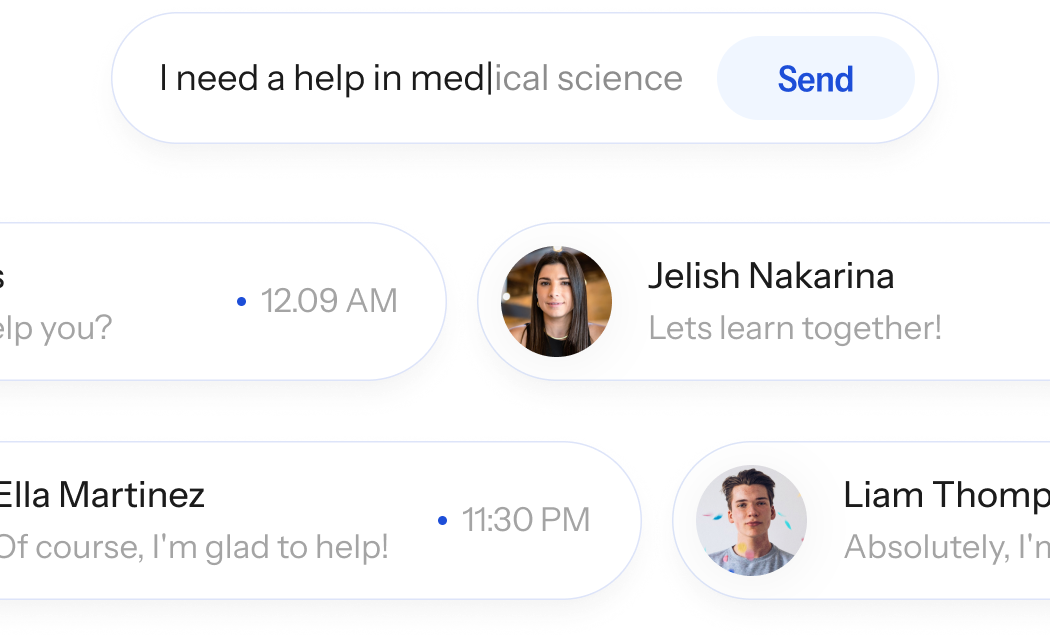
Most people only ever practise with one or two friends. Study Groups connect you with candidates right across the country sitting the same Dermatology HST interview.
Live MocksBeta

Practise interview technique with different candidates
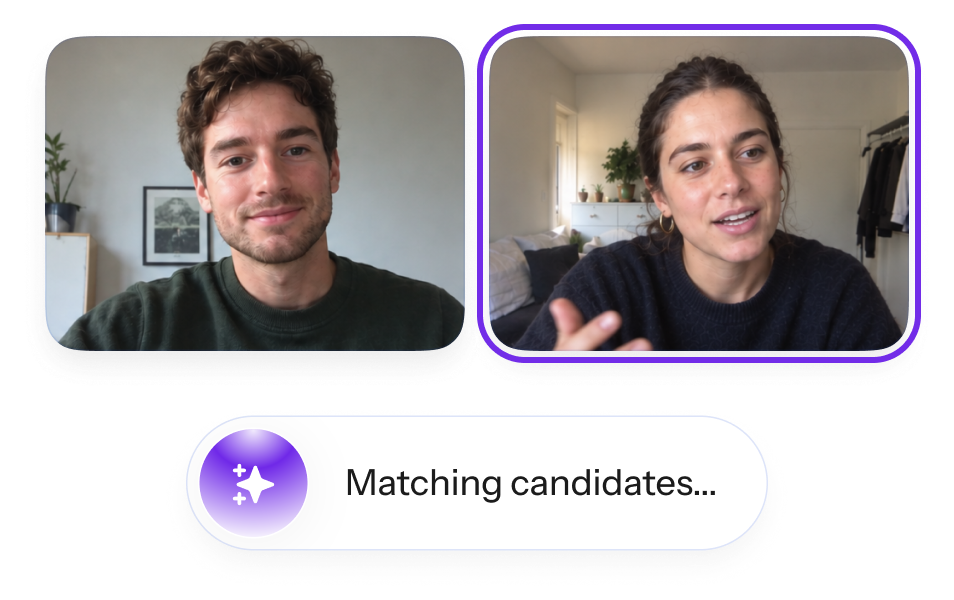
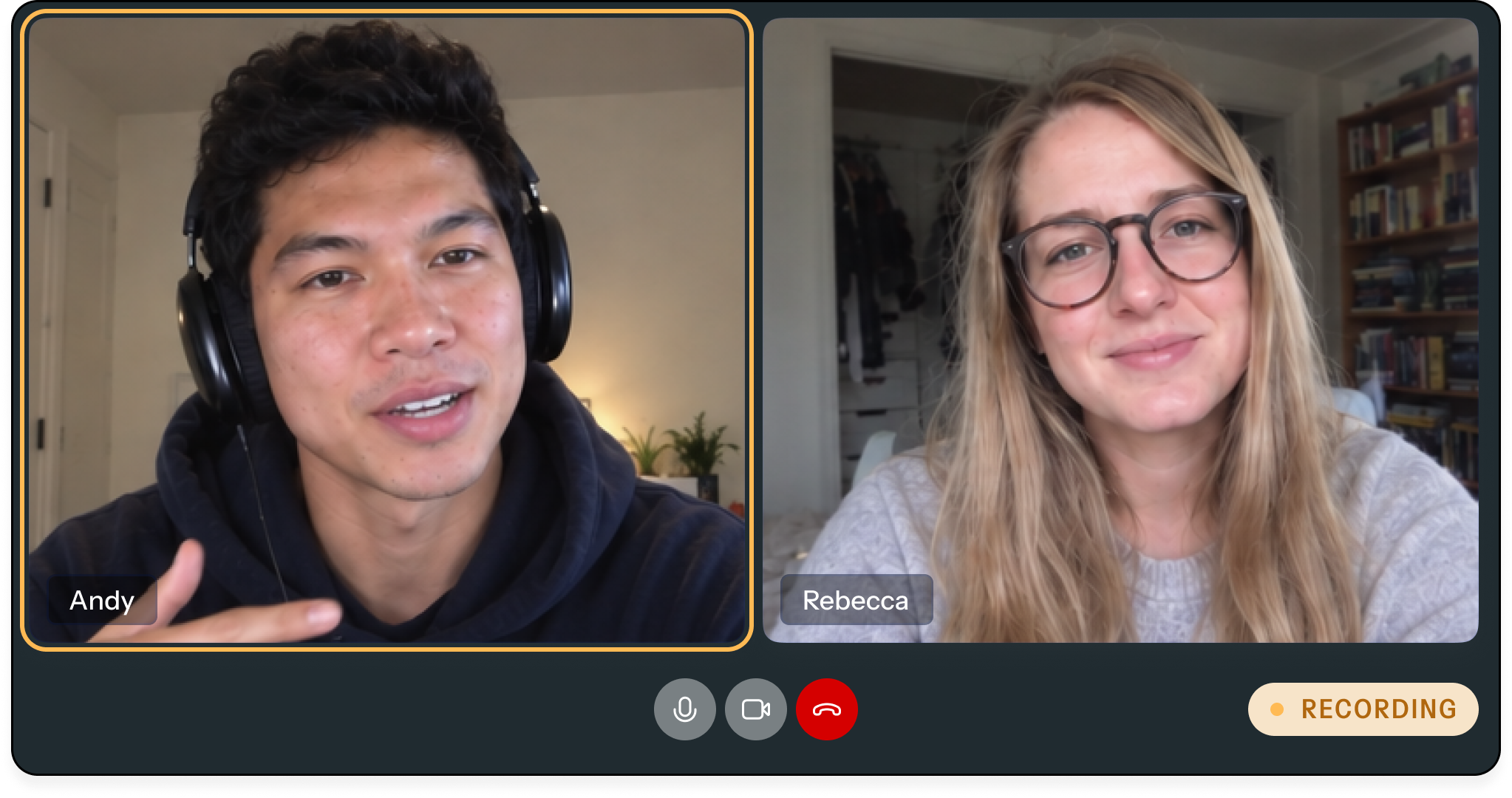
Arrange or get matched on demand with other candidates and run real scenarios out loud under interview conditions. Those who practise with the widest range of people tend to score the highest.
Peer FeedbackBeta

Reviewed by candidates across the platform

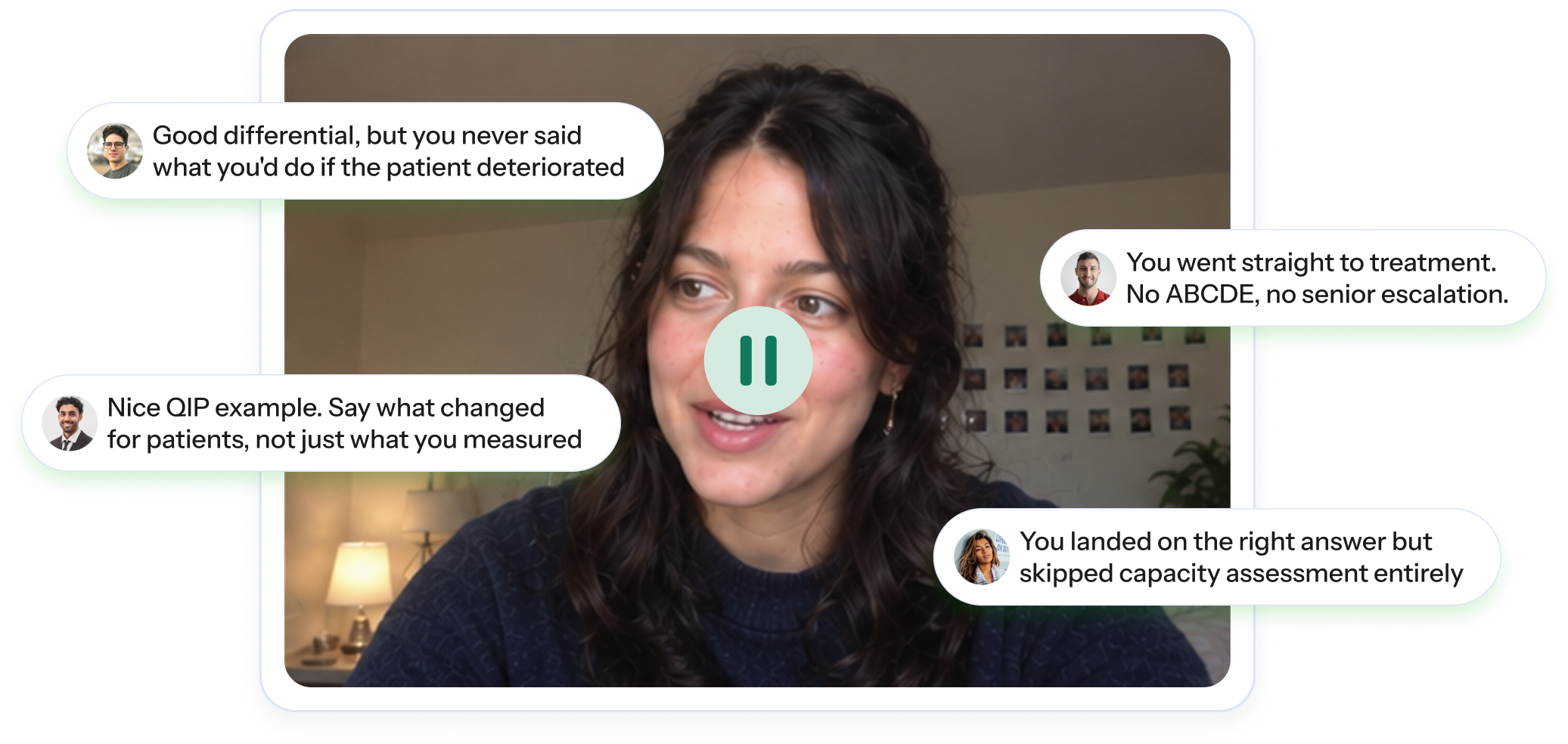
Submit your recorded mocks to candidates across the platform and get honest, varied feedback. Reviewing other people's mocks teaches you just as much.

The question bank, and other candidates to practise with, all in one platform.

Dermatology HST Revision Platform • €170

Gain access to over 50 scenarios across every theme, and collaborate with other candidates through Study Groups, Live Mocks and Peer Feedback.
Get instant access
What candidates say

Scored well, secured their post

A few of the candidates who prepared with us for the Dermatology HST interview.

Verified candidateInterviewed 2026
"The clinical scenarios were pitched exactly right. Having a structure ready meant I could work through a dermatological emergency calmly under pressure."
Secured first-choice post
Verified candidateInterviewed 2026
"Practising the CV and research questions out loud with other candidates was the single most useful thing I did before the day."
Ranked highly
Part 1 • See the questions

The Medibuddy Dermatology HST Question Bank

The interview is tightly timed, so you have a limited window to deliver the high-scoring answers you need to do well. That means every point has to land, and knowing how to structure each answer is essential. That's why each of our 50-plus scenarios comes with a model answer, written by candidates who scored highly in the Dermatology HST interview, so you know exactly how to approach every question the interviewers throw your way.
What's inside

What's included in the Dermatology HST Question Bank

There's nothing worse than getting to the interview and being handed a scenario you've never seen before. The panel draws on clinical, CV, research and professionalism themes, so the safest approach is to revise across all of them. We provide scenarios for every part of the interview, including the common ones and the more unusual cases that have come up before, so you don't get caught out.

Clinical Scenario

Dermatology scenarios where you play the SpR, from skin emergencies and urgent referrals to clinic and inpatient reviews: assess, reason and manage safely, each with a worked answer showing how to structure your response and when to escalate.

CV

Questions built around your CV: your training, experience and achievements, with model answers so you can present your portfolio clearly and convincingly.

Research, Audit & Teaching

Questions on your research, audit and teaching experience, and how you apply evidence and quality improvement, with example questions and model answers.

Professionalism

Realistic situations covering ethics, consent, patient safety, governance and working within a team, with structured model answers built on clear principles.
Reflecting how Dermatology HST is really assessed
Our scenarios and model answers are written to reflect the current interview structure, across the clinical, CV, research and professionalism themes.
Try it

Try an example Dermatology question

You are the on-call Dermatology Specialist Registrar, asked by the Emergency Department to review a 34-year-old woman with a three-day history of a rapidly spreading rash and painful erosions of the lips and mouth.

She was started on trimethoprim two weeks ago for a urinary tract infection, has no known allergies and takes no regular medication. She is unwell: temperature 38.4, heart rate 106, blood pressure 108/72.

There is a widespread targetoid eruption over the trunk and limbs, with blistering affecting around 12% of her body surface area and erosions of the oral and conjunctival mucosae.

How would you approach this?

Question
What is your differential diagnosis, and how would you differentiate the key conditions?
Example answer
This is a widespread blistering eruption with mucosal involvement after a new drug, which points to a severe cutaneous adverse reaction that must be identified urgently.
  • Stevens-Johnson syndrome: mucosal involvement with epidermal detachment of less than 10% of body surface area.
  • SJS/TEN overlap: detachment of 10 to 30%, and toxic epidermal necrolysis: more than 30%. At around 12%, she is in the overlap range.
  • Also consider DRESS, erythema multiforme major, staphylococcal scalded skin syndrome and autoimmune blistering disease, distinguished on the history, distribution and mucosal pattern.
  • The timing after trimethoprim and the targetoid rash with mucosal erosions make an SJS/TEN spectrum reaction the leading diagnosis.
Question
How would you assess her severity and prognosis?
Example answer
I would use SCORTEN, the validated tool that predicts mortality in SJS/TEN and guides escalation.
  • SCORTEN scores one point each for age over 40, active malignancy, heart rate over 120, detachment over 10% on day one, urea over 10, bicarbonate under 20, and glucose over 14.
  • I would send bloods to complete the score and repeat it, as predicted mortality rises steeply with each point.
  • Her detachment is already over 10%, so she needs close monitoring and early escalation regardless of the initial number.
  • The score helps decide the level of care, including whether she needs a burns unit or specialist centre.
Question
What are your immediate management priorities?
Example answer
The priorities are to stop the cause, resuscitate her and manage the skin and mucosae, with senior involvement from the outset.
  • Stop the trimethoprim immediately, document it clearly as the suspected cause and flag the allergy.
  • Fluid resuscitation: losses are comparable to burns, so I would calculate requirements from the affected body surface area and aim for a urine output above 0.5 ml/kg/hour.
  • Analgesia, temperature control, and meticulous wound, mucosal and early eye care, ideally in a burns or specialist centre.
  • Involve my consultant early and escalate to critical care if she is unstable.
Question
What complications would you monitor for, who needs to be involved, and how would you prevent a recurrence?
Example answer
This carries significant morbidity beyond the skin, so I would take a structured, multidisciplinary approach and close the loop on the drug.
  • Complications: ocular involvement with daily ophthalmology review, airway and respiratory compromise, infection and sepsis, fluid and electrolyte disturbance, and nutritional needs.
  • Multidisciplinary input: dermatology, intensive care or the burns team, ophthalmology, and others such as urology or gynaecology for mucosal involvement, with dietetics and pain specialists.
  • Document the causation using a structured tool, review the full drug history for any co-suspect, and record a clear, permanent allergy alert.
  • Counsel her and her GP to avoid trimethoprim and related sulfonamides, and provide written information for future care.

That's one scenario. There are over 50 more.

Dermatology HST Revision Platform • €170

Includes every scenario in the Question Bank, and access to Study Groups, Live Mocks with other candidates and Peer Feedback.
Get instant access
Actively maintained

How we keep our Question Banks up to date

The Dermatology HST interview changes from year to year, and the biggest fear for any candidate is getting to interview day and realising you've revised with a question bank that's totally outdated.

That's why we review and update every Question Bank regularly, so you know you're revising with scenarios that are likely to come up, aligned with current Irish dermatology practice and the HST recruitment process.

Our scenarios and model answers are kept aligned with the current interview structure, across the clinical, CV, research and professionalism themes, so you always practise with the format the panel is using now.
Updated for the latest interviews
Part 2 • Practise them live

The only interview resource where you can practise live with other candidates from across the country

Our Dermatology HST Question Bank tells you exactly how to answer real interview scenarios. But how you practise with them will determine how many marks you score. Simply reading answers off a screen won't prepare you for the intense scrutiny you'll face in the interview. And only practising with the same few colleagues or friends limits the amount of feedback you'll get. Medibuddy gives you unique access to Dermatology HST candidates across the country, so you can learn from a variety of perspectives and hear a far wider range of feedback than your own circle could ever give you.
Study Groups
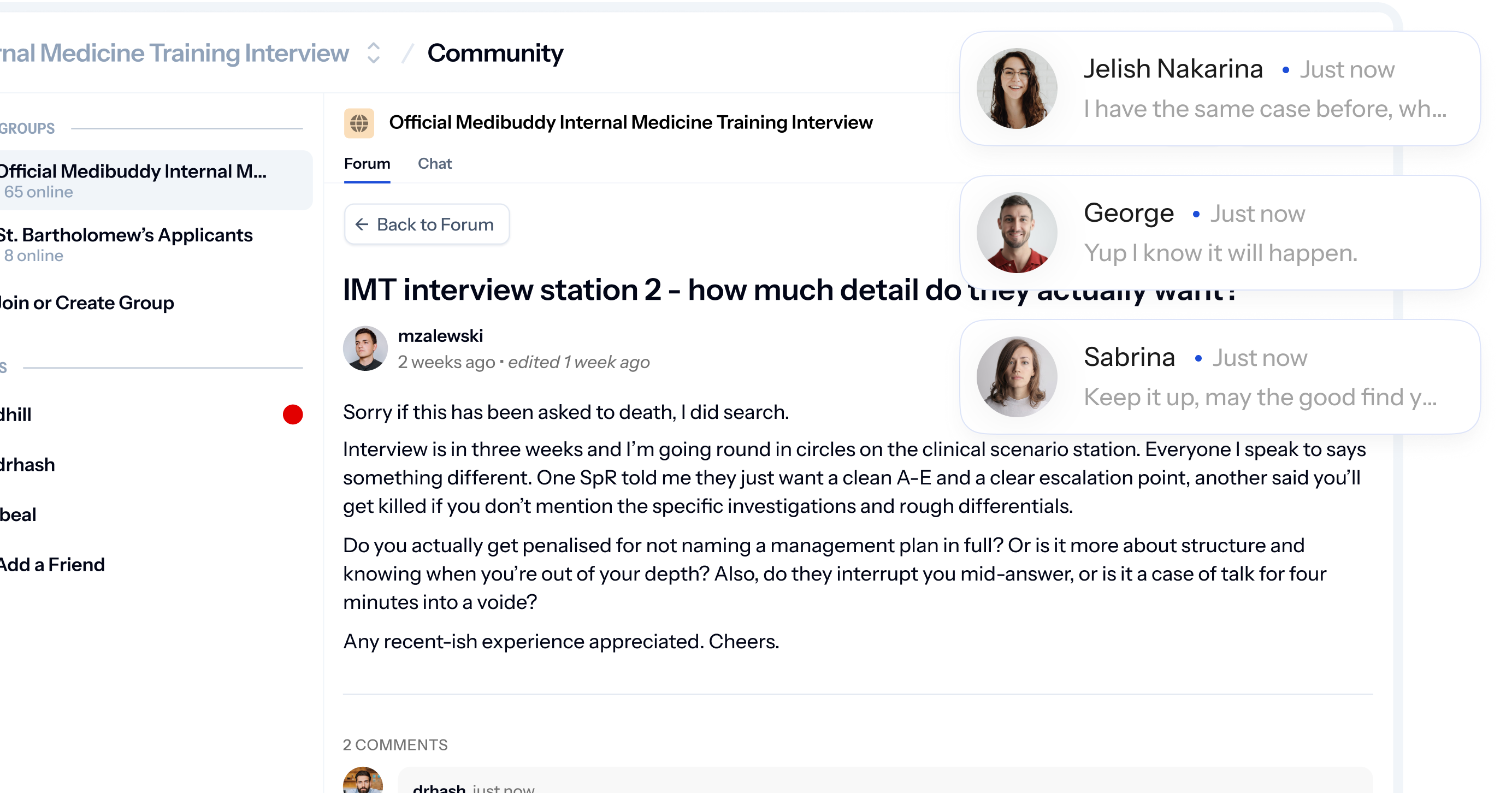
When you prepare in isolation, you're relying on your own interpretation of the interview process, which is one of the quickest ways to get found out on the day. Study Groups connect you with other doctors across the country who are also applying to Dermatology HST, so you can engage and network with people preparing for the same interview as you. Everyone brings different experience from different hospitals, meaning you won't ever miss out on the key bits of information that could swing the interview in your favour.
Live MocksBeta
Candidates who don't take part in mocks often struggle to adapt to the pressure of the interview. Your knowledge might be correct, but without convincing delivery the interviewers will score you poorly. The best way to improve your delivery is to take part in as many live mocks as possible, which is why we haven't put a cap on how many you can do. We also know how difficult it can be to organise mocks with other people, so all you have to do is join the waiting room and we'll match you with a different Dermatology HST candidate each time. Take turns as both the interviewer and candidate on real Question Bank scenarios, so you can see exactly how other candidates perform in real time, while refining your own interview technique.
Peer FeedbackBeta
Preparing alone means you won't know how you're coming across during the interview. And preparing with the same few candidates means you'll miss opportunities to improve, which is why it's so important to get as many opinions as possible on your performance. With Medibuddy, you can record a mock and submit it for feedback from other candidates on the platform, so you receive a wider range of feedback and refine your answers with each person you practise with. Reviewing other people's mocks is just as valuable, as it shows you how strong candidates handle the same scenarios, which is one of the fastest ways to improve.
The interview

What to expect from the Dermatology HST interview

Dermatology is one of the most competitive HST specialties, and strong applicants are often separated by narrow margins at interview.

Theme

Clinical Scenario

Dermatology scenarios that assess your clinical judgement and safe, structured management as the SpR, from skin emergencies and urgent referrals to clinic and inpatient reviews. Work through a safe, systematic approach and be ready to explain when you would escalate.
Theme

CV

Questions built around your CV: your training, experience and achievements. Present your portfolio clearly and show what your experience says about you as a future dermatologist.
Theme

Research, Audit & Teaching

Questions on your research, audit and teaching experience, and how you apply evidence and quality improvement. Go beyond listing projects and show the impact of your work.
Theme

Professionalism

Situations covering ethics, consent, patient safety, governance and teamwork. Explain your reasoning, refer to relevant guidance, and show how you would handle the situation safely and professionally.

How the interview is scored

The interview is marked against the Dermatology HST person specification. Our model answers are structured against those criteria, so you know exactly what a strong, well-organised answer looks like across each theme.
Get ready

How to prepare for the Dermatology HST interview

Start with the Question Bank

Work through over 50 scenarios across every theme, each with a worked answer from a candidate who scored well in the interview. Start by reading how a strong answer is formed, then think about how you'd deliver it.

Talk the hard ones through in Study Groups

Study Groups are your biggest opportunity to network and connect with other candidates sitting the same interview as you. Everyone on the platform is in the same boat, so don't be scared to get involved and ask questions. Someone in your study group might just help you work through a scenario you've been struggling with.

Rehearse out loud in Live Mocks

Live mocks are where you begin to put everything you've learned into practice, and we know from experience that those who practise with a wide range of candidates usually do the best. Organise mocks with people from one of your study groups, or get matched with a random Dermatology HST candidate, then take turns as interviewer and candidate using real scenarios until answering out loud under pressure feels normal.

Get reviewed with Peer Feedback before the day

Once you've recorded a mock, you can have other community members review it. This lets you see how you come across to other people, and gives you time to refine your delivery as you revise, rather than being caught out on the day. Reviewing other people's mocks is just as crucial, as you see how other candidates navigate the same scenarios.
Questions

Frequently asked questions

What does the Dermatology HST interview involve?
A structured interview assessing several themes: Clinical scenarios, your CV, Research, Audit and Teaching, and Professionalism. Our scenarios and model answers cover each theme so you know how to structure a strong response.
How competitive is the Dermatology HST interview?
Very competitive. Dermatology is one of the most sought-after HST specialties, and strong candidates are frequently separated by small margins at interview, which is why a structured, well-rehearsed approach matters.
Who writes the model answers?
High-scoring candidates who sat the Dermatology HST interview, so the answers reflect what came up and what scored.
Can I practise with other candidates?
Yes. Every Revision Platform purchase gives you the opportunity to connect with other candidates through Study Groups, Live Mocks and Peer Feedback.
How do the Live Mocks work?
All you have to do is join the waiting room, and we match you with another Dermatology HST candidate. You then take turns as interviewer and candidate on real Question Bank scenarios, so you gain experience answering out loud to a real person before you ever sit in front of the panel.
What are Study Groups and how do they help?
Study Groups are community forums for doctors across the country preparing for the same Dermatology HST interview. You can ask questions, share what you're struggling with, and compare how you'd approach a scenario.
Can I get feedback on my interview performance?
Yes. After you've recorded a mock, you can ask other members to review it, so you can see which part of your answer needs fine-tuning.
How long do I get access for?
Access runs for 12 months from the purchase date.

Start preparing for the Dermatology HST interview

The Revision Platform gives you over 50 scenarios to practise and refine with other candidates through Study Groups, Live Mocks and Peer Feedback.

Dermatology HST Revision Platform • €170

Buy Now