General Surgery HST Interview Question Bank – Medibuddy Ireland
General Surgery HST • 2027 Interview

The 2027 General Surgery HST Interview Revision Platform: Question Bank, Live Practice and Mocks with Other Candidates

The Medibuddy General Surgery HST Question Bank includes 50 scenarios and over 215 model-answered questions that closely mirror the real interview, each written and edited by high-scoring candidates who sat the General Surgery HST interview in 2026.

However, knowing a strong answer isn't the same as delivering it well under pressure, which is why we provide:

10 years' experience preparing doctors for interviews

Users of the Medibuddy General Surgery HST Revision Platform have secured some of the most competitive surgical training posts in recent rounds. Ask around, there's a good chance the trainees in the year above you used us too.

Always up to date

Did you know the interviews change every year? That's why we review and update every Question Bank on the platform twice a year, so you know you're always practising with scenarios based on the latest interview structure.

Network and practise real interview scenarios with other candidates

Question Bank

See every scenario, and how to answer it well

50 scenarios across all five scored stations, which tell you exactly how to respond to each question.
Study Groups

Connect with candidates across the country
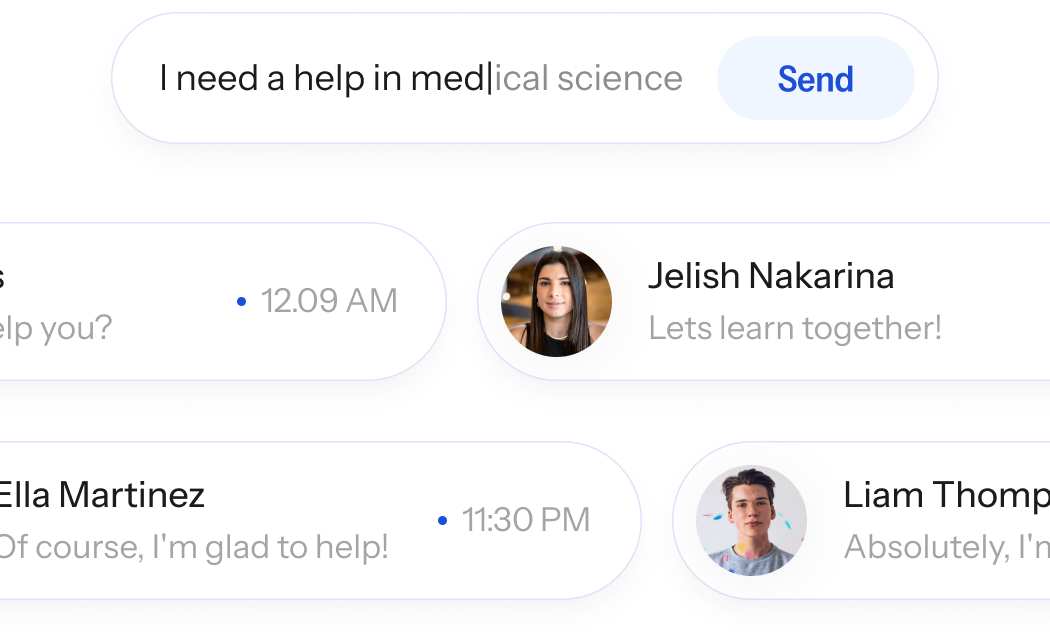
Most people only ever practise with one or two friends. Study Groups connect you with candidates right across the country sitting the same General Surgery HST interview.
Live MocksBeta

Practise interview technique with different candidates

Arrange or get matched on demand with other candidates and run real scenarios out loud under interview conditions. Those who practise with the widest range of people tend to score the highest.
Peer FeedbackBeta

Reviewed by candidates across the platform

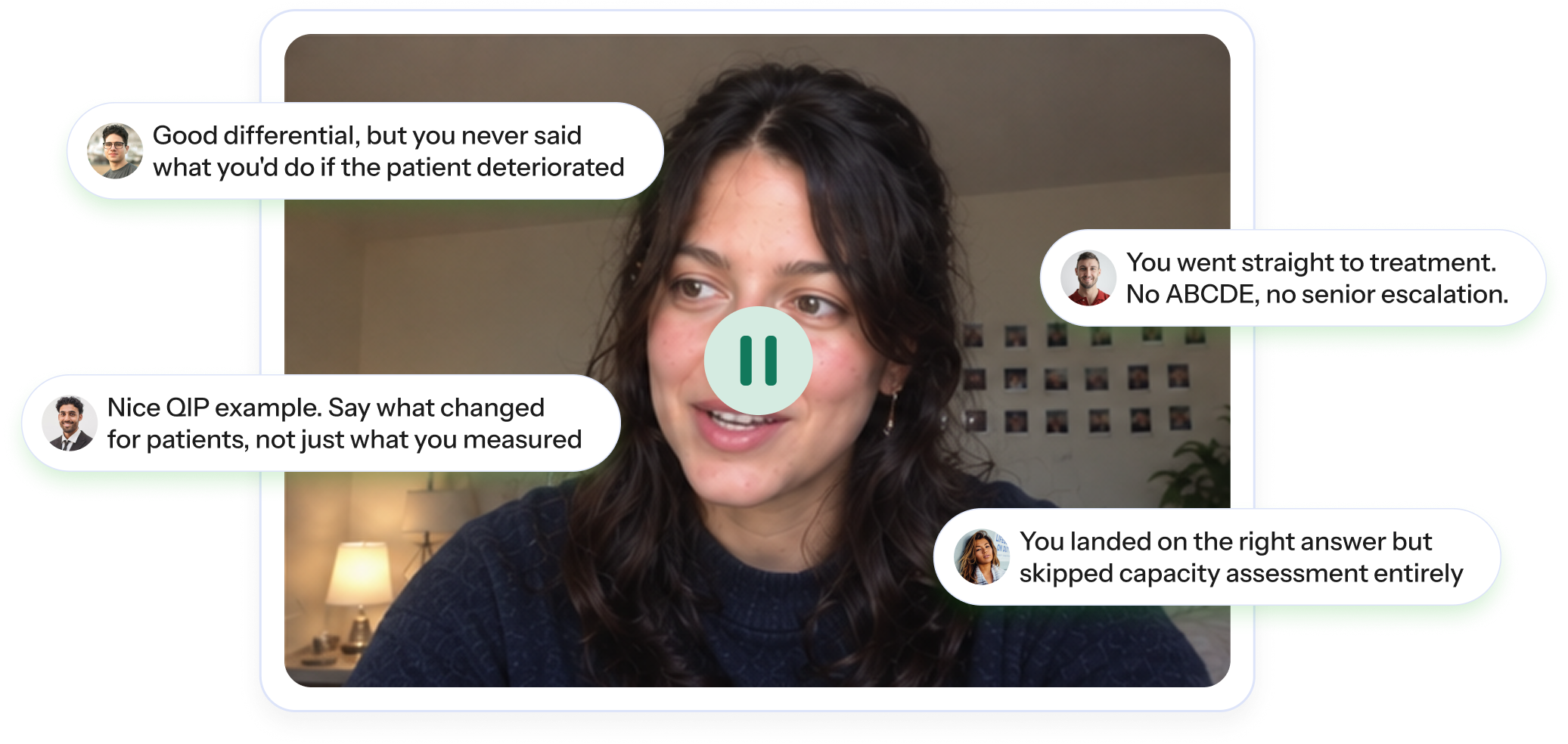
Submit your recorded mocks to candidates across the platform and get honest, varied feedback. Reviewing other people's mocks teaches you just as much.

The question bank, and other candidates to practise with, all in one platform.

General Surgery HST Revision Platform • €170

Gain access to 50 scenarios across all five stations, and collaborate with other candidates through Study Groups, Live Mocks and Peer Feedback.
Get instant access
What candidates say

Scored well, secured their post

A few of the candidates who prepared with us for the General Surgery HST interview.

Verified candidateInterviewed 2026
"Having a clear structure for the decision making and quality and safety stations meant I stayed calm and systematic under pressure."
Secured HST post
Verified candidateInterviewed 2026
"Practising the current-issues and professionalism questions out loud with other candidates made all the difference on the day."
Ranked highly
Part 1 • See the questions

The Medibuddy 2027 General Surgery HST Question Bank

The interview is worth 360 marks across five scored stations, and you need at least 60 per cent of the interview total to be appointed, so every answer counts. Each station is tightly timed, so you have a limited window to deliver the high-scoring answers you need to do well. That means every point has to land, and knowing how to structure each answer is essential. That's why each of our 50 scenarios comes with a model answer, written by candidates who scored highly in the 2026 General Surgery HST interview, so you know exactly how to approach every question the panel puts to you.
What's inside

What's included in the General Surgery HST Question Bank

There's nothing worse than reaching the interview and being handed a scenario you've never prepared for. The panel scores five stations, from quality and safety to surgical decision making, so the safest approach is to revise across all of them. We provide scenarios for every station, including the common themes and the trickier cases that have come up before, so you don't get caught out.

Quality & Safety in Surgical Healthcare

Audit, never events, governance and patient-safety frameworks, each with a worked answer showing how to reason through safety and quality systematically.

Commitment to Academic Advancement & Lifelong Learning

Research, teaching, audit and professional development, with model answers that show how to evidence your academic commitment.

Knowledge of Current Issues in Surgical Practice

The issues shaping surgery today, with structured answers so you can discuss them with balance and confidence.

Decision Making in Surgery

Clinical and operative judgement under pressure, from the acute abdomen to cancer and consent, each with a worked answer.

Professionalism & Probity in Surgical Practice

Realistic professional, ethical and probity dilemmas, with model answers so you can reason through them clearly on the day.
Built around the five scored stations
The bank serves both entry routes, the Pathway from Core Surgical Training and the Equivalent Standards Route. Every scenario is anchored to Irish practice, guidelines and law, with model answers structured against the RCSI selection criteria.
Try it

Try an example General Surgery HST question

You are the General Surgery registrar on call. A 52-year-old man is referred to the acute surgical assessment unit by his GP with a six-hour history of severe, worsening central abdominal pain that has migrated to the right iliac fossa. He is nauseated and has vomited twice. He has no significant past medical history and takes no regular medications. His observations on arrival are HR 102 bpm, BP 118/76 mmHg, RR 18, temperature 38.1 degrees Celsius, SpO2 97% on room air.

How would you assess this patient?

Question
How would you assess this patient?
Example answer
This patient is haemodynamically borderline and needs an urgent, structured assessment, so I would assess airway, breathing and circulation alongside a targeted history, place two large-bore cannulae, send bloods and start IV fluids.
  • History: the onset, character, radiation and progression of the pain (central-to-right-iliac-fossa migration suggests appendicitis), anorexia, nausea and vomiting, bowel habit and last motion, the last menstrual period and sexual history in any woman of reproductive age, past surgical and family history, and systemic features such as fever, rigors or urinary symptoms.
  • Examination: general signs of pallor, jaundice and hydration; abdominal inspection, auscultation, percussion for rebound and guarding, and palpation for McBurney point tenderness, Rovsing, psoas and obturator signs; a digital rectal examination where indicated; and the hernial orifices and testes in men.
Question
What investigations would you request?
Example answer
Investigations aim to confirm the diagnosis, stratify severity and prepare for possible surgery.
  • Bloods: FBC, CRP, U and E, LFTs, amylase or lipase, coagulation and group and save; lactate if I am concerned about perfusion or mesenteric ischaemia; a beta-hCG in any woman of reproductive age; and blood cultures if the temperature is over 38.
  • Urinalysis: to look for infection or the haematuria of ureteric colic.
  • Imaging: an erect chest X-ray for free air under the diaphragm, and a CT abdomen and pelvis with contrast as the first-line cross-sectional test for an undifferentiated acute abdomen in adults; ultrasound is useful first in women of reproductive age or where radiation is a concern.
  • ECG: to exclude an inferior MI in an atypical presentation.
Question
What are your differential diagnoses for this clinical picture?
Example answer
The central-to-right-iliac-fossa migration with fever and localised tenderness gives a broad differential I would work through systematically.
  • Most likely: acute appendicitis, simple or complicated.
  • Gastrointestinal: perforated peptic ulcer with fluid tracking down, Meckel diverticulitis, terminal ileitis such as Crohn disease, a caecal carcinoma with localised perforation or obstruction, omental torsion or caecal volvulus.
  • Urological: right ureteric colic with ileus, or a urinary tract infection.
  • Gynaecological, if applicable: ectopic pregnancy, ovarian torsion, a tubo-ovarian abscess or a ruptured ovarian cyst.
  • Not to miss: mesenteric ischaemia, classically with pain out of proportion to the signs.
Question
CT confirms acute appendicitis with a small amount of free fluid but no free gas. How do you manage him?
Example answer
The free fluid points to complicated appendicitis, so this needs prompt surgical planning and senior involvement.
  • Immediate: resuscitate with IV crystalloid, titrated analgesia and antiemetics, and start broad-spectrum antibiotics per local HSE guidelines, typically piperacillin-tazobactam with metronidazole for perforation; keep him nil by mouth and catheterise to monitor urine output.
  • Consent: confirm capacity and consent, discussing the diagnosis, options and risks under the Assisted Decision-Making (Capacity) Act 2015 and the HSE National Consent Policy.
  • Operative: place him on the emergency list, brief the team and complete the WHO Surgical Safety Checklist; laparoscopic appendicectomy is standard, and I would involve the on-call consultant rather than proceed independently with a complicated case.
  • Post-operative: continue IV antibiotics for 24 to 48 hours, step down to oral when he tolerates diet, and send the specimen for histology to exclude an underlying tumour.
Question
During consent he asks about non-operative management with antibiotics alone. How do you respond?
Example answer
I would acknowledge this is a reasonable question and answer it honestly through shared decision-making.
  • Antibiotic-first management is a recognised option for uncomplicated appendicitis, supported by trials such as APPAC and CODA, but the evidence is weaker once there is free fluid as here.
  • I would disclose the risk of treatment failure and needing an operation later, around 20 to 40 per cent within five years in uncomplicated cases.
  • I would explain that surgery also lets us send the appendix for histology, which matters to exclude an underlying caecal cancer or Crohn disease.
  • Under the Assisted Decision-Making (Capacity) Act 2015 his informed preference must be respected, but I would document the discussion and the risk of failure fully, and ask my consultant to speak with him before we proceed either way.
Question
What quality and governance frameworks apply to emergency surgical care for a patient like this?
Example answer
A registrar entering higher surgical training should know the Irish governance framework around emergency surgical care.
  • The Irish Audit of Surgical Mortality, run by the National Office of Clinical Audit, provides peer review of in-hospital surgical deaths, so any mortality would need an IASM case review.
  • The HSE National Policy for Safe Surgery mandates the WHO Surgical Safety Checklist for every procedure.
  • Adverse and near-miss events are managed through the HSE Incident Management Framework and recorded on the National Incident Management System run by the State Claims Agency.
  • Open disclosure under the Patient Safety (Notifiable Incidents and Open Disclosure) Act 2023 applies if the patient is harmed, requiring prompt, honest communication.
  • Antibiotic stewardship in line with HSE national guidelines applies throughout, particularly for prophylaxis duration.

That's one scenario. There are 49 more.

General Surgery HST Revision Platform • €170

Includes every scenario in the Question Bank, and access to Study Groups, Live Mocks with other candidates and Peer Feedback.
Get instant access
Actively maintained

How we keep our Question Banks up to date

The General Surgery HST interview changes from year to year, and the biggest fear for any candidate is getting to interview day and realising you've revised with a question bank that's totally outdated.

That's why we review and update every Question Bank twice a year, so you know you're revising with scenarios that are likely to come up. We do this in April after the previous year's interviews, and again in the autumn when the new recruitment guidance is published.

For 2027, this process kept the Question Bank aligned with the current five-station interview, across quality and safety, academic commitment, current issues, decision making, and professionalism and probity, so you always practise with the format the panel is using now.
Updated for 2027 Interviews
Part 2 • Practise them live

The only interview resource where you can practise live with other candidates from across the country

Our General Surgery HST Question Bank tells you exactly how to answer real interview scenarios. But how you practise with them will determine how many marks you score. Simply reading answers off a screen won't prepare you for the intense scrutiny you'll face in the interview, and only practising with the same few colleagues limits the feedback you'll get. Medibuddy gives you unique access to General Surgery HST candidates across the country, so you can learn from a variety of perspectives and hear a far wider range of feedback than your own circle could ever give you.
Study Groups
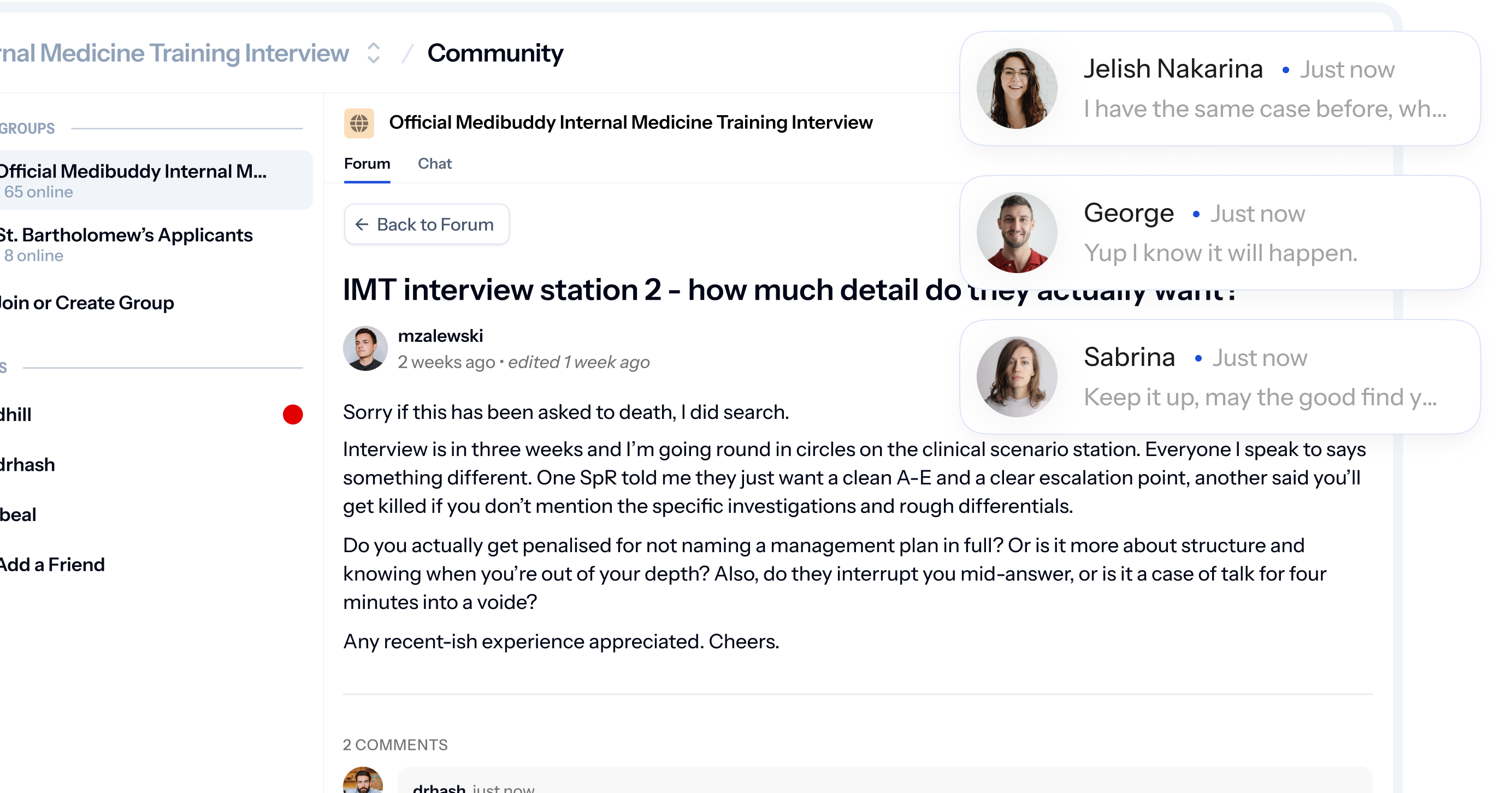
When you prepare in isolation, you're relying on your own interpretation of the interview process, which is one of the quickest ways to get found out on the day. Study Groups connect you with other doctors across the country who are also applying to General Surgery HST, so you can engage and network with people preparing for the same interview as you. Everyone brings different experience from different units, meaning you won't miss out on the key bits of information that could swing the interview in your favour.
Live MocksBeta
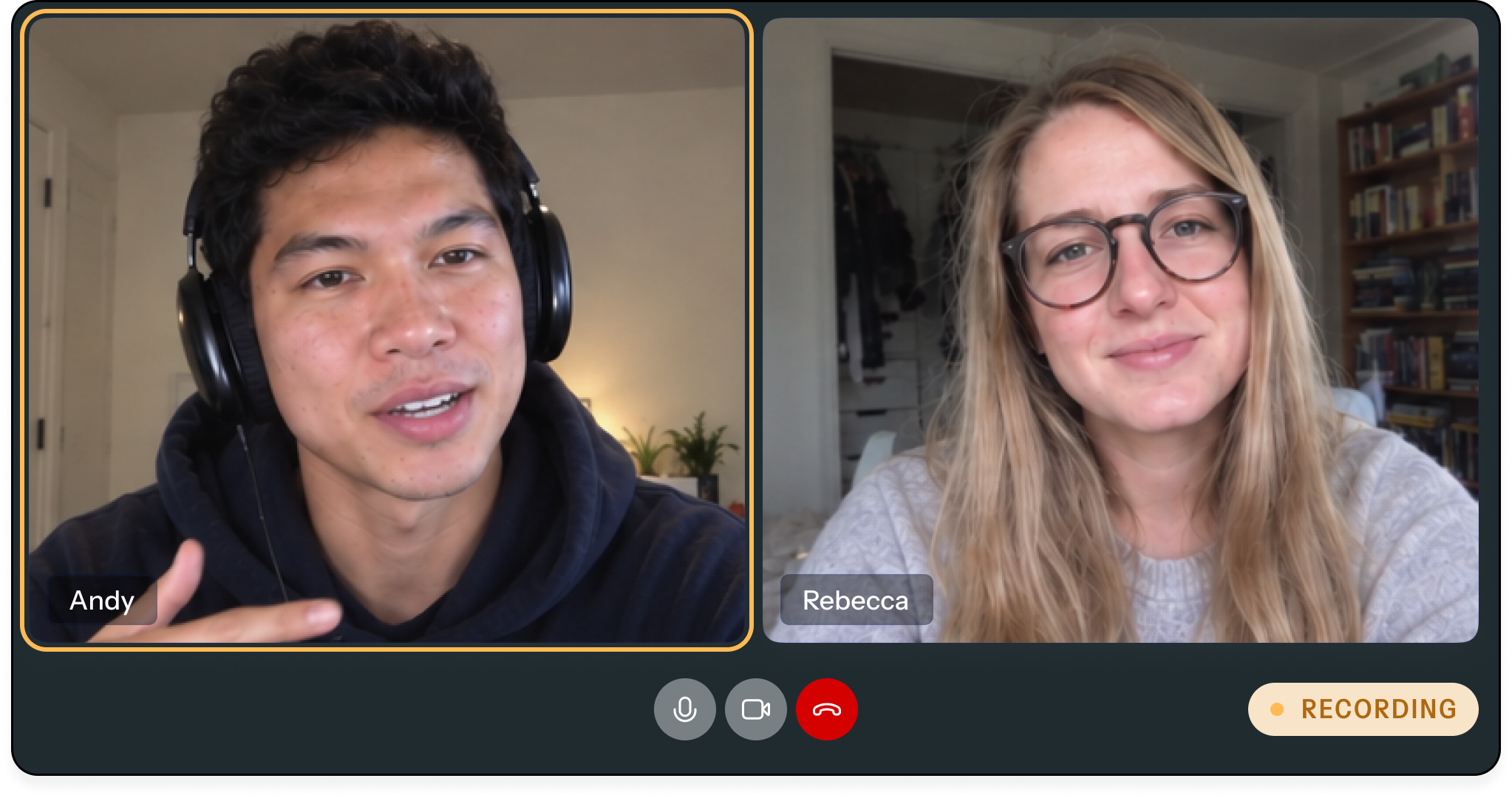
Candidates who don't take part in mocks often struggle to adapt to the pressure of the interview. Your knowledge might be correct, but without convincing delivery the interviewers will score you poorly. The best way to improve your delivery is to take part in as many live mocks as possible, which is why we haven't put a cap on how many you can do. All you have to do is join the waiting room and we'll match you with a different General Surgery HST candidate each time. Take turns as both the interviewer and candidate on real Question Bank scenarios, so you can see exactly how other candidates perform in real time while refining your own technique.
Peer FeedbackBeta
Preparing alone means you won't know how you're coming across during the interview, and preparing with the same few candidates means you'll miss opportunities to improve, which is why it's so important to get as many opinions as possible on your performance. With Medibuddy, you can record a mock and submit it for feedback from other candidates on the platform, so you receive a wider range of feedback and refine your answers with each person you practise with. Reviewing other people's mocks is just as valuable, as it shows you how strong candidates handle the same scenarios.
The interview

What to expect from the General Surgery HST interview

Higher specialist training in General Surgery with the Royal College of Surgeons in Ireland is highly competitive, and strong applicants are often separated by narrow margins at interview.

Selection runs through the Irish Surgical Postgraduate Training Committee and serves two routes: the Pathway, direct from Core Surgical Training, and the Equivalent Standards Route. The interview is worth 360 marks, and you need at least 60 per cent of the interview total to be appointed. It is scored across five stations: quality and safety in surgical healthcare, commitment to academic advancement and lifelong learning, knowledge of current issues relevant to surgical practice, decision making in surgery, and professionalism and probity in surgical practice.

Station

Quality and Safety in Surgical Healthcare

Audit, governance, never events and patient-safety systems: how you identify risk, respond to incidents and improve quality in a surgical unit.
Station

Commitment to Academic Advancement and Lifelong Learning

Your research, teaching, audit and professional development, and how you keep learning throughout a surgical career.
Station

Knowledge of Current Issues in Surgical Practice

The issues shaping surgery today, and your ability to discuss them in a balanced, informed way.
Station

Decision Making in Surgery

Clinical and operative judgement under pressure, assessing and managing safely and knowing when and when not to operate.
Station

Professionalism and Probity in Surgical Practice

Professional, ethical and probity dilemmas, handled safely and with integrity and reference to relevant guidance.

How the interview is scored

The interview is worth 360 marks across five stations, and a minimum of 60 per cent of the interview total is required for appointment. Each station is marked against the Royal College of Surgeons in Ireland selection criteria, and our model answers are structured against those criteria, so you know what a strong, well-organised answer looks like at each station.
Get ready

How to prepare for the General Surgery HST interview

Start with the Question Bank

Work through 50 scenarios across all five stations, each with a worked answer from a candidate who scored well in the 2026 interview. Start by reading how a strong answer is formed, then think about how you'd deliver it.

Talk the hard ones through in Study Groups

Study Groups are your biggest opportunity to network and connect with other candidates sitting the same interview as you. Everyone on the platform is in the same boat, so don't be scared to get involved and ask questions. Someone in your study group might just help you work through a scenario you've been struggling with.

Rehearse out loud in Live Mocks

Live mocks are where you begin to put everything you've learned into practice, and we know from experience that those who practise with a wide range of candidates usually do the best. Organise mocks with people from one of your study groups, or get matched with a random General Surgery HST candidate, then take turns as interviewer and candidate using real scenarios until answering out loud under pressure feels normal.

Get reviewed with Peer Feedback before the day

Once you've recorded a mock, you can have other community members review it. This lets you see how you come across to other people, and gives you time to refine your delivery as you revise, rather than being caught out on the day. Reviewing other people's mocks is just as crucial, as you see how other candidates navigate the same scenarios.
Questions

Frequently asked questions

What does the General Surgery HST interview involve?
It is selection for Specialty Training in General Surgery with the Royal College of Surgeons in Ireland, through the Irish Surgical Postgraduate Training Committee. The interview is worth 360 marks across five stations: quality and safety, commitment to academic advancement, knowledge of current issues, decision making in surgery, and professionalism and probity. A minimum of 60 per cent of the interview total is required for appointment.
What are the two entry routes?
The Pathway, direct from Core Surgical Training, and the Equivalent Standards Route. This Question Bank serves both.
How competitive is the General Surgery HST interview?
General Surgery HST is highly competitive, and strong candidates are frequently separated by small margins at interview, which is why a structured, well-rehearsed approach matters.
Who writes the model answers?
High-scoring candidates who sat the General Surgery HST interview in 2026, so the answers reflect what came up and what scored this year.
Can I practise with other candidates?
Yes. Every Revision Platform purchase gives you the opportunity to connect with other candidates through Study Groups, Live Mocks and Peer Feedback.
How do the Live Mocks work?
All you have to do is join the waiting room, and we match you with another General Surgery HST candidate. You then take turns as interviewer and candidate on real Question Bank scenarios, so you gain experience answering out loud to a real person before you ever sit in front of the panel.
What are Study Groups and how do they help?
Study Groups are community forums for doctors across the country preparing for the same General Surgery HST interview. You can ask questions, share what you're struggling with, and compare how you'd approach a scenario.
Can I get feedback on my interview performance?
Yes. After you've recorded a mock, you can ask other members to review it, so you can see which part of your answer needs fine-tuning.
How do you keep the General Surgery HST Question Bank up to date?
We review and update it twice a year: in April after that year's interviews, and again in the autumn when the new recruitment guidance is published, so you always practise with the current five-station format.
How long do I get access for?
Access runs for 12 months from the purchase date.

Start preparing for the General Surgery HST interview

The Revision Platform gives you 50 scenarios to practise and refine with other candidates through Study Groups, Live Mocks and Peer Feedback. Ten years preparing doctors for interviews, with the questions, this year's model answers and live practice, all in one place.

General Surgery HST Revision Platform • €170

Buy Now