Occupational Medicine HST • Ireland

The 2027 Occupational Medicine HST Interview Revision Platform: Question Bank, Live Practice and Mocks with Other Candidates

The Medibuddy Occupational Medicine HST Question Bank includes 84 scenarios and over 350 model-answered questions across all five scored categories, each with a model answer written to the RCPI Faculty of Occupational Medicine selection criteria and Irish practice.

However, knowing a strong answer isn't the same as delivering it well under pressure, which is why we provide:

Preparing doctors for interviews for 10 years

Medibuddy has been helping doctors prepare for competitive interviews for 10 years. The Occupational Medicine HST Question Bank is new for the 2027 interviews, built from the ground up around the five categories RCPI publishes for this interview.

Always up to date

Did you know the interviews change from year to year? For 2027, RCPI scores the Occupational Medicine interview across five equally weighted categories, with no separate clinical or knowledge of specialty category. That's why every Question Bank on the platform is built around the latest published interview structure, so you know you're always practising with scenarios that reflect how the interview is scored now.

Network and practise real interview scenarios with other candidates

Question Bank

See every scenario, and how to answer it well

84 scenarios across all five scored categories, which tell you exactly how to respond to each question.
Study Groups

Connect with candidates across the country
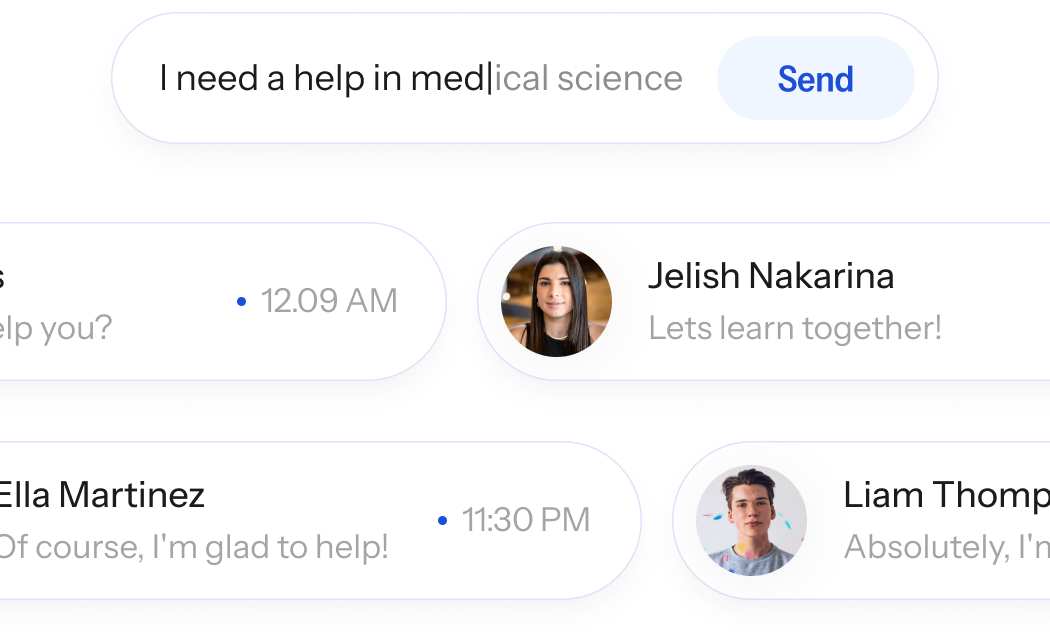
Most people only ever practise with one or two friends. Study Groups connect you with candidates right across the country sitting the same Occupational Medicine HST interview.
Live MocksBeta

Practise interview technique with different candidates
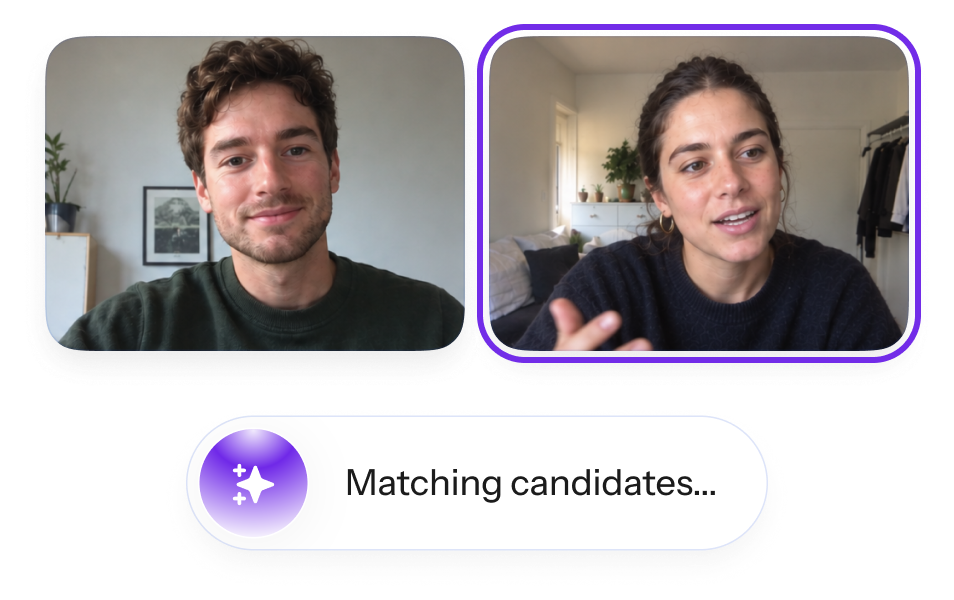
Arrange or get matched on demand with other candidates and run real scenarios out loud under interview conditions. Those who practise with the widest range of people tend to score the highest.
Peer FeedbackBeta

Reviewed by candidates across the platform

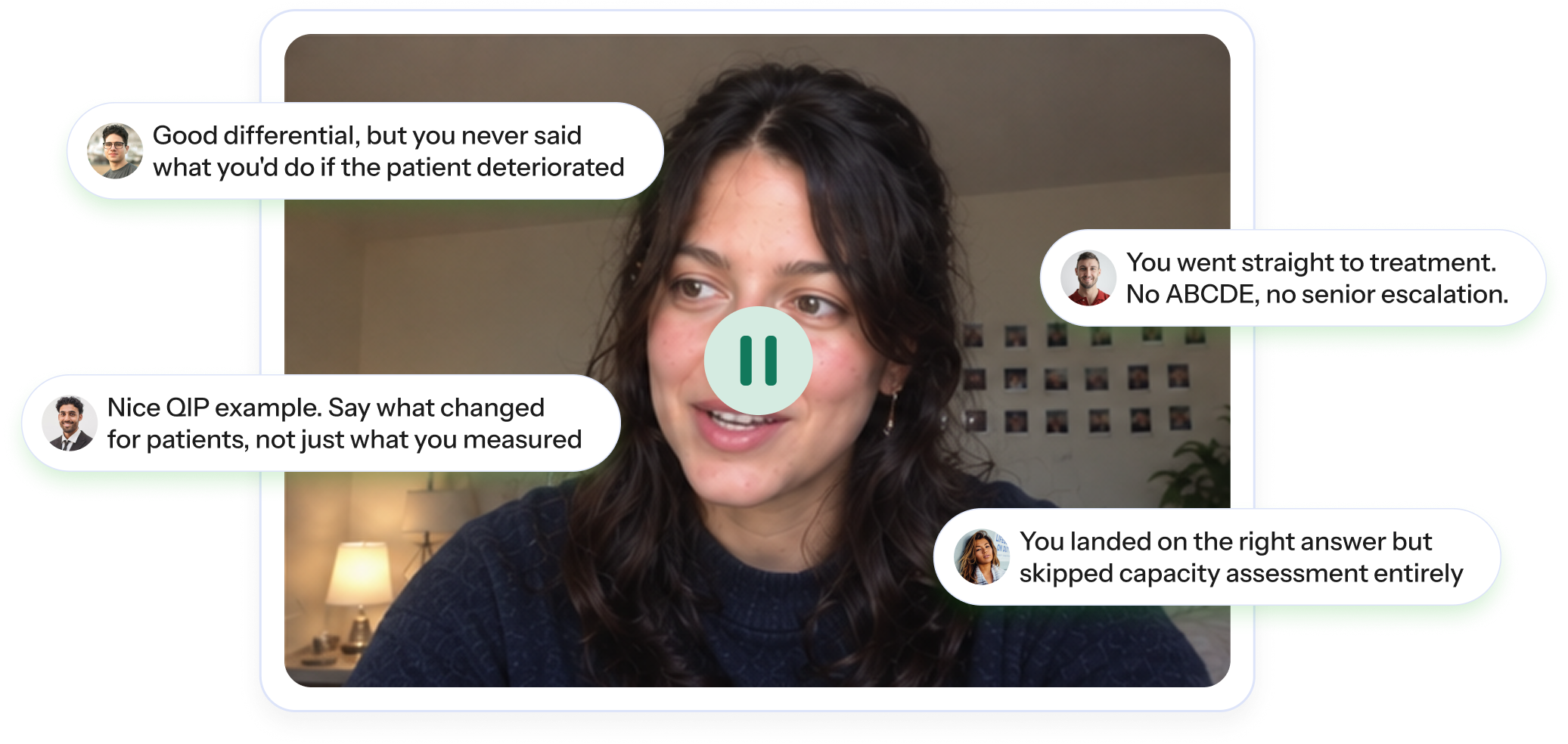
Submit your recorded mocks to candidates across the platform and get honest, varied feedback. Reviewing other people's mocks teaches you just as much.

The question bank, and other candidates to practise with, all in one platform.

Occupational Medicine HST Revision Platform • €170

Gain access to 84 scenarios across all five scored categories, and collaborate with other candidates through Study Groups, Live Mocks and Peer Feedback.
Get instant access
Part 1 • See the questions

The Medibuddy Occupational Medicine HST Question Bank

The Occupational Medicine HST interview is scored across five equally weighted categories, so every point has to land, and knowing how to structure each answer is essential. That's why each of our 84 scenarios comes with a model answer, written to the RCPI Faculty of Occupational Medicine selection criteria and Irish practice, so you know exactly how to approach every question the interviewers throw your way.
What's inside

What's included in the Occupational Medicine HST Question Bank

There's nothing worse than getting to the interview and being asked about something you've never prepared for. RCPI scores the Occupational Medicine HST interview across five categories of 20 marks each, so the safest approach is to revise across all of them. We provide scenarios for every category, from your career to date and leadership experience to occupational health cases written from the Specialist Registrar's point of view, so you don't get caught out.

Career to date

Your career narrative, qualifications and the evidence of your commitment to occupational medicine, from OH visits, meetings and courses to diplomas and membership, plus awareness of topical workplace health issues, with model answers that link your experience to what the panel is scoring.

Leadership and Management Experience

Rostering, committee work, quality improvement and change projects, with model answers grounded in Irish occupational health: the HSE Workplace Health and Wellbeing Unit, the employer's duties under the Safety, Health and Welfare at Work Act 2005, and managing attendance.

Communication and Teamwork Skills

Short occupational health communication scenarios: reports to management, consent and confidentiality, and your duties to both the employee and the employer, alongside teamwork with safety officers, HR, line managers, unions, GPs and treating consultants.

Academic (Teaching and Research) Skills

Your teaching, research, audit and QI, plus critical appraisal and occupational epidemiology, with model answers that show how to present your work and the evidence behind it.

Commitment to Specialty and Overall Suitability

Occupational health case scenarios where you act as the Specialist Registrar: pre-placement and return to work assessments, occupational asthma, health surveillance, blood-borne viruses in healthcare workers and pregnancy risk assessment, each anchored to Irish law and guidance.
Reflecting how Occupational Medicine HST is really assessed
Our scenarios and model answers follow the five interview categories RCPI publishes for the 2027 intake, anchored to Irish occupational health practice, guidance and law.
Try it

Try an example Occupational Medicine HST question

You are the first-year Specialist Registrar in Occupational Medicine in an occupational health department serving a large automotive manufacturing plant. The manager refers a 38-year-old male paint sprayer, Tomás, who has worked in the spray booth for six years. Over the past eight months he has had episodes of wheeze and chest tightness. He reports that symptoms are worse on shift and improve at weekends and on holidays. His GP has started him on a salbutamol inhaler. He has never smoked and has no childhood asthma history.

How would you approach this?

Question
How do you approach the initial occupational history and assessment of Tomás?
Example answer
The temporal pattern of symptoms relative to work is the cornerstone of the assessment; establish the exposure before moving to investigation.
  • Occupational history: Exact job: spray booth operator, type of paint used and specifically whether isocyanate-based paints are in use (two-pack polyurethane paints contain diisocyanates such as HDI, MDI or TDI). Duration in current role and any change in paint type or process in the past year. Ventilation controls in the booth: local exhaust ventilation (LEV), supplied-air respirator or half-face mask, and whether controls have deteriorated. Other potential sensitisers in the plant: amines, acrylates, metal working fluids. Any colleagues with similar symptoms.
  • Symptom history: Onset, frequency, and severity of wheeze, chest tightness, breathlessness and rhinitis. Clear work-relatedness: worse during the working week, improving over the weekend and recovering fully on holiday (this pattern is highly suggestive of occupational asthma). Any nocturnal symptoms. Use of reliever inhaler and how often.
  • Medical and atopy history: Atopy, eczema, allergic rhinitis, and childhood respiratory history. Current medications and any previous respiratory investigations.
  • Examination: Chest auscultation (may be normal at rest). Upper airway: nasal mucosa for rhinitis, which commonly accompanies occupational asthma to isocyanates. Note any skin changes.
Question
What investigations do you arrange to confirm or refute a diagnosis of occupational asthma?
Example answer
A structured objective approach is required; subjective history alone is insufficient for diagnosis or medicolegal purposes.
  • Spirometry: Baseline spirometry with reversibility testing in the occupational health department. Serial peak expiratory flow (PEF) monitoring: at least four readings per day for four weeks, covering working and non-working days, using a validated diary; the Oasys programme or manual analysis to demonstrate work-related variability. A fall in PEF of 20% or more on work days compared with rest days is highly suggestive.
  • Immunological testing: Specific IgE to isocyanates (HDI, MDI, TDI) through a clinical immunology or occupational lung disease laboratory; a positive result supports sensitisation but a negative does not exclude it, as isocyanate asthma is partly non-IgE mediated. Total IgE and skin prick testing if atopy is to be assessed.
  • Specific inhalation challenge (SIC): Gold standard for diagnosing isocyanate occupational asthma. Refer to a centre with SIC capability (a specialist occupational lung disease or thoracic unit) if serial PEF and serology are inconclusive. Not done in the occupational health department.
  • Airway inflammation: Fractional exhaled nitric oxide (FeNO): elevated in eosinophilic airway inflammation; supportive but not diagnostic. Sputum eosinophilia if available at the referral centre.
  • Workplace exposure assessment: Liaise with the plant's safety officer and request air monitoring data for isocyanate exposure levels in the spray booth; compare with the occupational exposure limit.
Question
Serial PEF monitoring confirms a work-related pattern. How do you manage Tomás's fitness for work in the short term?
Example answer
Once occupational asthma is confirmed or strongly suspected, continued exposure to the causative agent risks progression; a balance must be struck between clinical risk and the practicalities of employment.
  • Fitness decision: Tomás should not continue to work in the spray booth with isocyanate-containing paints; ongoing exposure after sensitisation leads to progressive, often irreversible, deterioration even at low levels. The aim is removal from isocyanate exposure, not simply improving respiratory protection. Respiratory protective equipment alone is not adequate as a long-term control; respirator failure or removal during use results in exposure.
  • Adjustments and redeployment: Advise management in writing (with Tomás's consent): he requires removal from the spray booth and from any process where isocyanates are used or where off-gassing may occur. Identify alternative duties within the plant: finishing, assembly or inspection roles without isocyanate exposure. Employment Equality Acts 1998 to 2015, section 16: management must consider appropriate measures (redeployment) unless a disproportionate burden; cite Nano Nagle School v Daly on redistribution of duties.
  • Treatment: Liaise with his GP and, if not already under one, refer to a respiratory physician for inhaled corticosteroid therapy and optimised asthma management. Advise Tomás of the diagnosis and its work-related cause in plain terms, and that continued exposure carries significant risk.
  • Documentation: The report to management, released with Tomás's consent, gives a functional opinion and the restriction only, not the diagnosis (Medical Council Guide s.51).
Question
What are your statutory reporting obligations in this case?
Example answer
Be precise about who reports what: occupational asthma is not one of the diseases a doctor reports to the HSA, but the case still has to change practice at the plant.
  • Reporting to the HSA: Doctors report only three groups of occupational disease to the HSA: asbestos-related disease (Exposure to Asbestos Regulations 2025), disease from biological agents (Biological Agents Regulations 2013) and cancer or reproductive effects from CMR substances (CMR Regulations 2024). Isocyanate asthma is a sensitiser-induced disease, not a CMR effect, so it is not reportable under these rules. The 2016 accident reporting rules cover injuries and dangerous occurrences, not occupational disease, so absence from asthma does not trigger them.
  • What you do instead: Record the diagnosis and its work-relatedness clearly in the occupational health record. Advise the employer, with Tomás's consent for anything identifying, that a case of occupational asthma has occurred and the chemical agents risk assessment must be reviewed.
  • Health surveillance: Under the Chemical Agents Regulations and s.22 of the Safety, Health and Welfare at Work Act 2005, workers exposed to a respiratory sensitiser should have health surveillance; this case suggests it was absent or ineffective. Advise management to review surveillance for all spray booth workers.
Discuss the case with your trainer before you write to management.
Question
Management asks whether Tomás can return to spray booth work if he wears a supplied-air respirator and the booth ventilation is upgraded. How do you advise?
Example answer
This is a common management request; the clinical answer is clear but needs to be communicated carefully with reference to the employer's legal duties.
  • Clinical position: Once isocyanate sensitisation has occurred, no safe level of exposure exists; even trace concentrations can precipitate an asthmatic response. Engineering controls and respiratory protective equipment reduce but do not eliminate exposure; respirator failure, donning errors, or brief removal can cause serious attacks. Occupational asthma guidelines are consistent: a sensitised worker should not return to work involving the causative agent.
  • Advice to management: Confirm in writing that return to the spray booth, even with improved controls, is not clinically recommended and exposes the company to significant liability under the Safety, Health and Welfare at Work Act 2005. The employer's duty under section 8 of the Act is to provide a safe place and system of work; returning a sensitised employee to the causative exposure does not meet this standard. Redeployment to an isocyanate-free role remains the appropriate measure.
  • Long-term prognosis: Even with complete removal from isocyanate exposure, only around a third recover fully; most have persistent symptoms. Prognosis is worse the longer exposure continues after sensitisation; early removal is in Tomás's interest.
Discuss with your trainer before finalising the written report to management.
Question
How do you organise health surveillance for the other spray booth workers?
Example answer
A single confirmed case of occupational asthma signals a systemic failure of hazard control; all workers with comparable exposure require assessment.
  • Legal basis: Safety, Health and Welfare at Work Act 2005, section 22: the employer must provide health surveillance where there is an identifiable disease or adverse health effect linked to the work. The General Application Regulations 2007 and the Chemical Agents Regulations place specific health surveillance requirements on employers using respiratory sensitisers such as isocyanates.
  • Surveillance programme: Identify all current spray booth operators and any former workers who left within the past two to three years. Baseline respiratory questionnaire covering wheeze, chest tightness, dyspnoea on exertion, rhinitis and skin symptoms, with attention to work-relatedness. Baseline spirometry for all, with periodic spirometry at intervals determined by risk (at least annually for high-exposure roles). Serial PEF monitoring for any symptomatic worker. Specific IgE to isocyanates for symptomatic workers or those with a history suggesting atopy.
  • Practical steps: Liaise with the plant's safety officer: review the chemical agents risk assessment under section 19 of the 2005 Act; confirm the safety statement (section 20) records isocyanate exposure. Confirm LEV inspection and maintenance records; request air monitoring data. Brief management: any worker with new respiratory symptoms should be referred to occupational health promptly, not managed solely by their GP. Record results in individual occupational health records; report aggregate anonymised findings to management.
Discuss the surveillance schedule and reporting format with your trainer.
Question
Tomás is offered redeployment to a quality inspection role but declines, saying he wants to return to spray painting because it pays more. How do you handle this?
Example answer
Respect Tomás's autonomy while being clear about clinical risk, the limits of your role, and the employer's independent legal duties.
  • Conversation with Tomás: Explore his reasons: financial concern about pay differential, fear of job security, disbelief in the diagnosis, or lack of understanding of the risk. Explain in plain terms that continued isocyanate exposure after sensitisation carries a high risk of progressive, often permanent, worsening of his asthma and potential for life-threatening attacks. Clarify that improved pay for a hazardous role does not alter the clinical risk; this is not a lifestyle choice but an objective health risk. Address financial concerns: suggest he discusses pay protection, retraining or other isocyanate-free roles with HR and his union, and note that the Reasonable Accommodation Fund grants may help the employer support redeployment.
  • Your role and limits: You can advise; you cannot compel Tomás to accept redeployment. Your duty is to give clear written advice to management that the spray booth role is not medically compatible with Tomás's health; what management then does is their decision under employment law. The employer retains an independent duty under the Safety, Health and Welfare at Work Act 2005 not to expose a sensitised worker to the causative agent; management cannot lawfully allow him to continue in the booth solely because he consents.
  • Documentation: Record the conversation, the advice given, and Tomás's response in the occupational health record. Discuss the situation with your trainer before finalising advice to management.

That's one scenario. There are 83 more.

Occupational Medicine HST Revision Platform • €170

Includes every scenario in the Question Bank, and access to Study Groups, Live Mocks with other candidates and Peer Feedback.
Get instant access
Actively maintained

How we keep our Question Banks up to date

The Occupational Medicine HST Question Bank is new for the 2027 interviews. It was built from the ground up around the current interview structure published by RCPI, with all five scored categories.

Every scenario and model answer is anchored to Irish practice, guidance and law, from the Safety, Health and Welfare at Work Act 2005, the General Application Regulations 2007 and HSA reporting rules to the Employment Equality Acts and the HSE's 2025 guidance on health clearance of healthcare workers, so you're revising with content that reflects how the interview is run now.

Our scenarios and model answers follow the current interview structure, across Career to date, Leadership and Management Experience, Communication and Teamwork Skills, Academic (Teaching and Research) Skills, and Commitment to Specialty and Overall Suitability, so you always practise with the format the panel is using now.
New for 2027 interviews
Part 2 • Practise them live

The only interview resource where you can practise live with other candidates from across the country

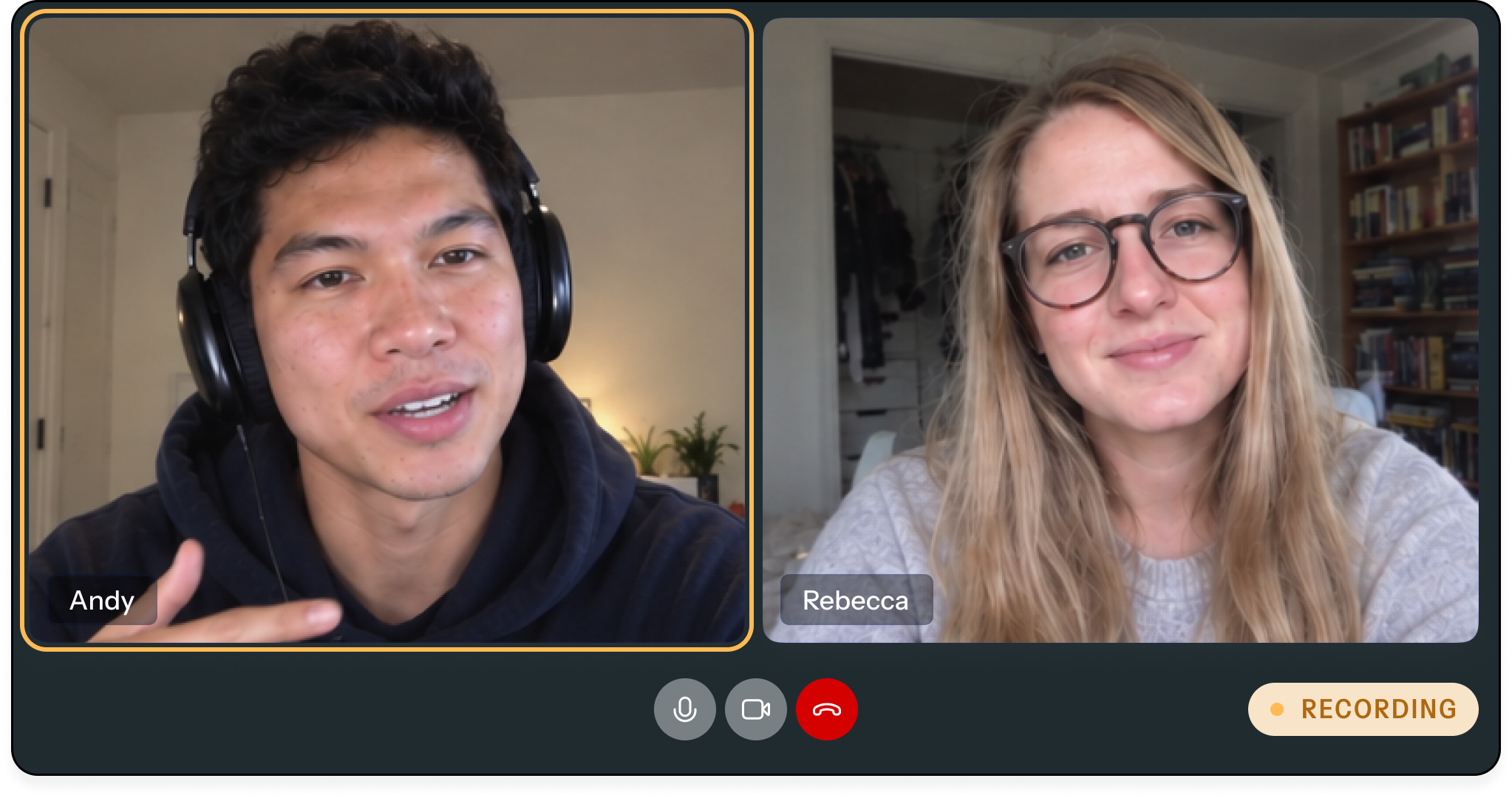
Our Occupational Medicine HST Question Bank tells you exactly how to answer real interview scenarios. But how you practise with them will determine how many marks you score. Simply reading answers off a screen won't prepare you for the intense scrutiny you'll face in the interview. And only practising with the same few colleagues or friends limits the amount of feedback you'll get. Medibuddy gives you unique access to Occupational Medicine HST candidates across the country, so you can learn from a variety of perspectives and hear a far wider range of feedback than your own circle could ever give you.
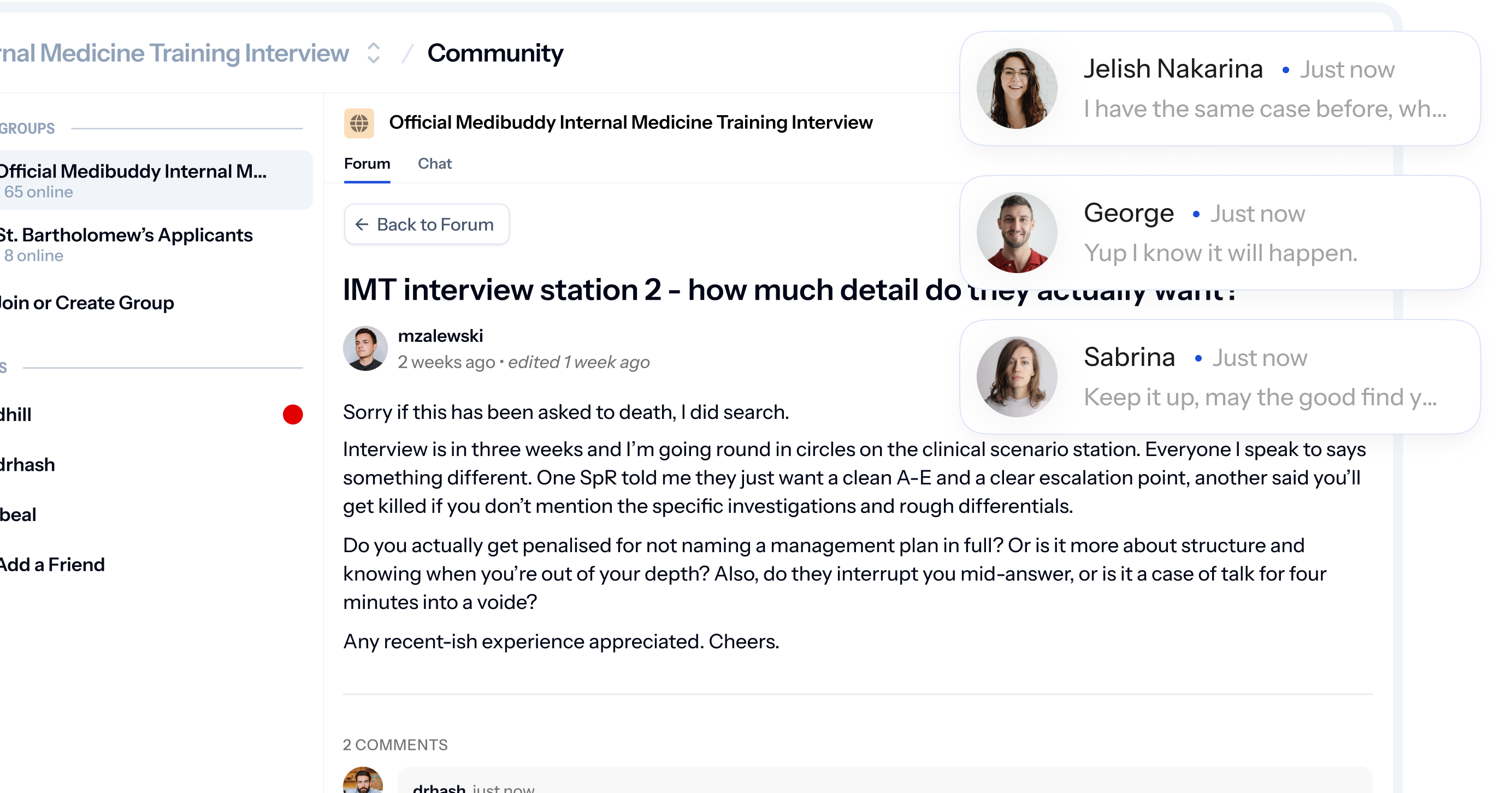
Study Groups
When you prepare in isolation, you're relying on your own interpretation of the interview process, which is one of the quickest ways to get found out on the day. Study Groups connect you with other doctors across the country who are also applying to Occupational Medicine HST, so you can engage and network with people preparing for the same interview as you. Everyone brings different experience from different hospitals, meaning you won't ever miss out on the key bits of information that could swing the interview in your favour.
Live MocksBeta
Candidates who don't take part in mocks often struggle to adapt to the pressure of the interview. Your knowledge might be correct, but without convincing delivery the interviewers will score you poorly. The best way to improve your delivery is to take part in as many live mocks as possible, which is why we haven't put a cap on how many you can do. We also know how difficult it can be to organise mocks with other people, so all you have to do is join the waiting room and we'll match you with a different Occupational Medicine HST candidate each time. Take turns as both the interviewer and candidate on real Question Bank scenarios, so you can see exactly how other candidates perform in real time, while refining your own interview technique.
Peer FeedbackBeta
Preparing alone means you won't know how you're coming across during the interview. And preparing with the same few candidates means you'll miss opportunities to improve, which is why it's so important to get as many opinions as possible on your performance. With Medibuddy, you can record a mock and submit it for feedback from other candidates on the platform, so you receive a wider range of feedback and refine your answers with each person you practise with. Reviewing other people's mocks is just as valuable, as it shows you how strong candidates handle the same scenarios, which is one of the fastest ways to improve.
The interview

What to expect from the Occupational Medicine HST interview

Higher Specialist Training in Occupational Medicine is run by the Faculty of Occupational Medicine, RCPI. It is a four-year programme with entry at first-year Specialist Registrar level, and there is no BST in occupational medicine. The 2027 interview is held in person on 5 February 2027, and it is scored out of 100 across five equally weighted categories.

Category

Career to date

20 marks. Expect to talk through your training, your qualifications and what has drawn you to occupational medicine. RCPI's Structured CV asks you to demonstrate an interest in the specialty, and it is used in preparation for the interview.
Category

Leadership and Management Experience

20 marks. Leadership and management also carries 30 of the 100 shortlisting marks, so it is a theme RCPI weights heavily. Have clear examples of rostering, committee work or a QI or change project, and what you achieved.
Category

Communication and Teamwork Skills

20 marks. RCPI doesn't say whether this is tested through scenarios or past-behaviour questions, so prepare for both: how you communicate with employees, managers and HR, and how you work within a multidisciplinary team.
Category

Academic (Teaching and Research) Skills

20 marks, scored as one combined category. Be ready to discuss your teaching, research, audit and QI, and to show you can appraise evidence critically.
Category

Commitment to Specialty and Overall Suitability

20 marks. RCPI doesn't publish a format for this category, and there is no separate clinical or knowledge of specialty category. Show your commitment to occupational medicine, your suitability for the programme, and how you would think through the cases a Specialist Registrar sees.

How the interview is scored

RCPI publishes the full marking scheme: five interview categories of 20 marks each, out of 100, with shortlisting scored separately. The number of stations, their length and whether case scenarios are used are not published; in the last cycle, candidates were interviewed by two panel members and an independent chair. Our model answers are structured against each category, so you know exactly what a strong, well-organised answer looks like across all five.
Get ready

How to prepare for the Occupational Medicine HST interview

Start with the Question Bank

Work through 84 scenarios across all five scored categories, each with a model answer. Start by reading how a strong answer is formed, then think about how you'd deliver it.

Talk the hard ones through in Study Groups

Study Groups are your biggest opportunity to network and connect with other candidates sitting the same interview as you. Everyone on the platform is in the same boat, so don't be scared to get involved and ask questions. Someone in your study group might just help you work through a scenario you've been struggling with.

Rehearse out loud in Live Mocks

Live mocks are where you begin to put everything you've learned into practice, and we know from experience that those who practise with a wide range of candidates usually do the best. Organise mocks with people from one of your study groups, or get matched with a random Occupational Medicine HST candidate, then take turns as interviewer and candidate using real scenarios until answering out loud under pressure feels normal.

Get reviewed with Peer Feedback before the day

Once you've recorded a mock, you can have other community members review it. This lets you see how you come across to other people, and gives you time to refine your delivery as you revise, rather than being caught out on the day. Reviewing other people's mocks is just as crucial, as you see how other candidates navigate the same scenarios.
Questions

Frequently asked questions

What does the Occupational Medicine HST interview involve?
An in-person interview on 5 February 2027, scored out of 100 across five equally weighted categories: Career to date, Leadership and Management Experience, Communication and Teamwork Skills, Academic (Teaching and Research) Skills, and Commitment to Specialty and Overall Suitability, each worth 20 marks. You must pass the MRCPI Clinical Examination before the interview date. Our scenarios and model answers cover each category so you know how to structure a strong response.
How competitive is the Occupational Medicine HST interview?
Very competitive, because it is a small programme. In the last cycle, 16 doctors applied, 8 were shortlisted, 6 were interviewed and 3 were appointed, according to the Faculty's annual report. RCPI hasn't published the number of posts for 2027.
Who writes the model answers?
Written by our team of medical writers and reviewed against the current selection criteria and Irish guidance, so every answer reflects how the Occupational Medicine HST interview is scored now.
Can I practise with other candidates?
Yes. Every Revision Platform purchase gives you the opportunity to connect with other candidates through Study Groups, Live Mocks and Peer Feedback.
How do the Live Mocks work?
All you have to do is join the waiting room, and we match you with another Occupational Medicine HST candidate. You then take turns as interviewer and candidate on real Question Bank scenarios, so you gain experience answering out loud to a real person before you ever sit in front of the panel.
What are Study Groups and how do they help?
Study Groups are community forums for doctors across the country preparing for the same Occupational Medicine HST interview. You can ask questions, share what you're struggling with, and compare how you'd approach a scenario.
Can I get feedback on my interview performance?
Yes. After you've recorded a mock, you can ask other members to review it, so you can see which part of your answer needs fine-tuning.
How long do I get access for?
Access runs for 12 months from the purchase date.

Start preparing for the Occupational Medicine HST interview

The Revision Platform gives you 84 scenarios and over 350 model-answered questions to practise and refine with other candidates through Study Groups, Live Mocks and Peer Feedback.

Occupational Medicine HST Revision Platform • €170

Buy Now