Ophthalmology BST/BMT Interview Question Bank – Medibuddy Ireland
Ophthalmology BST/BMT • 2027 Interview

The 2027 Ophthalmology BST/BMT Interview Revision Platform: Question Bank, Live Practice and Mocks with Other Candidates

The Medibuddy Ophthalmology BST/BMT Question Bank includes 48 scenarios and over 175 model-answered questions that closely mirror the real interview, each written and edited by high-scoring candidates who sat the Ophthalmology BST/BMT interview in 2026.

However, knowing a strong answer isn't the same as delivering it well under pressure, which is why we provide:

10 years' experience preparing doctors for interviews

Users of the Medibuddy Ophthalmology BST/BMT Revision Platform have secured some of the most competitive training posts in recent rounds. Ask around, there's a good chance the trainees in the year above you used us too.

Always up to date

Did you know the interviews change every year? That's why we review and update every Question Bank on the platform twice a year, so you know you're always practising with scenarios based on the latest interview structure.

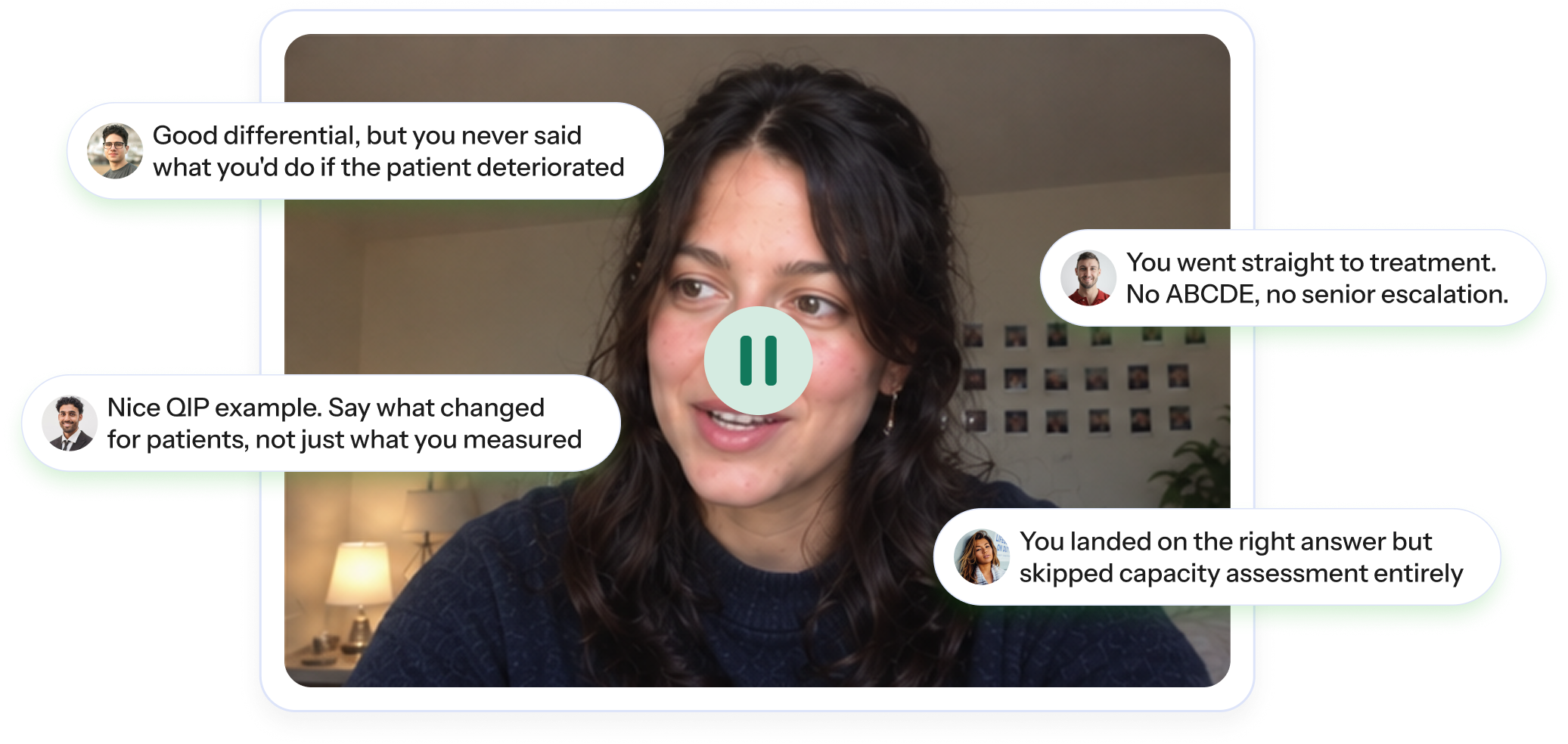
Network and practise real interview scenarios with other candidates

Question Bank

See every scenario, and how to answer it well

48 scenarios across all four scored domains, which tell you exactly how to respond to each question.
Study Groups

Connect with candidates across the country
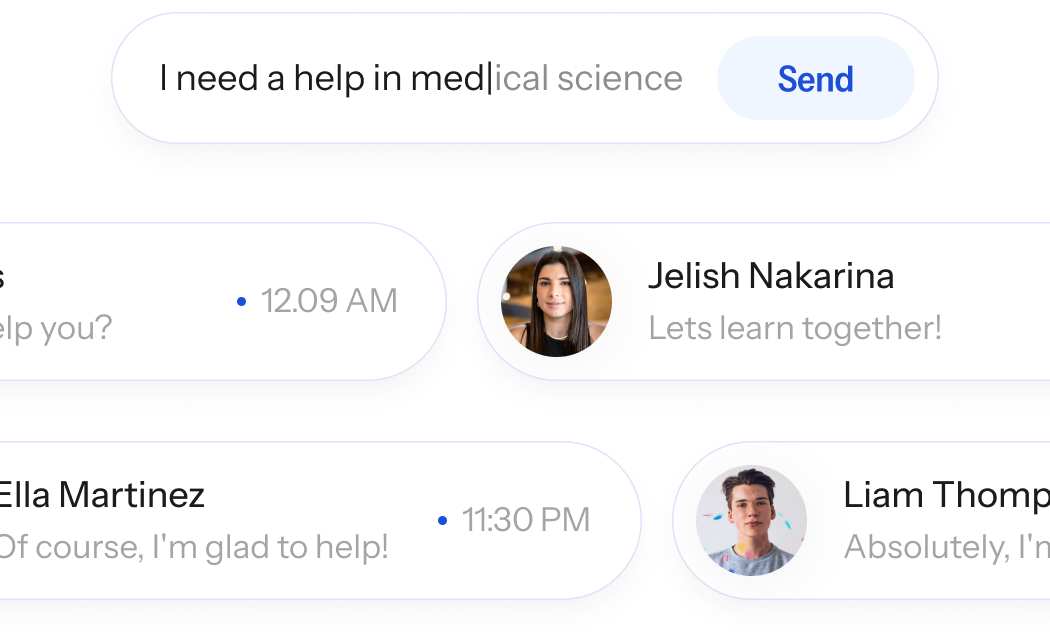
Most people only ever practise with one or two friends. Study Groups connect you with candidates right across the country sitting the same Ophthalmology BST/BMT interview.
Live MocksBeta

Practise interview technique with different candidates
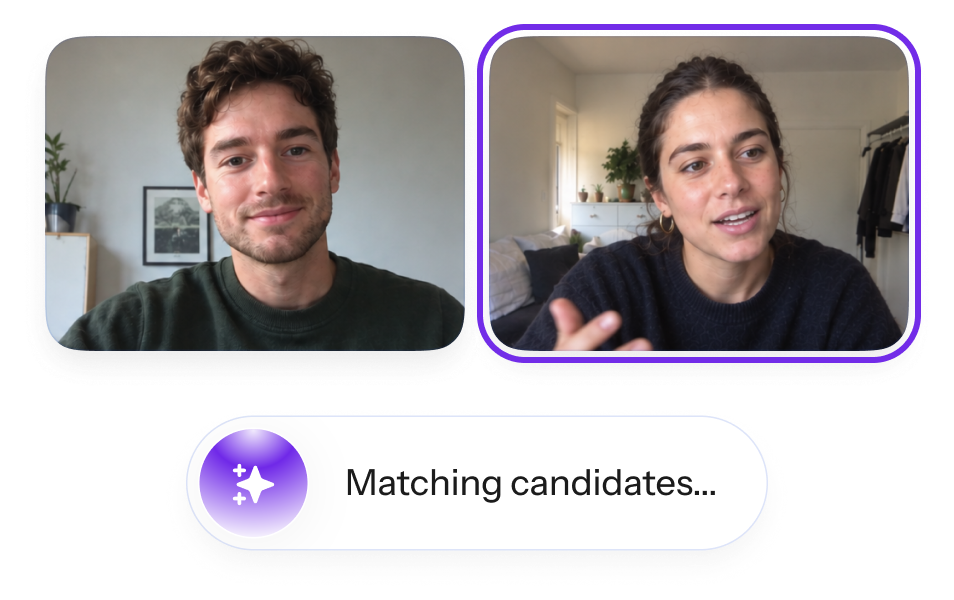
Arrange or get matched on demand with other candidates and run real scenarios out loud under interview conditions. Those who practise with the widest range of people tend to score the highest.
Peer FeedbackBeta

Reviewed by candidates across the platform
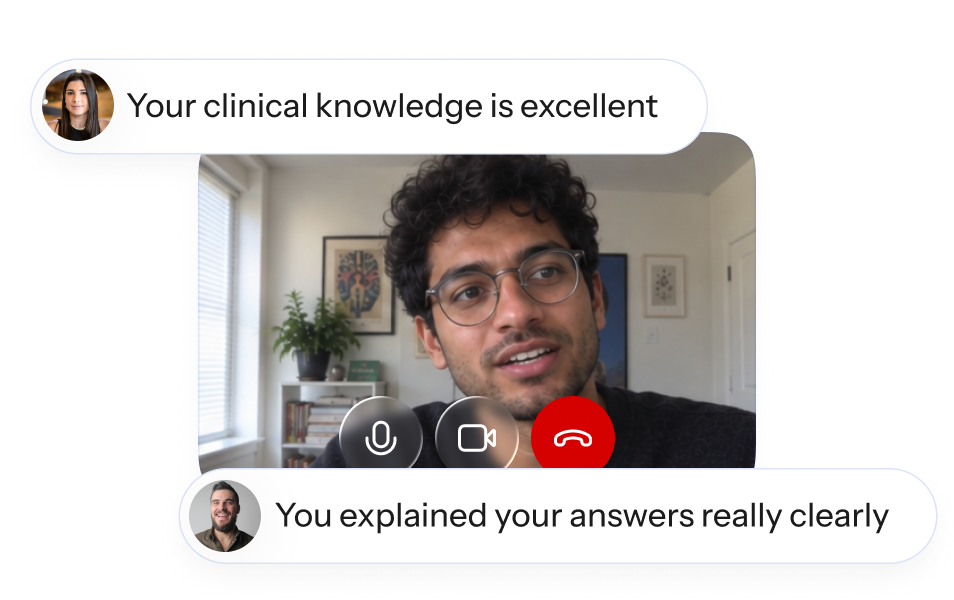
Submit your recorded mocks to candidates across the platform and get honest, varied feedback. Reviewing other people's mocks teaches you just as much.

The question bank, and other candidates to practise with, all in one platform.

Ophthalmology BST/BMT Revision Platform • €105

Gain access to 48 scenarios across all four scored domains, and collaborate with other candidates through Study Groups, Live Mocks and Peer Feedback.
Get instant access
What candidates say

Scored well, secured their post

A few of the candidates who prepared with us for the Ophthalmology BST/BMT interview.

Verified candidateInterviewed 2026
"Having a structure ready for the clinical scenario and communication domains meant I could stay calm and systematic under pressure."
Secured training post
Verified candidateInterviewed 2026
"Practising the suitability and research questions out loud with other candidates was the single most useful thing I did before the day."
Ranked highly
Part 1 • See the questions

The Medibuddy 2027 Ophthalmology BST/BMT Question Bank

The interview is a panel worth 40 of the 100 total selection marks, scored across four domains, so every answer counts. Each part is tightly timed, so you have a limited window to deliver the high-scoring answers you need to do well. That means every point has to land, and knowing how to structure each answer is essential. That's why each of our 48 scenarios comes with a model answer, written by candidates who scored highly in the 2026 Ophthalmology BST/BMT interview, so you know exactly how to approach every question the panel puts to you.
What's inside

What's included in the Ophthalmology BST/BMT Question Bank

There's nothing worse than getting to the interview and being handed a question you've never prepared for. The panel scores four domains, from your suitability and communication to research and a clinical scenario, so the safest approach is to revise across all of them. We provide scenarios for every domain, including the common themes and the trickier cases that have come up before, so you don't get caught out.

Suitability for a Career in Ophthalmology

Questions on your motivation for ophthalmology and why you're suited to it, with example answers that go beyond listing achievements.

Communication Skills & Self-Management

Consent, breaking bad news and self-management scenarios, with model answers that show clear, compassionate communication under pressure.

Research & Experience

Research, audit and relevant experience questions, with worked answers that show how to evidence your contribution and its impact.

Clinical Scenario

Acute ophthalmic scenarios where you assess, prioritise and manage safely, each with a worked answer.
Built around the four scored domains
The bank serves both the Surgical (BST/BMT) and Medical (BST/BMT) entry pathways, which share the same scored interview domains. Every scenario is anchored to Irish practice, guidelines and law, with model answers structured against the scoring domains.
Try it

Try an example Ophthalmology BST/BMT question

A 72-year-old woman is brought to the eye clinic by her daughter with a 90-minute history of sudden, complete, painless loss of vision in her right eye. She denies preceding flashes, floaters or eye pain. Her history includes atrial fibrillation, hypertension and type 2 diabetes, and she takes warfarin, ramipril and metformin. Visual acuity is counting fingers at one metre in the right eye and 6/9 in the left, with a relative afferent pupillary defect on the right.

How would you approach this?

Question
How would you assess this patient?
Example answer
Sudden painless monocular visual loss is an ophthalmic emergency. The differentials include central retinal artery occlusion, central retinal vein occlusion, vitreous haemorrhage, retinal detachment and non-arteritic anterior ischaemic optic neuropathy. Her age, vascular risk factors, RAPD and counting-fingers acuity raise strong suspicion of CRAO.
  • History: precise onset and duration (CRAO is most treatable within 4.5 hours), any preceding amaurosis fugax, flashes or floaters; crucially any headache, scalp tenderness, jaw claudication or weight loss, as giant cell arteritis must be excluded at this age; her AF, anticoagulation compliance and recent INR, and any prior stroke or carotid disease.
  • Examination: best-corrected acuity in both eyes, confirm the right RAPD, intraocular pressures, slit-lamp anterior segment, and dilated fundoscopy for retinal whitening and a cherry-red spot (CRAO), disc swelling (NAION or GCA), flame haemorrhages (CRVO) or detachment; look for iris neovascularisation; and check blood pressure, pulse and carotid bruits.
Question
Fundoscopy shows diffuse retinal pallor with a cherry-red spot, consistent with CRAO. What investigations would you arrange?
Example answer
Investigations have two parallel priorities: confirm the diagnosis and cause, and urgently exclude giant cell arteritis.
  • Urgent ESR, CRP and FBC: these are mandatory before assuming non-arteritic CRAO in anyone over 50, as a markedly raised ESR or CRP needs high-dose steroids and a temporal artery biopsy.
  • Glucose, HbA1c, lipids, renal function, and a coagulation screen with INR as she is on warfarin.
  • ECG to confirm AF, carotid Doppler for an embolic source, and an echocardiogram for a cardiac source.
  • Fluorescein angiography and OCT can support the diagnosis.
  • Neuroimaging and a same-day stroke pathway, as CRAO is a stroke equivalent.
Question
It is non-arteritic CRAO, within three hours of onset. What immediate treatment options would you consider?
Example answer
The prognosis without intervention is poor, so within the 4.5-hour window I would consider the recognised measures while escalating.
  • Ocular massage, digitally or with a Goldmann lens, to try to dislodge the embolus.
  • Lower the intraocular pressure with a topical beta-blocker, IV acetazolamide, or anterior chamber paracentesis to improve perfusion distal to the occlusion.
  • Carbogen or paper-bag rebreathing to promote retinal vasodilation, low risk but limited evidence.
  • Intra-arterial thrombolysis in a specialist centre may help within about 4.5 to 6 hours, discussed urgently with the stroke and neuroradiology teams.
  • Review and optimise her warfarin with cardiology and haematology, and admit under the stroke pathway as CRAO is a stroke equivalent.
Question
How would giant cell arteritis change your management if it were suspected?
Example answer
GCA threatens both sight and life, so if suspected treatment must not wait for biopsy.
  • Suspect it with an ESR over 50, raised CRP, jaw claudication, scalp tenderness, a new headache, proximal myalgia, fever or weight loss.
  • Start high-dose steroids immediately: IV methylprednisolone for three days if vision is affected, then oral prednisolone around 1 mg/kg; do not wait for the biopsy, which stays valid for up to two weeks.
  • Arrange an urgent temporal artery biopsy and refer to rheumatology for ongoing management.
  • Start bone protection and monitor for steroid complications, and explain the diagnosis, the risk to the other eye and the need for prolonged treatment.
Question
Her vision does not recover. How would you communicate this and what follow-up would you arrange?
Example answer
Breaking this news needs a clear, compassionate approach in line with the Medical Council guidance and the open-disclosure duties under the Patient Safety (Notifiable Incidents and Open Disclosure) Act 2023.
  • Use a private room with a support person if she wishes, explain in plain language that the blood supply to the eye was blocked and the loss in the right eye is permanent while the left is unaffected, and allow time for questions.
  • Explain the risk of neovascular glaucoma and the need for close follow-up with monitoring for iris neovascularisation.
  • Stress secondary prevention: optimising anticoagulation, blood pressure and glucose, and attending cardiology and the stroke service.
  • Refer to the National Council for the Blind of Ireland for low-vision support, consider registration as vision impaired, and advise clearly that she cannot drive and must notify the NDLS, documenting this.
  • Arrange ophthalmology review at four to six weeks and as the consultant advises.
Question
How do the fundoscopic and clinical features distinguish CRAO from CRVO and from NAION?
Example answer
Telling these three apart is a core BST/BMT-level skill.
  • CRAO: diffuse retinal whitening with a cherry-red spot at the fovea, attenuated arterioles and a possible visible embolus; acuity usually very poor, an RAPD, and no disc swelling acutely.
  • CRVO: flame haemorrhages in all four quadrants with dilated tortuous veins, disc oedema and cotton-wool spots; acuity variable and often better in non-ischaemic cases; no cherry-red spot.
  • NAION: a pale, swollen optic disc with splinter haemorrhages at the margin and no retinal whitening; acuity typically less severe than CRAO, an RAPD, a classic altitudinal field defect, and often a small cup-to-disc ratio.

That's one scenario. There are 47 more.

Ophthalmology BST/BMT Revision Platform • €105

Includes every scenario in the Question Bank, and access to Study Groups, Live Mocks with other candidates and Peer Feedback.
Get instant access
Actively maintained

How we keep our Question Banks up to date

The Ophthalmology BST/BMT interview changes from year to year, and the biggest fear for any candidate is getting to interview day and realising you've revised with a question bank that's totally outdated.

That's why we review and update every Question Bank twice a year, so you know you're revising with scenarios that are likely to come up. We do this in April after the previous year's interviews, and again in the autumn when the new recruitment guidance is published.

For 2027, this process kept the Question Bank aligned with the current four-domain interview, across suitability, communication and self-management, research and experience, and the clinical scenario, so you always practise with the format the panel is using now.
Updated for 2027 Interviews
Part 2 • Practise them live

The only interview resource where you can practise live with other candidates from across the country

Our Ophthalmology BST/BMT Question Bank tells you exactly how to answer real interview scenarios. But how you practise with them will determine how many marks you score. Simply reading answers off a screen won't prepare you for the intense scrutiny you'll face in the interview, and only practising with the same few colleagues limits the feedback you'll get. Medibuddy gives you unique access to Ophthalmology BST/BMT candidates across the country, so you can learn from a variety of perspectives and hear a far wider range of feedback than your own circle could ever give you.
Study Groups
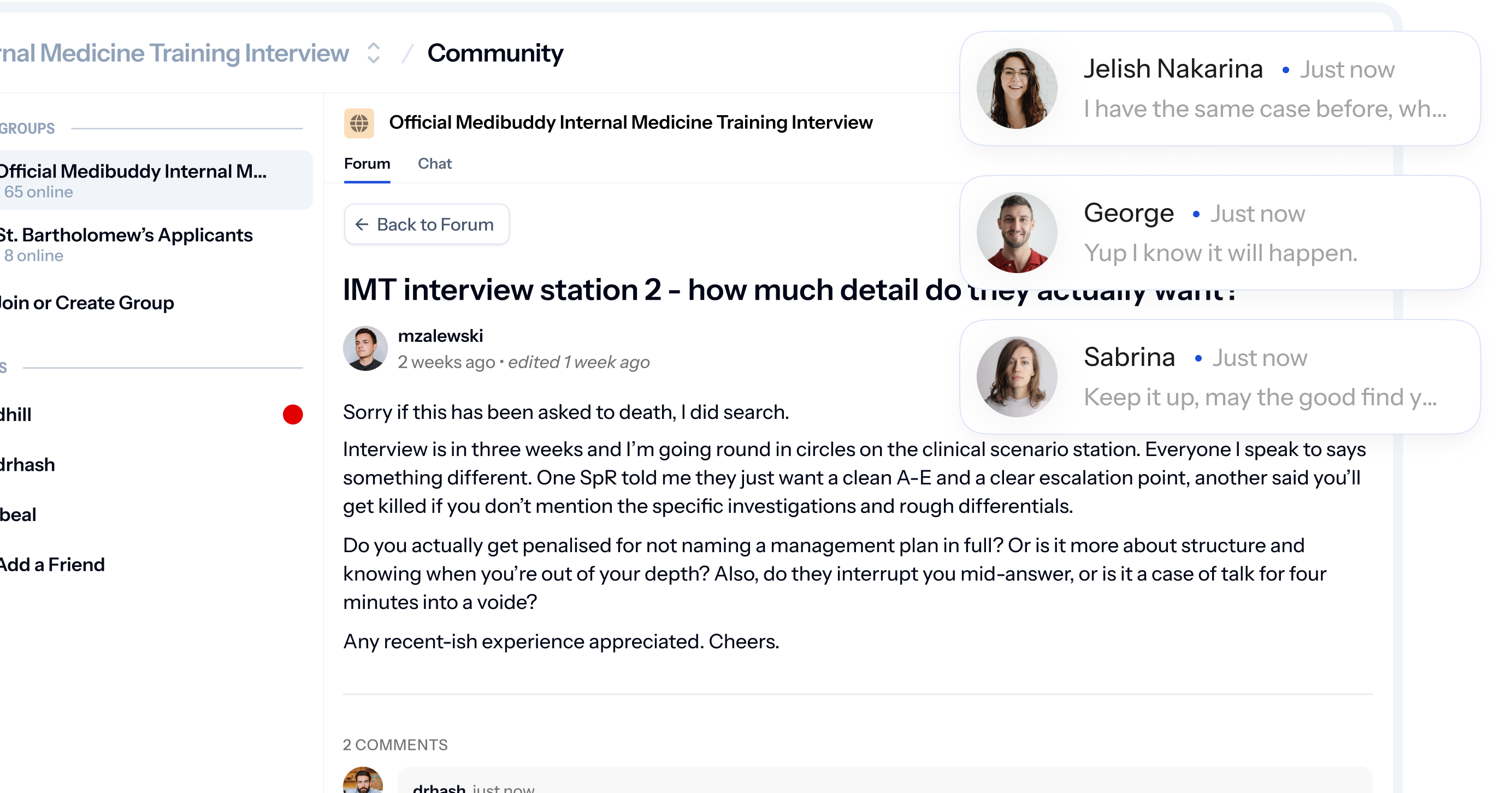
When you prepare in isolation, you're relying on your own interpretation of the interview process, which is one of the quickest ways to get found out on the day. Study Groups connect you with other doctors across the country who are also applying to Ophthalmology BST/BMT, so you can engage and network with people preparing for the same interview as you. Everyone brings different experience from different hospitals, meaning you won't miss out on the key bits of information that could swing the interview in your favour.
Live MocksBeta
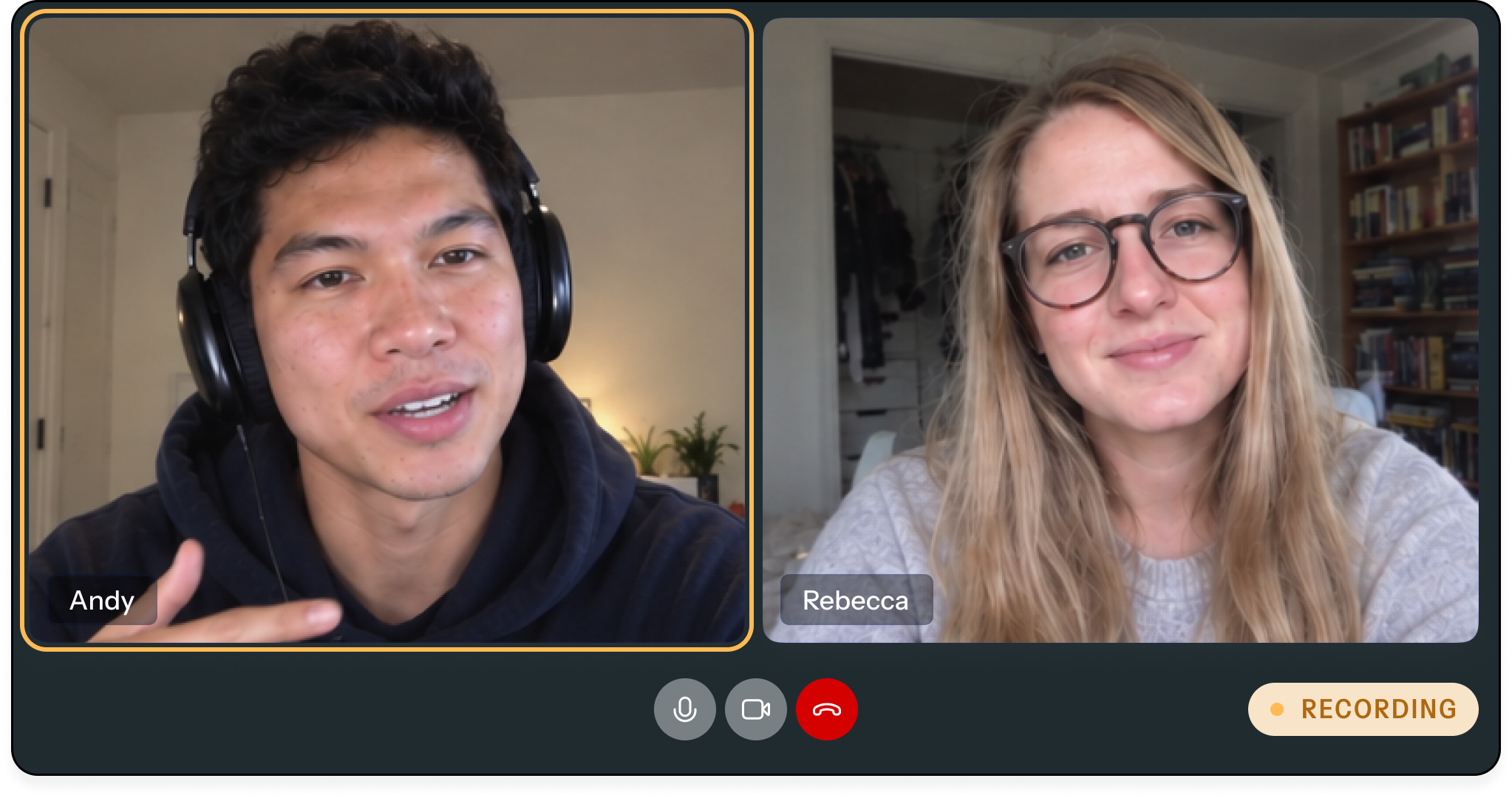
Candidates who don't take part in mocks often struggle to adapt to the pressure of the interview. Your knowledge might be correct, but without convincing delivery the interviewers will score you poorly. The best way to improve your delivery is to take part in as many live mocks as possible, which is why we haven't put a cap on how many you can do. All you have to do is join the waiting room and we'll match you with a different Ophthalmology BST/BMT candidate each time. Take turns as both the interviewer and candidate on real Question Bank scenarios, so you can see exactly how other candidates perform in real time while refining your own technique.
Peer FeedbackBeta
Preparing alone means you won't know how you're coming across during the interview, and preparing with the same few candidates means you'll miss opportunities to improve, which is why it's so important to get as many opinions as possible on your performance. With Medibuddy, you can record a mock and submit it for feedback from other candidates on the platform, so you receive a wider range of feedback and refine your answers with each person you practise with. Reviewing other people's mocks is just as valuable, as it shows you how strong candidates handle the same scenarios.
The interview

What to expect from the Ophthalmology BST/BMT interview

Entry to Ophthalmology training with the Irish College of Ophthalmologists is highly competitive, and strong applicants are often separated by narrow margins at interview.

The bank serves both entry pathways chosen at application, Surgical (Basic Specialist Training) and Medical (Basic Medical Training), which share the same scored interview domains. The interview is a panel worth 40 of the 100 total selection marks, scored across four domains: suitability for a career in ophthalmology, communication skills and self-management, research and experience, and a clinical scenario.

Domain

Suitability for a Career in Ophthalmology

Your motivation for ophthalmology and why you're suited to it, shown through your experience rather than a list of achievements.
Domain

Communication Skills and Self-Management

Consent, breaking bad news and self-management, handled with clear, compassionate communication under pressure.
Domain

Research and Experience

Your research, audit and relevant experience, and how you evidence your contribution and its impact.
Domain

Clinical Scenario

An acute ophthalmic scenario, assessing your clinical judgement and safe, structured management.

How the interview is scored

The interview panel is worth 40 of the 100 total selection marks, scored across four domains. Our model answers are structured against those domains, so you know exactly what a strong, well-organised answer looks like in each.
Get ready

How to prepare for the Ophthalmology BST/BMT interview

Start with the Question Bank

Work through 48 scenarios across all four domains, each with a worked answer from a candidate who scored well in the 2026 interview. Start by reading how a strong answer is formed, then think about how you'd deliver it.

Talk the hard ones through in Study Groups

Study Groups are your biggest opportunity to network and connect with other candidates sitting the same interview as you. Everyone on the platform is in the same boat, so don't be scared to get involved and ask questions. Someone in your study group might just help you work through a scenario you've been struggling with.

Rehearse out loud in Live Mocks

Live mocks are where you begin to put everything you've learned into practice, and we know from experience that those who practise with a wide range of candidates usually do the best. Organise mocks with people from one of your study groups, or get matched with a random Ophthalmology BST/BMT candidate, then take turns as interviewer and candidate using real scenarios until answering out loud under pressure feels normal.

Get reviewed with Peer Feedback before the day

Once you've recorded a mock, you can have other community members review it. This lets you see how you come across to other people, and gives you time to refine your delivery as you revise, rather than being caught out on the day. Reviewing other people's mocks is just as crucial, as you see how other candidates navigate the same scenarios.
Questions

Frequently asked questions

What does the Ophthalmology BST/BMT interview involve?
It is selection for entry to Ophthalmology training with the Irish College of Ophthalmologists. The interview is a panel worth 40 of the 100 total marks, scored across four domains: suitability for a career in ophthalmology, communication skills and self-management, research and experience, and a clinical scenario.
What's the difference between the BST and BMT pathways?
Both are entry routes chosen at application: Surgical (Basic Specialist Training, BST) and Medical (Basic Medical Training, BMT). They use the same application scorecard and the same scored interview domains, though the shortlisting thresholds differ. This Question Bank covers both.
How competitive is the Ophthalmology BST/BMT interview?
Ophthalmology is one of the most competitive specialties to enter in Ireland, and candidates are frequently separated by small margins at interview, which is why a structured, well-rehearsed approach matters.
Who writes the model answers?
High-scoring candidates who sat the Ophthalmology BST/BMT interview in 2026, so the answers reflect what came up and what scored this year.
Can I practise with other candidates?
Yes. Every Revision Platform purchase gives you the opportunity to connect with other candidates through Study Groups, Live Mocks and Peer Feedback.
How do the Live Mocks work?
All you have to do is join the waiting room, and we match you with another Ophthalmology BST/BMT candidate. You then take turns as interviewer and candidate on real Question Bank scenarios, so you gain experience answering out loud to a real person before you ever sit in front of the panel.
What are Study Groups and how do they help?
Study Groups are community forums for doctors across the country preparing for the same Ophthalmology BST/BMT interview. You can ask questions, share what you're struggling with, and compare how you'd approach a scenario.
Can I get feedback on my interview performance?
Yes. After you've recorded a mock, you can ask other members to review it, so you can see which part of your answer needs fine-tuning.
How do you keep the Ophthalmology BST/BMT Question Bank up to date?
We review and update it twice a year: in April after that year's interviews, and again in the autumn when the new recruitment guidance is published, so you always practise with the current four-domain format.
How long do I get access for?
Access runs for 12 months from the purchase date.

Start preparing for the Ophthalmology BST/BMT interview

The Revision Platform gives you 48 scenarios to practise and refine with other candidates through Study Groups, Live Mocks and Peer Feedback. Ten years preparing doctors for interviews, with the questions, this year's model answers and live practice, all in one place.

Ophthalmology BST/BMT Revision Platform • €105

Buy Now